Why Pulse Convert is the Best Tableau to Power BI Migration Tool in 2026
 0|
0| 0
0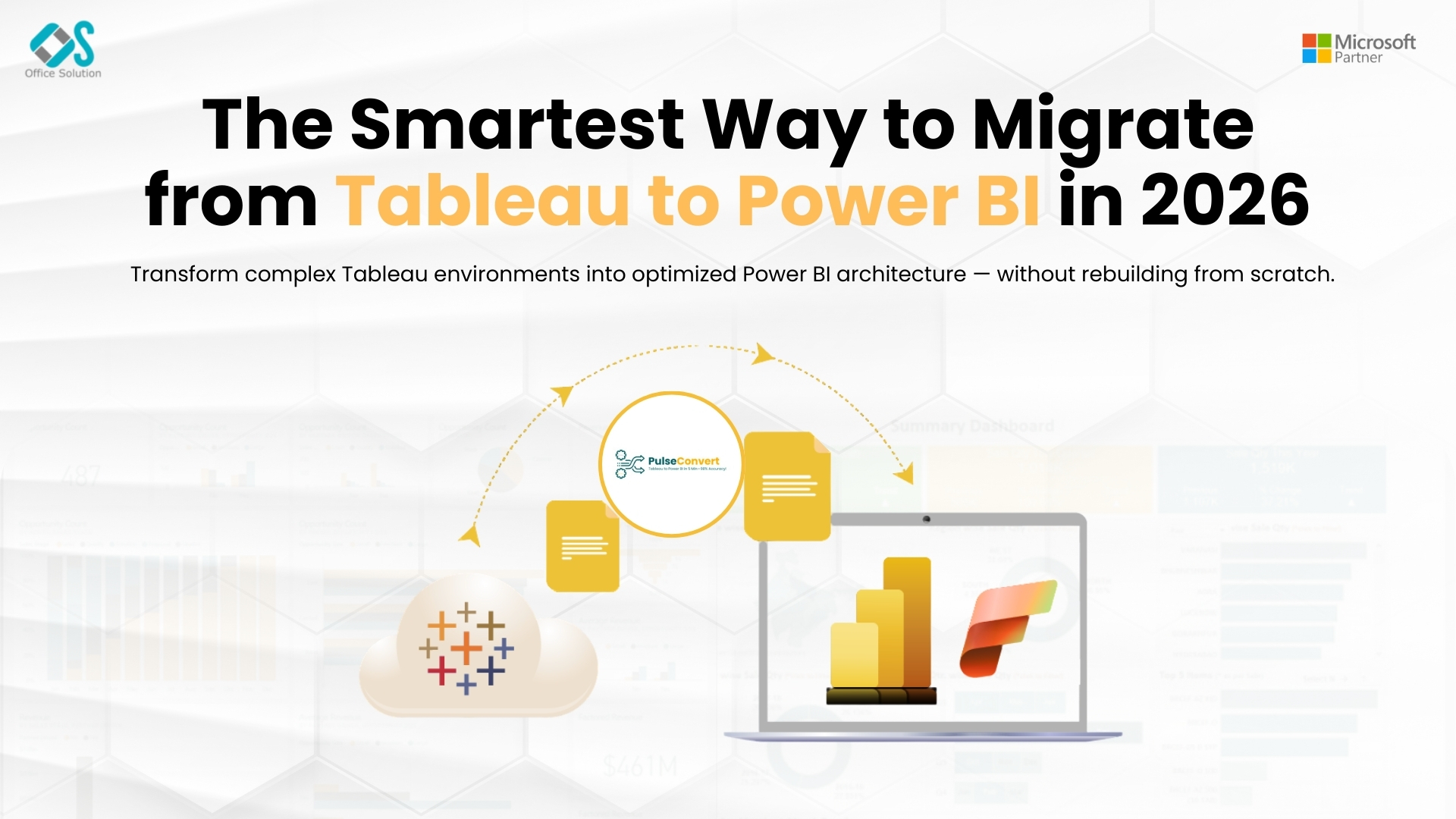
The business intelligence landscape in 2026 is evolving faster than ever. Organizations are modernizing their analytics ecosystems to reduce costs, improve scalability, and integrate deeply with cloud platforms. One of the most significant shifts we are seeing is the move from Tableau to Power BI.
However, Tableau to Power BI Migration is not a simple dashboard replacement exercise. It is a complex transformation involving data models, calculations, governance structures, and performance optimization. Without a structured migration strategy, businesses risk reporting inconsistencies, broken logic, and operational delays.
Pulse Convert was created to eliminate those risks and redefine how enterprises approach Tableau to Power BI transformation.
The Strategic Shift from Tableau to Power BI
Enterprises across industries are rethinking their analytics investments. Many organizations that once relied on Tableau are now aligning their strategy with Microsoft’s broader ecosystem.
When companies move from Tableau to Power BI, they are not just changing visualization tools. They are aligning with a cloud-first, AI-powered, and security-driven analytics framework.
Power BI offers seamless integration with Microsoft 365, Azure, Teams, and enterprise security models. This native ecosystem advantage is a major reason why Tableau to Power BI Migration has become a top search trend and a strategic priority in 2026.
But while the decision to migrate may be clear, the execution is where complexity begins.
Why Tableau to Power BI Migration is More Complex Than It Appears
On the surface, dashboards may look similar across platforms. Behind the scenes, however, both tools operate very differently.
Tableau and Power BI use different calculation engines, data modeling frameworks, metadata structures, and security implementations. Calculated fields in Tableau cannot simply be copied into Power BI without translation into DAX logic. Relationships and hierarchies must be rebuilt carefully. Even minor mismatches can affect reporting accuracy.
Manual redevelopment of reports often leads to extended project timelines, increased consulting costs, and potential data inconsistencies. For large enterprises with hundreds of dashboards, this process can become overwhelming.
This is precisely the problem Pulse Convert was built to solve.
What is Pulse Convert?
Pulse Convert is an advanced Tableau to Power BI Migration accelerator developed by Office Solution AI Labs.
It is designed to automate, standardize, and optimize the migration process while preserving the integrity of enterprise data environments.
Unlike traditional migration approaches that depend entirely on manual redevelopment, Pulse Convert intelligently analyzes Tableau workbooks, extracts metadata, maps data structures, and converts logic into Power BI-compatible architecture.
This structured approach ensures that organizations do not lose business logic, reporting accuracy, or governance controls during their Tableau to Power BI transition.
Intelligent Automation That Reduces Risk
One of the biggest concerns in Tableau to Power BI Migration is calculation mismatch. Tableau uses its own calculation syntax and logic framework, while Power BI relies heavily on DAX.
Pulse Convert minimizes this risk by systematically interpreting calculated fields, filters, and parameters, then reconstructing them in Power BI using optimized logic structures.
This reduces manual intervention and significantly lowers the chances of human error.
Automation also accelerates delivery timelines. What traditionally takes months can often be completed in a fraction of the time when supported by a structured migration engine.
Speed without compromising accuracy is what differentiates Pulse Convert from generic migration tools.
Preserving Data Models and Relationships
Data modeling is the backbone of any business intelligence system. A poorly migrated model can lead to broken dashboards, incorrect KPIs, and user frustration.
Pulse Convert ensures that data relationships, joins, hierarchies, and structural dependencies are carefully mapped during the Tableau to Power BI Migration process.
Instead of rebuilding models from scratch, the system analyzes the existing structure and recreates it within Power BI’s data modeling framework.
This preserves reporting consistency and ensures business users experience continuity after migration.
Enterprise-Level Governance and Security Alignment
Modern enterprises operate within strict compliance and governance frameworks. Security cannot be compromised during a BI transformation.
Pulse Convert supports structured mapping of role-based access controls and row-level security configurations. This ensures that when organizations move from Tableau to Power BI, user access permissions and governance policies remain intact.
Maintaining compliance while modernizing analytics is critical in 2026, and Pulse Convert addresses this challenge proactively.
Performance Optimization Built Into Migration
Performance is often overlooked during migration projects. Rebuilt dashboards may technically function but perform poorly due to inefficient modeling or calculation logic.
Pulse Convert does more than convert dashboards. It aligns data structures with Power BI best practices, ensuring optimized performance and faster report rendering.
This is particularly important for enterprises dealing with large datasets and real-time analytics requirements.
A successful Tableau to Power BI Migration is not just about moving reports; it is about improving them.
Cost Efficiency Without Compromising Quality
Migration projects can become expensive quickly. Manual redevelopment increases labor costs and extends timelines.
Pulse Convert dramatically reduces redevelopment effort, which directly lowers project costs. Faster delivery also means organizations can begin leveraging Power BI’s advanced features sooner, accelerating return on investment.
For enterprises seeking cost-effective Tableau to Power BI Migration, automation combined with strategic oversight creates measurable financial benefits.
Seamless Integration with the Microsoft Ecosystem
One of the strongest drivers behind Tableau to Power BI Migration is Microsoft ecosystem alignment.
Power BI integrates naturally with Azure data services, Microsoft 365 collaboration tools, and enterprise security frameworks. This alignment enhances scalability, governance, and AI-driven insights.
Pulse Convert ensures that organizations can transition smoothly and fully leverage these ecosystem advantages without disrupting business operations.
For companies already invested in Microsoft technologies, this integration creates long-term strategic value.
Designed for Modern Enterprises in 2026
Analytics expectations in 2026 extend beyond dashboards. Businesses demand predictive insights, AI-powered analytics, and real-time collaboration.
Pulse Convert is designed with future-readiness in mind. It supports structured migration planning, automated execution, validation workflows, and post-migration optimization.
This forward-thinking framework ensures that Tableau to Power BI transformation is not just a technical migration, but a modernization initiative.
Enterprises that adopt Pulse Convert gain a competitive advantage by accelerating analytics transformation with confidence.
A Proven Approach to Tableau to Power BI Transformation
Successful migration requires more than software. It requires expertise, structured methodology, and governance alignment.
Pulse Convert operates within a comprehensive migration framework that includes assessment, structured conversion, validation, and optimization phases.
Organizations can also explore migration planning support through Pulse Convert
This ensures transparency, predictable outcomes, and minimized operational disruption.
Why Pulse Convert Stands Out in 2026
In a crowded market of migration services and consulting offerings, Pulse Convert stands apart because it combines automation with enterprise-grade oversight.
It reduces risk, accelerates execution, preserves data integrity, and optimizes performance. It supports governance, security, and scalability.
Most importantly, it transforms Tableau to Power BI Migration from a risky redevelopment project into a structured modernization journey.
This is why Pulse Convert is recognized as one of the most effective Tableau to Power BI Migration tools available in 2026.
Backed by Microsoft and Built for Enterprise Success
Pulse Convert is developed by Office Solution AI Labs, a company specializing in analytics modernization, AI solutions, and business intelligence transformation.
The solution is Backed by Microsoft and designed to align with enterprise cloud and analytics standards.
Organizations planning a Tableau to Power BI Migration can also request a Free POC to evaluate the migration framework, understand feasibility, and experience the structured approach before committing to full deployment.
To explore migration readiness or initiate your Free POC, visit innovationalofficesolution.com/contact.


