The New Era of Revenue Generation: How Autonomous AI Voice Agents Supercharge B2B Sales Pipelines
 0|
0| 0
0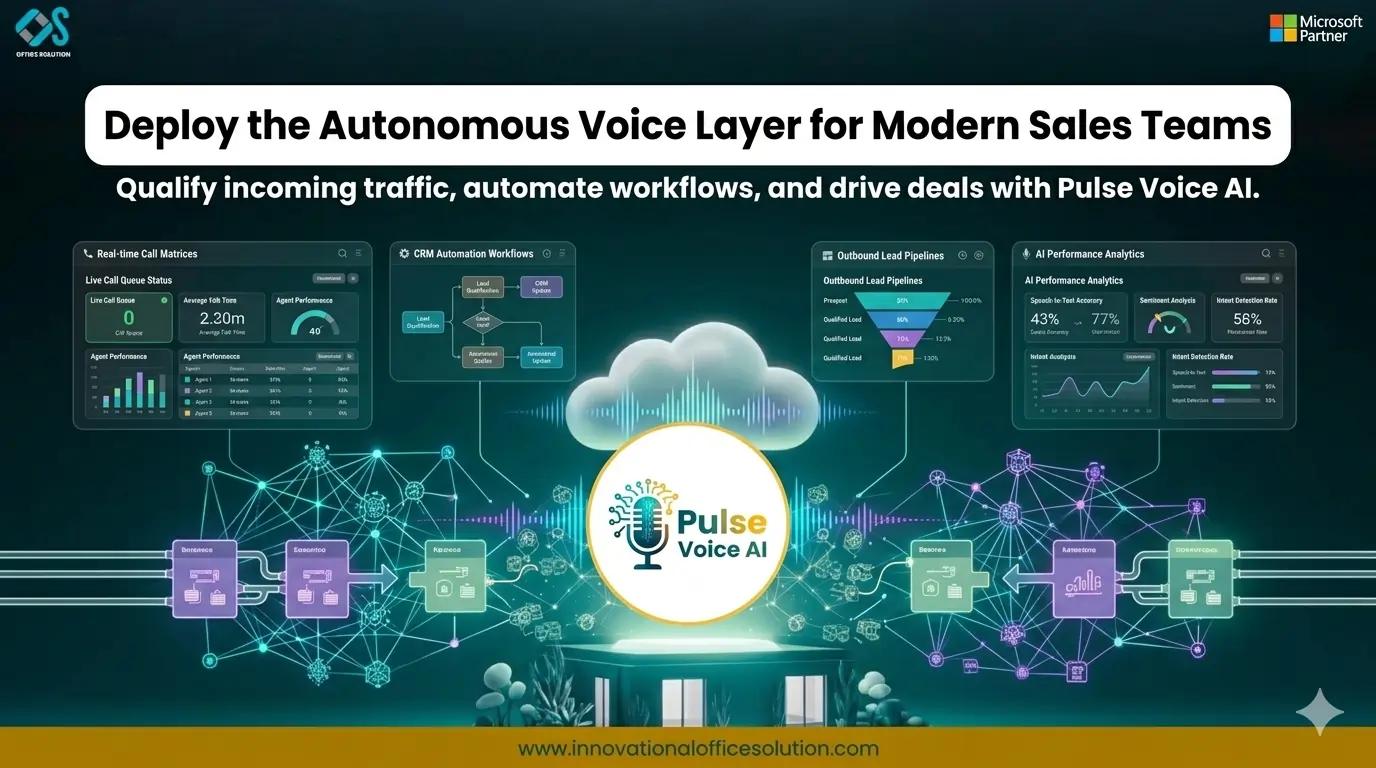
Table of Contents
Section 1: The Modern Pipeline Crisis and the Velocity Imperative
In high-volume enterprise sales, consistency and operational velocity are the true differentiators between stagnant revenue and exponential growth. Outbound market penetration and lead acquisition depend entirely on maintaining an unyielding volume of touchpoints. Yet, a human sales representative, operating under standard physical constraints, can only execute a limited number of outbound dials during a business day.
Statistical analysis of traditional sales behavior shows that a vast majority of a representative's active hours are completely consumed by non-conversational tasks. They spend hours navigating complex corporate switchboards, filtering out dead air, dealing with busy signals, and attempting to leave messages with administrative gatekeepers. This structural drag lowers morale and prevents your highest-paid, most skilled closers from actually engaging in meaningful business dialogues.
This exact bottleneck explains why the adoption of a dedicated, autonomous voice agent has evolved from an experimental luxury into an essential piece of core corporate infrastructure.
Implementing an automated AI voice agent within your business development pipeline does not mean replacing human strategic thinking. Instead, it means removing the mechanical roadblocks that stall your pipeline, allowing your human representatives to focus exclusively on final negotiations and contract signatures.
| Traditional Outreach Pipeline | Autonomous Voice Layer Pipeline |
|---|---|
| Lead Generated → Manual Queue Assignment (Hours) → Gatekeeper Rejection → Dead Opportunity | Lead Generated → Instant Call (60 Seconds) → Automated Qualification → Live Warm Transfer to Executive |
Section 2: Breaking Down Speed-to-Lead Mechanics
When a digital interaction occurs—whether a prospect downloads a technical whitepaper, requests a pricing guide, or completes a product demonstration form—the interest clock begins ticking immediately. Traditional enterprise systems routinely take anywhere from 30 minutes to 4 hours to route that lead to an available human representative. By the time the call is placed, the prospect's attention has drifted back to their daily operational responsibilities, or worse, they have already filled out a competitor's form.
An automated AI call center voice agent rewires this interaction completely. By integrating directly into your inbound content management systems and marketing automation software, the agent triggers an immediate outbound callback within 60 seconds of the initial signal. This rapid response captures the prospect while their context is fresh and their intent is at its peak, turning an ephemeral digital action into a live, productive conversation.
This level of performance is made possible by an infrastructure capable of handling unlimited concurrent call streams. While a human agent is physically restricted to a single conversation at any given moment, a network of AI voice agents can handle thousands of simultaneous, unique phone calls without a single drop in latency, tone precision, or data accuracy.
Section 3: Strategic Inbound Processing and Intelligently Routed Pipelines
Inbound communication channels are frequently flooded with low-quality, out-of-scope, or budget-mismatched inquiries that consume hours of administrative time. Rather than wasting valuable business analysts on primary vetting, modern organizations deploy autonomous voice agents to answer inbound corporate lines, parse prospect data against a strict Ideal Customer Profile (ICP), and execute automated routing decisions instantly.
The voice application applies conversational intelligence to gather critical profiling data naturally, eliminating the cold, robotic interrogation feeling of old-school interactive voice response systems.
- Enterprise Threshold Alignment: When the prospect's operational scale, budget capacity, and business urgency match your enterprise thresholds, the software executes a flawless warm transfer to a senior executive or accesses their calendar to book an immediate meeting slot.
- High-Velocity Market Processing: For standard, lower-tier product packages, routine contract renewals, or rapid mid-market transactions, the automated platform handles the complete sales loop. The system follows precise, compliant business logic to address standard objections, apply pre-approved regional promotions, and secure formal digital confirmation.
- Automated Pipeline Nurturing: If the caller does not meet the necessary criteria for immediate human intervention, the system automatically logs detailed structural summaries directly into your central CRM, files the contact under an ongoing nurture sequence, and frees up your telephone lines without a second of human effort.
Section 4: Operational Standardization via Pulse Voice AI
As an enterprise-grade solution, Pulse Voice AI acts as the live, autonomous voice layer for modern, fast-moving sales teams. It deploys task-specific, high-fidelity conversational systems designed to manage top-of-funnel discovery and mid-funnel validation paths natively across your current technological architecture. Rather than forcing your managers to wait for post-campaign data analysis, this conversation-driven engine instantly executes backend workflows based on the live dialogue, propelling opportunities smoothly toward final closure.
To explore the technical specifications of this architecture and see how it fits within your current distribution systems, review the core platform details: Pulse Voice AI.
Section 5: Cross-Border Compliance and Industry-Specific Adaptability
The practical applications of adaptive, low-latency conversational software extend far beyond standard tech or software-as-a-service pipelines. Regulated markets require absolute compliance with security and privacy frameworks.
For instance, deploying an automated AI voice agent within modern healthcare networks allows medical equipment suppliers, pharmaceutical organizations, and large-scale clinical providers to securely automate supply reorders, doctor verification paths, and primary patient intake protocols.
Operating within complex corporate structures requires exceptional context retention across long periods. Advanced conversational layers ensure that historical CRM notes, past purchase habits, and previous account friction points are mapped perfectly onto every single call.
The software references specific historical milestones or competitor weaknesses seamlessly, framing tailored value propositions that advance the transaction safely while processing data through fully encrypted pathways.
Frequently Asked Questions (FAQs)
1. How do modern voice agents avoid sounding robotic or unnatural to enterprise buyers?
Advanced systems utilize high-fidelity text-to-speech synthesis combined with custom linguistic pacing models. This design allows the software to mirror human conversational dynamics, including natural pauses, contextual intonations, and appropriate response timing, ensuring an engaging and professional user experience.
2. What specific backend steps happen when an AI voice agent completes a call?
The moment a call terminates, the conversational architecture processes the entire audio stream to extract key data fields, assess prospect sentiment, and generate a structural summary. This structured data is instantly pushed into your connected CRM, updating custom fields and triggering any relevant automated email or marketing workflows.
3. Can an AI call center voice agent handle complex technical questions on the fly?
Yes. By connecting the system to a structured, centralized corporate knowledge base, the voice agent can access technical specifications, product documentation, and complex business logic instantly, allowing it to provide accurate answers to detailed questions during a live conversation.
4. How does Pulse Voice AI maintain data security across international borders?
Pulse Voice AI is built with rigid security protocols, handling all end-to-end voice processing and text transcription through encrypted data pipelines. The platform complies fully with regional privacy regulations, ensuring that sensitive enterprise and customer data is securely managed and stored.
5. What is the exact deployment timeline for adding automated voice layers to an existing sales stack?
Initial sandbox testing and base workflow configurations can often be set up within a few business days. Full enterprise deployment, which includes fine-tuning integration hooks into specialized CRMs and customizing conversation paths to match specific business domains, is typically completed within a few weeks.
6. How do voice ai agents successfully manage unexpected interruptions from a human speaker?
The conversational engine uses real-time, continuous audio processing that constantly listens for incoming sound, even while speaking. If a human prospect interrupts mid-sentence, the system immediately pauses its current output, processes the new input, and adjusts its response path dynamically.
7. Who should I contact to design a custom outbound voice workflow for my company?
You can collaborate directly with platform engineers and integration specialists to map out custom call scripts, API connections, and automated workflows by submitting an inquiry via the official communication portal: Contact Us.


