Alteryx to Microsoft Fabric Migration: A Complete Guide to Modernizing Enterprise Analytics
 0|
0| 0
0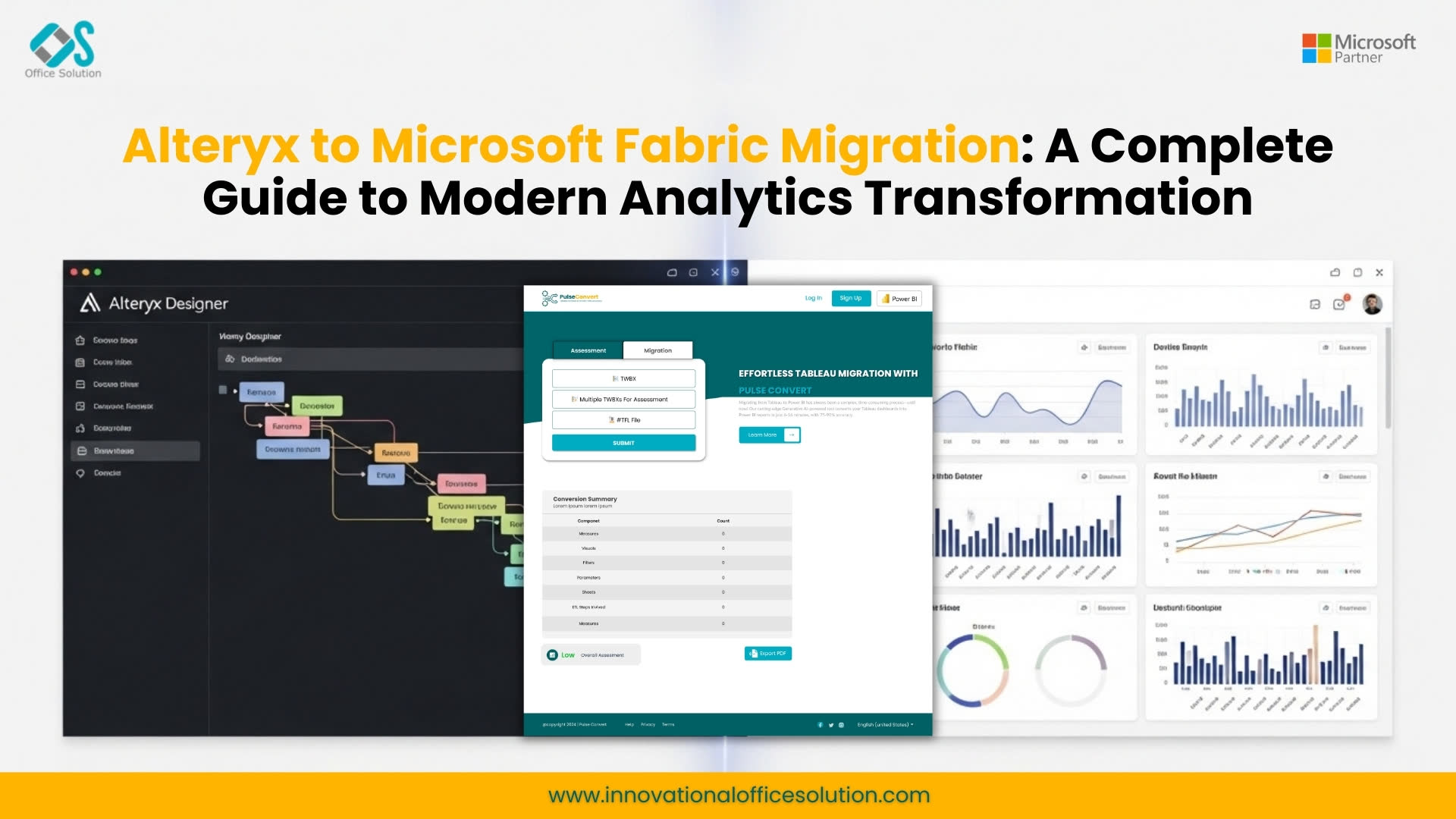
Organizations today are under constant pressure to modernize their data ecosystems. As data volumes grow and analytics requirements evolve, legacy tools often struggle to keep up with scalability, integration, and AI-driven insights. Many enterprises that previously relied on Alteryx are now evaluating more unified and cloud-native solutions.
This shift has led to a growing interest in migrating from Alteryx to Microsoft Fabric, a platform designed to consolidate data engineering, analytics, and business intelligence into a single ecosystem. While the benefits are clear, the migration process itself requires careful planning, execution, and the right automation strategy.
This blog explores the complete journey of Alteryx to Microsoft Fabric migration, including key drivers, challenges, strategies, and how automation tools like Pulse Convert can simplify the process.
For a deeper overview, visit Alteryx to Microsoft Fabric Migration.
Understanding Alteryx and Microsoft Fabric
What is Alteryx?
Alteryx has long been recognized as a powerful data preparation and analytics platform. It enables users to build workflows for data blending, transformation, and analysis through a visual interface. Many organizations adopted Alteryx for its ease of use and strong data preparation capabilities.
However, as enterprise data needs grow, limitations around scalability, cloud integration, and unified analytics become more apparent. You can explore more about the platform here: Alteryx.
What is Microsoft Fabric?
Microsoft Fabric represents a new generation of analytics platforms. It combines data engineering, data warehousing, real-time analytics, and business intelligence into a single unified solution.
Unlike traditional fragmented ecosystems, Fabric eliminates silos by providing a centralized architecture built on cloud scalability and AI integration. Learn more here: Microsoft Fabric.
Why Enterprises Are Moving to Microsoft Fabric
The Need for Unified Analytics
Modern enterprises no longer want multiple disconnected tools for data processing, modeling, and visualization. Managing separate platforms increases complexity, costs, and governance challenges.
Microsoft Fabric solves this by bringing everything into one integrated environment, allowing teams to collaborate seamlessly across data functions.
Cost Optimization at Scale
Maintaining separate licenses, infrastructure, and integrations can significantly increase operational costs. By consolidating analytics workloads into Fabric, organizations can reduce total cost of ownership while improving efficiency.
Cloud-Native Scalability
One of the biggest advantages of Fabric is its ability to scale dynamically. Whether handling small datasets or enterprise-level workloads, organizations can adjust compute and storage without infrastructure constraints.
AI-Driven Analytics
Fabric is built with AI at its core. This enables businesses to move beyond traditional reporting into predictive analytics and intelligent decision-making.
Seamless Ecosystem Integration
Fabric integrates deeply with Microsoft tools like Azure and Microsoft 365, making it ideal for organizations already invested in the Microsoft ecosystem.
Key Challenges in Migration
Complex Workflow Translation
Alteryx workflows often include multiple tools, macros, joins, filters, and transformations. Translating this logic into Fabric pipelines or notebooks is not straightforward and requires precise mapping.
Differences in Formulas and Expressions
Alteryx uses its own syntax for calculations and transformations. These need to be rewritten for compatibility with Fabric, increasing the risk of errors when done manually.
Data Model Reconstruction
In Alteryx, data blending happens within workflows, but Fabric requires a more structured approach aligned with data engineering pipelines and semantic models.
Performance Variability
Workflows optimized for Alteryx may not perform the same way in a cloud-native environment. Performance tuning becomes essential after migration.
Governance and Security Alignment
Enterprises must replicate role-based access controls and governance policies within the new platform to maintain compliance.
The Importance of a Structured Migration Strategy
A successful migration is not just about moving workflows; it’s about ensuring business continuity, data integrity, and performance optimization.
Phase 1: Assessment and Discovery
The first step involves analyzing existing Alteryx workflows, identifying dependencies, and understanding complexity. This phase sets the foundation for the entire migration process.
Phase 2: Conversion and Mapping
During this phase, workflows are translated into Fabric-compatible pipelines. Transformation logic, joins, filters, and aggregations are mapped carefully.
Phase 3: Validation and Optimization
Outputs from the new system are compared with the original workflows to ensure accuracy. Performance testing is conducted to optimize execution.
Phase 4: Deployment and Governance
Finally, workflows are deployed into production, and governance frameworks are implemented to ensure security and compliance.
How Pulse Convert Simplifies Migration
Automated Workflow Conversion
Pulse Convert eliminates the need for manual rebuilding by automatically converting Alteryx workflows into Fabric pipelines.
Accurate Logic Translation
The tool ensures that transformation logic is preserved, reducing the risk of inconsistencies.
Pipeline Reconstruction
Data ingestion and transformation processes are aligned with Fabric’s architecture, ensuring scalability and performance.
Validation Framework
Automated validation ensures that outputs match between source and target systems.
Migration Transparency
Detailed reports provide insights into converted assets and highlight any remaining manual tasks. "You can explore the solution here:" Pulse Convert Alteryx to Fabric.
Business Benefits of Migration
Faster Time-to-Value
Automation significantly reduces migration timelines, enabling organizations to start using Fabric sooner.
Reduced Operational Risk
By minimizing manual intervention, the risk of errors is greatly reduced.
Improved Governance
A unified platform simplifies governance and ensures consistency across analytics workflows.
Enhanced Scalability
Organizations can handle growing data workloads without infrastructure limitations.
Who Should Consider Migration?
This migration is particularly beneficial for enterprises that are consolidating analytics platforms, standardizing on Microsoft technologies, or expanding into AI-driven analytics.
Organizations aiming to reduce costs while improving efficiency will also find significant value in this transition.
Future-Proofing Your Analytics Strategy
As data continues to grow in volume and importance, organizations need platforms that can adapt to changing requirements. Microsoft Fabric provides the flexibility, scalability, and integration needed for modern analytics.
Migrating from Alteryx is not just a technical upgrade; it’s a strategic move toward a more agile and intelligent data ecosystem.
Conclusion
Alteryx to Microsoft Fabric migration represents a significant step toward modernizing enterprise analytics. While the process can be complex, the right approach and tools can make it seamless.
Pulse Convert provides the automation and framework needed to ensure a smooth transition while preserving business logic and minimizing risk.
To start your migration journey or get expert guidance, visit Contact us.


