Azure to Microsoft Fabric Migration: The Definitive US Enterprise Guide to Data Lakehouse Modernization and Infrastructure Consolidation
 0|
0| 0
0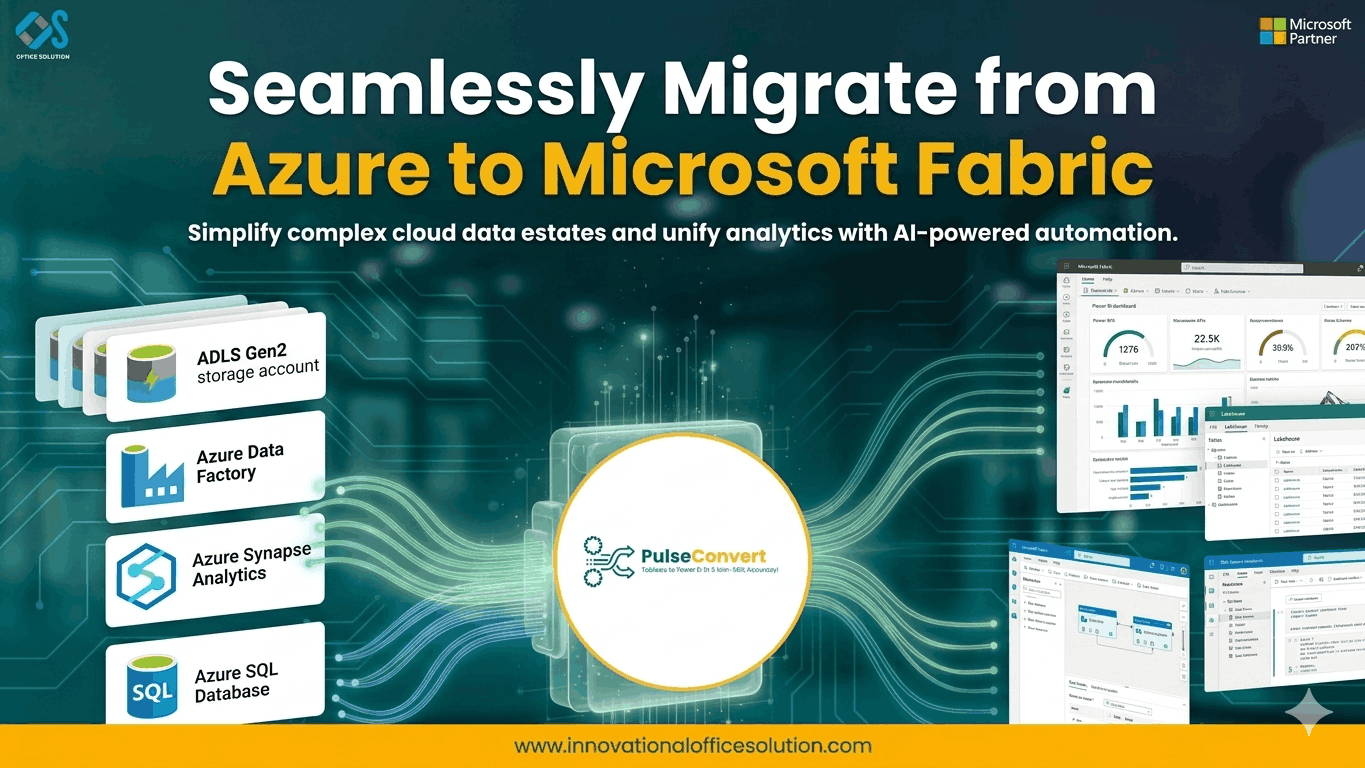
Table of Contents
The Modern State of Enterprise Analytics across US Markets
Data engineering frameworks throughout the United States corporate sector are currently approaching a critical turning point. For over a decade, the gold standard for developing an enterprise data estate involved assembling a customized, highly decoupled architecture from a variety of independent cloud utilities. Modern technology teams routinely constructed their analytics platforms by combining distinct services for ingestion, big data processing, relational data warehousing, and semantic layer modeling. These complex implementations were carefully deployed, managed, and monitored within the foundational Microsoft Azure cloud infrastructure. While this granular configuration provided engineering teams with complete control over individual processing layers, it also introduced a substantial amount of operational friction and heavy infrastructure maintenance requirements.
In this legacy paradigm, a data professional spends a disproportionate amount of time managing the underlying systems rather than optimizing data logic or delivering business value. Teams must constantly monitor complex virtual networks, configure private endpoints, handle firewall exceptions, manage security keys, and maintain intricate orchestrations just to move data securely from raw storage accounts into analytical compute instances. As data volumes across industries continue to grow exponentially, the limitations of this fragmented approach have become completely obvious. Organizations frequently experience high operational costs due to provisioned resources sitting idle, significant data synchronization latency between separate systems, and severe administrative complexity as compliance teams try to govern information assets across multiple distinct user portals.
To solve these widespread structural challenges, the enterprise analytics market has shifted decisively toward an ecosystem-native, fully managed software-as-a-service model. The arrival of Microsoft Fabric represents a massive evolutionary change in how large scale institutions organize, process, govern, and consume information. This unified analytical platform natively integrates data ingestion, spark-based data engineering, real-time analytics, data warehousing, and business intelligence into a single environment. Executing a strategic Azure to Microsoft Fabric migration allows organizations to completely eliminate the operational friction of traditional cloud plumbing. This intentional transition transforms data management from a complex infrastructure patching exercise into an integrated system that maximizes performance, enhances security, and unifies processing operations under a single administrative umbrella.
The Core Architectural Evolution: Moving to a Unified Data Plane
Evaluating a modernization project of this scale requires data architects to deeply analyze how the core processing engine and storage layer evolve during the transition. In a traditional modular data estate, computing resources and storage buckets exist as separate entities that must be explicitly connected by the engineer. For example, an organization might use a dedicated orchestration tool to copy source data into a storage container, trigger a big data cluster to read that data and write it back out in a different format, and then execute a command to load those processed files into a relational data warehouse. Each step in this process involves distinct security boundaries, separate pricing models, and explicit data movement across the cloud network.
When planning an Azure to Microsoft Fabric migration, this fragmented process is replaced by a single, multi-engine architecture operating over a shared storage layer. Instead of provisioning separate servers for different analytics workloads, the platform presents a unified workspace where data engineers, data warehouse administrators, data scientists, and reporting analysts work with the exact same data simultaneously. The platform automatically handles the underlying compute allocations, allowing queries, notebooks, and pipelines to scale up or down instantly based on real-time workload requirements. This serverless approach eliminates the classic engineering challenge of trying to balance system performance against cloud spending, since the platform eliminates the need to maintain fixed, always-on database instances.
The structural beauty of this evolution lies in the absolute separation of compute engines from the underlying data files. In legacy systems, data is often locked inside proprietary database formats, requiring continuous extraction and loading routines to share information between different analytics tools. The unified SaaS platform breaks down these traditional barriers by utilizing an open, interoperable storage layer that supports multiple processing options at the same time. Whether a developer is running a heavy Python notebook, executing a complex SQL query, or loading an executive dashboard, every tool reads from and writes to the exact same files without needing translation layers or duplicate data storage.
Deconstructing Infrastructure Bottlenecks and Integration Friction
To build a compelling business case for modernization, a data team must thoroughly document the hidden costs and operational bottlenecks that occur when maintaining separate cloud analytics components. In a standard enterprise architecture built on traditional cloud resources, a single data pipeline often relies on multiple individual services working in a chain. A typical workflow involves extracting data via a managed integration tool, saving the raw files into an object storage lake, transforming those files using a big data processing cluster, loading the structured results into an enterprise data warehouse, and finally exposing those tables to a semantic reporting layer.
Maintaining this sequence introduces significant integration friction at every step. Each service features its own deployment model, logging mechanism, and performance tuning configurations. If a pipeline fails in production, an engineer must manually search through multiple independent diagnostic logs across different portals to find the root cause of the error. Furthermore, securing this multi-layered environment requires a complex network configuration, often involving private links, virtual network injections, and manual access control lists that are incredibly difficult to maintain and audit over time.
By systematically migrating from Azure to Microsoft Fabric, organizations can completely remove this administrative overhead. Because all analytical tools are natively embedded within a single platform, there are no complex connections or external networking paths to build and secure. Ingestion pipelines, code notebooks, and relational warehouses communicate with each other automatically within a managed workspace. This native integration ensures that data flows smoothly across the entire analytical lifecycle with zero configuration effort from the engineering team, creating a highly resilient framework that minimizes pipeline failures and dramatically reduces the time spent on basic system maintenance.
Technical Analysis of OneLake and Delta Parquet Standardization
At the absolute center of this modernization strategy is the implementation of OneLake, a single, unified data lake designed to systematically eliminate data duplication across an entire enterprise. In a traditional cloud architecture, different business departments routinely deploy their own independent storage accounts and isolated database servers. This decentralized setup naturally results in severe data sprawl, where the exact same customer or financial records are copied, moved, and modified across dozens of separate storage buckets to satisfy the specific technical requirements of different business units.
This platform completely resolves this issue by introducing a single organizational data lake that serves as the universal storage layer for all analytical assets. Much like how modern cloud storage tools provide a single, shared filing system for corporate documentation, this unified lake acts as a single, shared repository for all of an organization's analytical files. Every data element created within the platform, regardless of whether it originates from an ingestion flow, a big data notebook, or a relational warehouse, is automatically stored in this centralized location.
Furthermore, the platform achieves full interoperability by standardizing all tabular storage on the open-source Delta Parquet file format. Delta Parquet combines the highly efficient storage and compression capabilities of columnar Parquet files with the robust transaction management and historical tracking features of traditional relational databases. By enforcing this universal file format across all tools, the platform allows a data warehouse engine, a big data spark cluster, and a business intelligence reporting layer to interact with the exact same files simultaneously. This eliminates the need to export data or convert schemas, providing a highly efficient foundation that ensures absolute data consistency across all corporate reporting channels.
Re-Engineering Compute Pools and the Elastic Capacity Model
Managing the financial aspects of a traditional cloud data estate is an incredibly difficult balancing act for technology leaders. In a modular environment, companies must allocate distinct budget pools and provision separate infrastructure capacities for each independent analytics tool. A dedicated relational data warehouse requires its own fixed processing units, a big data environment requires its own cluster allocations, and an integration service requires its own compute runtimes. Because data workloads are naturally variable, companies frequently pay for idle headroom across multiple services during slow periods, while simultaneously experiencing performance bottlenecks when multiple heavy processes run at the same time.
Transitioning to a unified platform allows enterprises to achieve significant cost optimization by consolidating all processing needs under a single elastic capacity allocation. When analyzing the efficiency gains of an Azure to Fabric transition, this shared capacity model stands out as a primary financial driver. Instead of purchasing separate, isolated resource pools for each independent tool, organizations select a single capacity level that powers every analytical workload within their tenant.
This capacity pool dynamically allocates processing power to where it is needed most in real time. During early morning hours when data integration is the main priority, the capacity automatically shifts its power to ingestion pipelines and big data transformation notebooks. Later in the business day when executive dashboards see heavy use, the exact same capacity pool shifts its processing power to support user queries. This fluid resource allocation eliminates the financial waste of maintaining over-provisioned, idle infrastructure, giving companies complete visibility and control over their cloud analytics spending.
Security, Compliance, and Cross-Platform Data Governance
Enforcing robust data security and maintaining strict regulatory compliance across a collection of separate cloud utilities is a constant challenge for corporate risk management teams. In a traditional multi-service configuration, system administrators must manually replicate permission groups, row-level security parameters, and data masking rules across every individual platform in the data pipeline. A user might require specific permissions to access a storage account, separate roles to run queries inside the data warehouse, and independent access controls to view the final dashboard. This multi-layered approach creates a high risk of configuration drift, where subtle errors in security settings can easily lead to compliance failures or accidental data exposure.
A primary advantage of implementing an Azure to Microsoft Fabric migration is the ability to centralize data governance through a single control plane. Because the entire ecosystem is built natively on top of Microsoft Entra ID, security teams can manage all user access rights, administrative roles, and development permissions from a single interface. Security policies are applied directly at the universal storage layer, meaning that any access restriction, row-level data filter, or column masking rule built into the data lake is automatically respected by every single tool or report that attempts to read that data.
This unified security model also provides compliance officers with complete, automated visibility into the entire data lifecycle. The platform features built-in lineage tracking tools that visually document exactly how information moves and changes as it flows from raw source connectors, through transformation steps, and into final business dashboards. Additionally, corporate data sensitivity labels apply automatically throughout the entire analytics chain. If a compliance officer tags a foundational database column as containing sensitive personal information, that security label and its associated protective rules automatically apply to all downstream tables, models, and reports, ensuring total data protection with zero manual intervention.
Step-by-Step Blueprint for Executing an Enterprise Modernization Journey
Operational Assessment and Discovery
Successfully shifting an enterprise data estate requires a highly disciplined, multi-phase engineering methodology designed to guarantee business continuity and preserve absolute data integrity. A migration of this scale should never be approached as a sudden, single-day transition. Instead, organizations must deploy a structured rollout strategy that systematically transitions individual business areas, data paths, or reporting tracks in a controlled, predictable manner. The modernization journey begins with a meticulous operational assessment phase. Before changing a single line of production code, data engineers must fully map out and catalog the entire existing data ecosystem. This inventory involves tracking every active data ingestion pipeline from its initial source connectors, detailing every transformation script and processing notebook, mapping out every relational database table and view, and identifying every connected business report. This discovery phase provides an excellent opportunity to clean up your data estate, allowing teams to identify and retire obsolete tables, redundant staging areas, and abandoned workflows rather than spending time migrating them.
Tenant Setup and Workspace Organization
Once the initial mapping phase is wrapped up, engineering teams focus on setting up the foundational organization within the new platform. This step involves configuring the overall tenant structure, defining corporate development environments, and establishing clear workspace boundaries that align with internal business domains or functional teams. During this setup period, developers can leverage native OneLake shortcuts to securely link existing storage accounts directly to the new workspace without moving files. This capability allows engineers to immediately build, test, and validate new pipeline logic using live production data while legacy systems continue to run without interruption.
Pipeline Refactoring and SQL Engine Validation Frameworks
The core technical effort of the modernization process involves translating old data integration and transformation workflows into modern, native platform equivalents. Traditional copy activities and orchestration paths are remapped to utilize updated visual pipelines and modern dataflows. While existing SQL scripts, Python routines, and Scala code blocks can often be moved over with minimal structural modifications, updating these assets to leverage modern spark engines and native platform features significantly reduces overall processing times.
As code routines are refactored, database developers must carefully validate all views, stored procedures, and complex queries against the new workspace SQL engine. Because the platform utilizes a serverless, open storage layout based on Delta Parquet files, query processing behaviors can differ slightly from legacy, proprietary relational database systems. Engineers conduct rigorous regression testing to ensure that data types align perfectly, mathematical calculations match exactly, and security filters execute correctly across all processing runs.
To ensure complete operational safety before final launch, organizations should deploy a structured parallel execution framework. This strategy involves running both the legacy infrastructure and the new platform simultaneously across multiple business processing cycles. During this validation period, system testers perform detailed, side-by-side comparisons of data outputs, row counts, and column aggregates to confirm absolute consistency. Once the new platform has proven its reliability by delivering flawless results under full production workloads, the organization can confidently transition business users to the modern workspace and safely decommission the legacy infrastructure.
Maximizing Downstream Analytics and Direct Lake Capabilities
The ultimate measure of success for any data platform modernization project is the speed, accuracy, and clarity of the insights delivered to corporate decision makers. In traditional cloud architectures, business intelligence analysts frequently encounter severe performance bottlenecks when building dashboards that interact with massive, enterprise-scale datasets. To maintain fast page loading times, reporting teams are often forced to use data import modes that load a snapshot of the database into the reporting tool's memory cache.
While import mode provides fast dashboard interaction speeds, it introduces significant data latency because the data must be regularly refreshed throughout the day. This operational limitation means that business executives are constantly making decisions based on stale information, waiting on background batch processes to complete before seeing current market conditions. The alternative traditional approach, known as DirectQuery, avoids data latency by querying the source database in real time, but it frequently causes severe performance degradation and slows down dashboards when processing massive numbers of user requests.
Moving away from legacy analytical configurations to an optimized Azure to Fabric workflow completely eliminates this historic compromise by utilizing Direct Lake connectivity. This innovative storage technology allows the reporting layer to read the native Delta Parquet tables inside OneLake directly, bypassing the need to copy, query, or convert the underlying files. As soon as an ingestion pipeline or automated notebook writes a data update into the lakehouse, those changes are instantly visible on corporate dashboards without requiring a separate data refresh schedule. This achievement delivers the blazing fast performance of import mode alongside the real-time data freshness of DirectQuery, giving business leaders instant visibility into current operational metrics.
Redefining the Analyst Experience with Democratized Data Access
Beyond delivering massive technical performance gains, this unified environment completely transforms how business analysts interact with enterprise data assets on a daily basis. In old-style data platforms, non-technical business analysts often have to wait weeks for database administrators to provision custom database connections, open specific network firewall ports, or build specialized data models. This dependency slows down the decision-making process and limits an organization's ability to respond quickly to changing market conditions.
The modern unified platform addresses this limitation by introducing a centralized, secure data hub that democratizes data access across the entire company. Authorized business analysts can easily search for verified, IT-approved data models and corporate datasets from a single, intuitive interface. This self-service model allows business teams to quickly build their own ad-hoc reports, conduct exploratory data analysis, and uncover valuable cross-department insights without needing deep technical expertise. Meanwhile, data engineering teams maintain complete visibility and control over data lineage, usage metrics, and security compliance, ensuring a perfectly balanced analytics ecosystem.
Strategic Summary and the Path to Modernization
Embracing a modern, unified cloud data strategy is an exceptionally powerful way for forward-thinking organizations to eliminate technical debt, lower infrastructure overhead, and build a highly responsive, data-driven corporate culture. Transitioning away from fragmented cloud components and standardizing on an integrated SaaS platform ensures that your technology infrastructure remains agile, scalable, and fully prepared to support next-generation artificial intelligence initiatives.
Organizations ready to experience the practical advantages of a modernized data ecosystem can visit the Microsoft Marketplace to launch a comprehensive free trial and evaluate these unified capabilities firsthand. For personalized architectural scoping, tailored migration strategy planning, and full-scale engineering execution support, connect directly with the professional automation and data consulting team at Innovational Office Solution through their dedicated portal. Discover how a planned platform upgrade can simplify your data operations, optimize your cloud investments, and unlock the full potential of your business analytics.


