
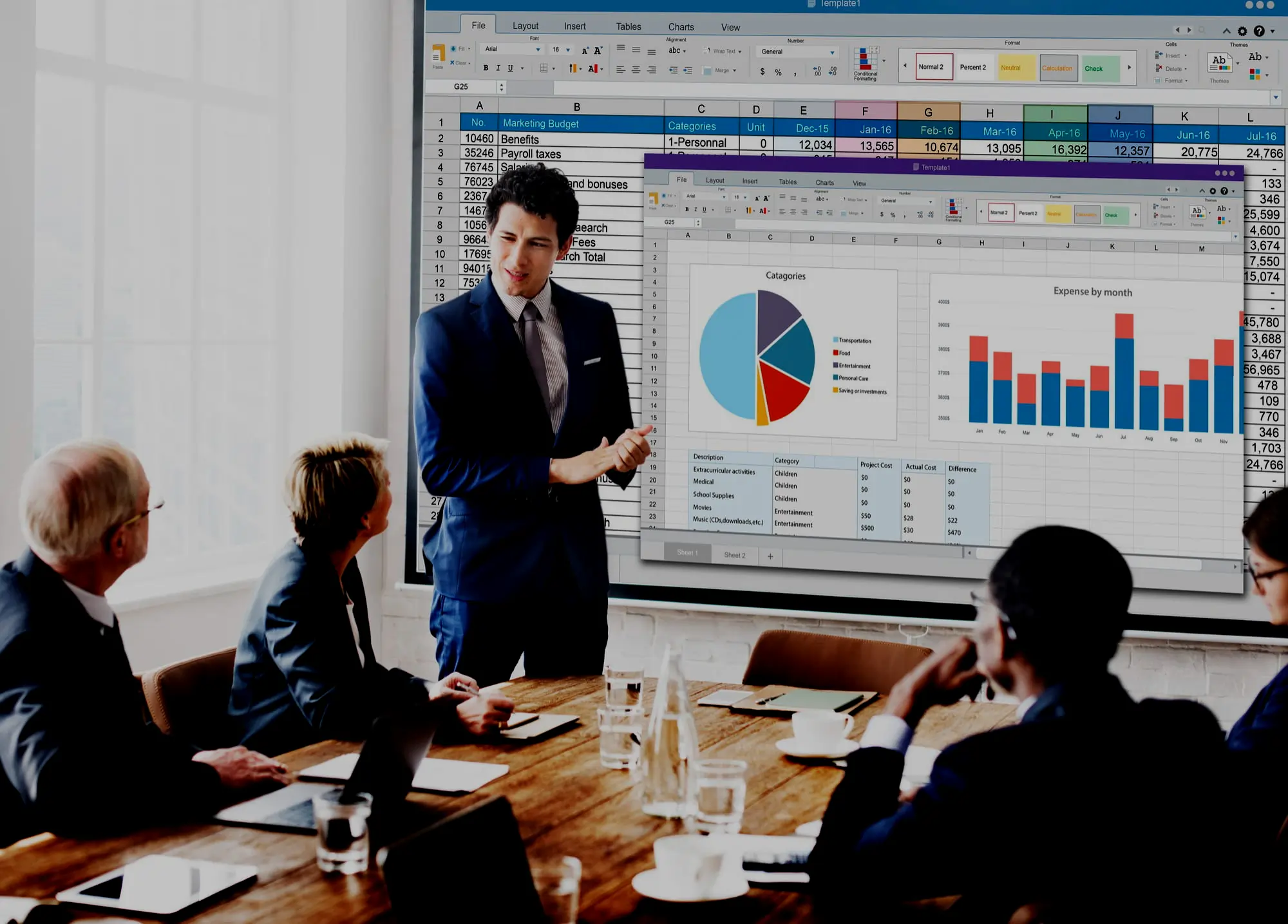
Data Science, Cloud Transformation, AI, BI Consulting and Data Engineering Services


-Blqbg2eG.jpg)


Data Science
Empowering organizations with data-driven decision-making through predictive modeling, machine learning, and insightful analytics to optimize performance.

Pulse Convert
Accelerate your transition from Tableau to Power BI with automated logic conversion. Effortlessly translate complex LOD expressions and dashboards while maintaining 100% data integrity and reducing migration time by up to 70%.
Genflow
Streamline your organizational workflows with an automated document and process management engine. Genflow optimizes data movement and task sequences to eliminate manual bottlenecks and improve cross-departmental efficiency.

OUR PRODUCTS
We offer a comprehensive range of products tailored to enhance your business efficiency. From Magic grid to Custom Charts, we ensure your success with cutting-edge strategies and dedicated support.
Decision Pulse
Convert complex datasets into strategic roadmaps with high-impact predictive modeling. Decision Pulse provides executive-level clarity on market trends and operational performance, allowing your leadership team to plan with objective confidence
Pulse QA
Ensure total data reliability with an automated quality assurance framework. Pulse QA systematically validates report accuracy and data consistency across your BI ecosystem, identifying discrepancies before they reach your decision-makers.
Power BI Load Testing Solution
Test and optimize your Power BI reports under high load scenarios, ensuring scalability and performance in demanding environments.
Power BI Custom Charts
Enhance your Power BI reports with custom charts designed to bring advanced data insights and interactive features tailored to your needs.
Power BI Magic Grid
Organize and display Power BI visuals seamlessly with Magic Grid, a customizable layout solution for an optimal viewing experience.

Pulse Convert
Accelerate your transition from Tableau to Power BI with automated logic conversion. Effortlessly translate complex LOD expressions and dashboards while maintaining 100% data integrity and reducing migration time by up to 70%.
Genflow
Streamline your organizational workflows with an automated document and process management engine. Genflow optimizes data movement and task sequences to eliminate manual bottlenecks and improve cross-departmental efficiency.
Decision Pulse
Convert complex datasets into strategic roadmaps with high-impact predictive modeling. Decision Pulse provides executive-level clarity on market trends and operational performance, allowing your leadership team to plan with objective confidence
OUR PRODUCTS
We offer a comprehensive range of products tailored to enhance your business efficiency. From Magic grid to Custom Charts, we ensure your success with cutting-edge strategies and dedicated support.
Pulse QA
Ensure total data reliability with an automated quality assurance framework. Pulse QA systematically validates report accuracy and data consistency across your BI ecosystem, identifying discrepancies before they reach your decision-makers.
Power BI Load Testing Solution
Test and optimize your Power BI reports under high load scenarios, ensuring scalability and performance in demanding environments.
Power BI Custom Charts
Enhance your Power BI reports with custom charts designed to bring advanced data insights and interactive features tailored to your needs.
Power BI Magic Grid
Organize and display Power BI visuals seamlessly with Magic Grid, a customizable layout solution for an optimal viewing experience.

About Us
Office Solution AI Labs is a leading data analytics and consulting firm that empowers businesses with data excellence. Headquartered in Chicago, we have been delivering exceptional value to our clients since 2012, and have catered to over 500 Fortune Enterprises.
As a niche consultancy firm, we offer a broad suite of "Impact Consulting" services and end-to-end solutions, helping large and mid-market organizations plan, grow, structure, and technology-enable their businesses. Our solutions are designed to bring immediate business benefits to our global customers, and we leverage big data, statistical and mathematical modelling techniques, social analytics, and mobile descriptive analytics to provide new business insights.
With a steadfast commitment to quality and timeliness, we have established an impressive track record of serving clients across the United States, the United Kingdom, Canada, Europe, and Dubai. Drawing from a cumulative experience of 10 years in the IT industry, encompassing over 1000 man years of offshore delivery, we offer a wealth of expertise.
We recognize the growing importance of analytics in improving ROI, and we help organizations solve the challenges they face when adopting analytics. By bridging the gap between data formation and consumption, we ensure that analytics yield the optimum business impact.
At Office Solution AI Labs, we are dedicated to enabling long-term sustained success for our clients. We provide innovative solutions that improve business performance and turn initiatives into reality. Contact us today to learn more about how we can help your organization unlock the power of data.
Offices: UK | US | UAE | Singapore | Germany | India
Note: Office Solution AI Labs is an operating subsidiary of DigIndia Innovation Solution,Our Parent Company



Why Choose Us
At Office Solution AI Labs, we place our clients at the center of our strategy. Our focus is on closing the critical gap that many organizations face: the disconnect between generating data and actually using it to drive ROI. While many firms can create analytics, we ensure those insights are consumed and integrated effectively to produce measurable business impact.
Our Approach
We bridge the implementation gap by unifying the four pillars of the data lifecycle:
- Creation: Building robust data models.
- Consumption: Ensuring insights are accessible to decision-makers.
- Correction: Refining logic based on real-world performance.
- Fusion: Integrating analytics into the heart of business operations.
Proven Expertise
With over a decade of experience, we have successfully delivered solutions for global leaders across diverse sectors, including Retail, CPG, Banking, Healthcare, Social Media, CRM, Supply Chain, and Telecom.
A Culture of Innovation
We don’t just follow industry standards; we challenge them. By constantly experimenting with new methodologies and learning from every project, we stay ahead of the curve. As an Authorized Microsoft and ECIF Partner, we bring the latest technological advancements directly to our clients, ensuring their data strategy remains a long-term competitive advantage.
Why Choose Us
At Office solution AI Labs, we place our clients at the center of our strategy. Our focus is on closing the critical gap that many organizations face: the disconnect between generating data and actually using it to drive ROI. While many firms can create analytics, we ensure those insights are consumed and integrated effectively to produce measurable business impact.
Our Approach
We bridge the implementation gap by unifying the four pillars of the data lifecycle:
- Creation: Building robust data models.
- Consumption: Ensuring insights are accessible to decision-makers.
- Correction: Refining logic based on real-world performance.
- Fusion: Integrating analytics into the heart of business operations.
Proven Expertise
With over a decade of experience, we have successfully delivered solutions for global leaders across diverse sectors, including Retail, CPG, Banking, Healthcare, Social Media, CRM, Supply Chain, and Telecom.
A Culture of Innovation
We don’t just follow industry standards; we challenge them. By constantly experimenting with new methodologies and learning from every project, we stay ahead of the curve. As an Authorized Microsoft and ECIF Partner, we bring the latest technological advancements directly to our clients, ensuring their data strategy remains a long-term competitive advantage.

Our Clients
Our valued clients are the heart of our business. We take pride in fostering long-lasting partnerships built on trust and exceptional service.

















We've partnered with the best to bring you the latest



Testimonials


Testimonials
We focus on client satisfaction and aim to exceed expectations with every project. Our team is dedicated to delivering exceptional results.
US Office
3190 S Vaughn Way Suite 550, Aurora, CO 80014, United States
+1(315) 5631684
US@innovationalofficesolution.com

Contact Us



