Designing High-Performance Enterprise Analytics Frameworks: Why Strategic Business Intelligence and Consulting Shape Long-Term Operations
 0|
0| 0
0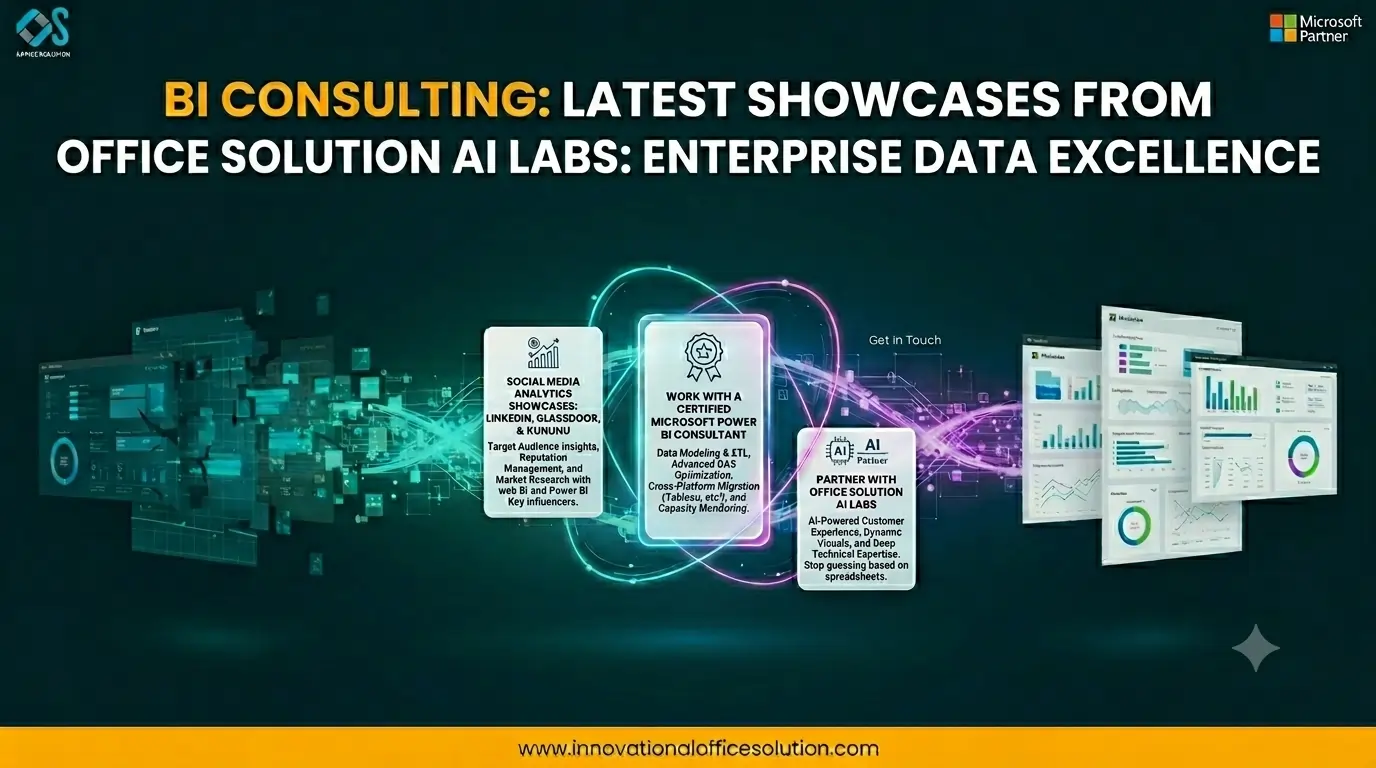
Table of Contents
Moving Past Superficial Reports to Clean Data Architecture
Modern mid-market enterprises and global corporate entities handle a massive, daily volume of operational datasets, transaction tables, and customer touchpoints. While gathering this raw data has largely become automated through modern cloud repositories, refining and transforming this data into a verified roadmap for corporate strategy remains a major operational hurdle. Many executive teams assume that purchasing database software licenses and assigning internal data analysts to build basic charts satisfies the requirements of a data-driven strategy. This surface-level approach creates deep technical debt, as simple visuals lack the foundational strength to scale with a growing business. True analytical maturity requires deep engineering expertise to build a highly performant, resilient, and secure semantic data framework.
When underlying data models are built without advanced technical architecture, performance issues surface immediately across the organization. Front-end visual reports suffer from extreme loading delays, automated data refreshes freeze during critical management meetings, and different internal departments present conflicting totals for identical business metrics. This breakdown in core data consistency destroys corporate trust, delays strategic decision-making, and forces teams right back into running manual, disconnected spreadsheets. Overcoming these deep-tier infrastructure bottlenecks requires a professional business intelligence consultant who looks past cosmetic chart layouts to engineer an optimized, unified data fabric. Investing in strategic business intelligence consulting services provides your organization with an automated, singular source of truth, turning unorganized raw data into a reliable asset that powers daily execution and predictable commercial growth.
To build a truly agile enterprise, an organization must transition away from legacy reporting habits where data is siloed by department. Instead, a successful framework relies on deep semantic layer architecture where data logic is centralized. When a business relies on disconnected data extracts, it creates fragmented analytical definitions. For example, the sales team's definition of "active revenue" might vary from the finance team's ledger records due to differences in processing schedules or filter applications. This mismatch slows down performance and destroys trust in the analytics system. Resolving these challenges is the core focus of intelligent business consulting, which aims to engineer robust analytical pipelines rather than merely polishing visual interfaces.
Establishing Enterprise Trust: The Performance Edge of Professional Engineering
Successfully executing a modern corporate analytics strategy requires a meticulous blend of software engineering principles, advanced relational database design, and deep cross-functional business strategy. General technology generalists or internal IT managers rarely possess the granular platform knowledge needed to optimize cloud tenants, configure robust row-level security parameters, or structure large-scale semantic models that remain highly performant. For this reason, fast-growing mid-market companies and global enterprises actively collaborate with specialized engineering consultants. An engineering-focused consultancy views data infrastructure as a production-grade software integration challenge, ensuring that pipeline connections remain exceptionally fast and accurate even when processing hundreds of millions of relational database rows.
By choosing a dedicated data implementation partner like Office Solution AI Labs, your organization can permanently eliminate the human errors associated with manually manipulated spreadsheets. Instead, you build a fully integrated data ecosystem that aligns your engineering, sales, marketing, and operations teams around a single set of verified operational metrics. Implementing the core tenets of integrated business intelligence and consulting means building structural trust into your reporting architecture. This rigorous data governance ensures that executive leadership can access live, unvarnished insight into daily market performance, allowing them to capture emerging opportunities and confidently execute long-term corporate goals.
Furthermore, true optimization requires expertise from a seasoned expert. Many enterprises face rising cloud costs because their analytical workflows run unoptimized queries across multiple servers. Professional analytics engineering eliminates this waste by refining database indexing, staging queries effectively, and utilizing incremental storage models. This engineering precision ensures enterprise reports load instantly without requiring costly computing resources, allowing corporate teams to focus on strategy rather than system performance through advanced microsoft power bi consulting services.
Work with a Certified Microsoft Power BI Consultant
Building dashboards is simple; architecting an enterprise data framework requires deep expertise. Every certified expert on our engineering team brings deep hands-on experience in database management, data engineering, and predictive analytics.
When you collaborate with our consulting team, you gain direct access to technical specialists who specialize in:
- Data Modeling and ETL Pipelines: Extracting, transforming, and loading structured and unstructured data using Power Query and SQL. Our engineers prioritize server-side transformations and early data curation, keeping the operational semantic model clean and lightning-fast.
- Advanced DAX Optimization: Writing clean, efficient Data Analysis Expressions to minimize processing overhead and maximize query speeds. This eliminates calculation bottlenecks and ensures your executive dashboards load instantly during critical planning sessions.
- Cross-Platform Migration: Seamlessly shifting your corporate reports from legacy systems—such as Tableau, QlikView, IBM Cognos, or SAP Business Objects—directly into Microsoft Fabric and Power BI without data loss. We map calculations and data sources precisely to ensure continuity and enhanced performance.
- Capacity Monitoring: Running comprehensive load testing tools and monitoring premium capacity usage to control enterprise cloud computing costs. We prevent unexpected cost spikes by fine-tuning underlying data structures and partition strategies.
Departmental Visibility: Optimizing Cross-Functional Strategy
To unlock genuine commercial value, modern business intelligence must be tightly integrated into the daily operational routines of every core business unit. In high-performing sales divisions, this means moving past lagging sales totals to track live pipeline velocity, historical win rates, and forward-looking deal trajectories. By utilizing built-in analytical capabilities like Power BI Key Influencers, sales leaders can isolate the exact variables—such as product mix, pricing tiers, or contract lengths—that push an account from an introductory lead to a closed win. This allows teams to optimize customer engagement based on clean data patterns rather than subjective intuition.
Similarly, marketing and financial divisions require real-time visibility to optimize complex corporate budgets. Marketing groups use Power BI Relationships to link distinct data streams from digital platforms, ad networks, and CRM tools together. This allows them to track multi-touch attribution models, evaluate changing consumer habits, and run hyper-targeted campaigns that maximize return on ad spend through insights gained from new BI tools. For corporate finance departments, our data architectures automate the assembly of cash flow statements, operational expense reports, and multi-tier balance sheets. Financial analysts can leverage these models to run rapid "what-if" scenarios, build predictive cash flow forecasts, and optimize investment strategies based on dynamic market variables, ensuring complete alignment between long-term strategic plans and actual daily performance.
Beyond typical financial tracking, operational and human resource teams require deep analytical visibility to manage complex workflows. In large operations, scheduling conflicts and supply chain delays can impact production output. When internal reporting is slow, managers cannot respond quickly to changing business conditions. By building unified data pipelines, corporate teams can monitor key metrics across multiple regions from a single interface. This centralized transparency eliminates operational delays and ensures localized business units operate in perfect sync with corporate headquarter strategies.
Tailored Visual Frameworks Across Diverse Industry Verticals
Data structures differ drastically between industry domains. A semantic model engineered to handle millions of daily retail transactions requires a completely different design approach than a highly regulated healthcare data warehouse or a high-velocity manufacturing ecosystem. A premier data engineering group understands these unique constraints and designs custom solutions tailored to specific vertical-market rules through robust business intelligence consulting services.
Healthcare Frameworks
In the healthcare sector, data integration directly impacts clinical speed, resource allocation, and patient delivery. Advanced web BI systems allow providers to aggregate electronic health records, clinical research data, and hospital staffing metrics into a secure, unified environment. Utilizing structured Power BI Relationships enhances cross-departmental data integration, giving administrators the visibility needed to improve patient outcomes, accelerate drug development, and optimize healthcare delivery while maintaining strict regulatory compliance.
Manufacturing Systems
Manufacturing operations rely entirely on asset tracking, timing, and minimizing machine downtime. By integrating factory-floor IoT sensors, warehouse management systems, and ERP software into a unified platform, engineering teams can use Power BI Key Influencers to improve production efficiency, reduce waste, and optimize inventory. This proactive data strategy streamlines operational processes, protects material yields, enhances performance, and prevents sudden supply chain interruptions.
BFSI Architecture (Banking, Financial Services, and Insurance)
The financial services sector operates under strict regulatory compliance and requires exceptionally low data latency. Organizations rely on top-tier analytical models to deploy secure data governance models that can process millions of daily transactions safely. These secure frameworks allow compliance teams to track risk exposures in real time, help portfolio managers optimize asset distributions, enhance fraud detection, and give risk officers the automated analytical tools they need to improve credit risk assessments instantly.
Retail and FMCG Sectors
High-velocity retail and fast-moving consumer goods sectors rely on fast product turnover and thin operational margins. Our custom web BI insights empower retailers to personalize marketing campaigns, optimize pricing structures, and improve supply chain management in real time. These data-driven decisions enhance customer satisfaction, refine market strategies, optimize inventory based on actual consumer behavior, and ensure optimal stock levels across multiple distribution channels.
Unstructured Web BI Frameworks: Extracting Market Sentiment
One of the clearest indicators of an advanced data consultant is their ability to ingest, transform, and analyze data that lives completely outside the boundaries of a traditional internal database. A major frontier in modern business intelligence is extracting deep, actionable value from employee and consumer feedback across public web platforms. Office Solution AI Labs has developed highly specialized solutions designed to solve this exact problem, turning qualitative public sentiment into structured quantitative strategies.
Social Media Analytics – LinkedIn
Professional brand positioning directly affects enterprise sales pipelines and corporate authority. Our Social Media Analytics-LinkedIn solution functions as a high-tier web BI platform that pulls deep audience demographic data and engagement metrics into a central hub. By leveraging built-in analytical engines, the platform processes content performance trends, tracks follower growth, and maps out critical engagement factors through Power BI Relationships. This enables corporate communications teams to move past simple "like counts" and adjust their organic and paid distribution strategies using clear, empirical trend data to enhance engagement strategies.
Reputational Analytics – Glassdoor
In a competitive talent market, employer branding directly impacts recruitment costs and retention metrics. Our Social Media Analytics-Glassdoor framework gives human resources and executive leadership teams a direct window into internal organizational health. The platform normalizes review scores, tracks sentiment shifts across different departments over time, and utilizes Power BI Key Influencers to analyze employee feedback. This gives leadership the exact, unvarnished insight needed to proactively resolve culture bottlenecks, improve workplace sentiment, optimize recruitment investments, and enhance your branding efforts to achieve your business goals.
Market Intelligence – Kununu
For organizations operating across international markets or managing distributed European teams, tracking regional workplace platforms is vital for competitive benchmarking. Our Social Media Analytics-Kununu framework harvests local market feedback and organizes it into intuitive, easily read dashboards. By applying structured web BI transformations, businesses can gather actionable insights that inform product development, run clear side-by-side market analyses, keep an eye on local competitor salaries, and uncover shifting regional employment expectations. This structural insight provides product development and corporate expansion teams with a distinct, data-backed edge.
AI-Powered Customer Experience: The Convergence of AI and BI
In today's competitive business landscape, delivering an exceptional customer experience is crucial for success. Artificial intelligence (AI) and business intelligence consulting can empower your business to transform customer interactions and drive growth. AI-powered BI online consulting provides businesses with the tools and expertise to analyze vast amounts of customer data to uncover hidden insights, identify customer pain points and unmet needs, and personalize customer experiences in real time.
Predicting customer behavior and proactively addressing their needs is essential. Additionally, measuring and improving customer satisfaction and loyalty leads to significant benefits, including increased customer satisfaction, improved retention, personalized interactions, data-driven decisions, and a competitive advantage in the marketplace. True AI integration is completely dependent on clean, well-governed data. If an underlying data model is structurally flawed, any machine learning framework or artificial intelligence layer deployed on top will simply generate inaccurate conclusions at an accelerated rate.
When properly architected by an experienced partner, AI-powered analytics models change how businesses interact with their markets. These systems run real-time sentiment analysis on inbound customer interactions, predict account churn risk based on product usage metrics, and provide dynamic product personalization algorithms that maximize customer lifetime value. This shifts your analytical stack from a passive look at historical data into an active operational engine that drives daily revenue growth, protects market share, and delivers a sustained competitive advantage.
Partner with Office Solution AI Labs
Stop guessing based on incomplete spreadsheets. Partner with a dedicated data engineer who understands backend modeling, advanced analytics, and smooth enterprise software integration. As an authorized implementation partner across major data environments—including Snowflake, Databricks, Amazon, Automation Anywhere, Denodo, DataDog, New Relic, and Elastic—Office Solution AI Labs has the deep technical expertise required to make your data work for you.
Get clear visibility into your operations, control your premium capacity overhead costs, and give your executive leadership team the real-time insights they need to execute corporate strategies successfully. Reach out to our technical engineering team today to audit your existing data infrastructure and build a highly scalable analytical engine designed for the modern economy.
Verified Resource Directory & Technical Documentation
To read further about enterprise data architecture, framework optimization, and migration paths, explore our verified technical document repositories:
- To view our core business intelligence frameworks and service offerings, review our directory at BI Consulting.
- To audit your data infrastructure or connect directly with our engineering specialists, access our portal at Contact Us.
- For a detailed breakdown of building a high-performance enterprise data fabric, read our guide at BI Consulting Services Enterprise Data Framework Strategy.
- To learn more about modernizing enterprise data infrastructure and managing cloud capacity, read our deep-dive analysis at Power BI Consulting Services Enterprise Data Architecture.
- To learn how to translate raw data analytics into strategic executive decisions, read our strategy guide at Transforming Raw Analytics into Corporate Strategy Microsoft Power BI Consulting Services.
- For clear methodologies on updating legacy architecture to modern cloud standards, access our data modernization roadmap at Modernizing Enterprise Data Infrastructure Power BI Consulting Services.
Frequently Asked Questions (FAQs)
1. What distinguishes "intelligent business consulting" from standard data analysis?
Standard analysis often focuses on surface-level visual reporting. In contrast, intelligent business consulting centers on backend engineering. We focus on building a robust semantic layer, automated ETL processes, and scalable data architectures that serve as a single source of truth for the entire enterprise.
2. Why is a star-schema design important for business intelligence?
A star-schema design is critical because it separates factual numeric data from descriptive filtering attributes. This architecture significantly enhances query speeds, simplifies data modeling, and ensures that front-end reports remain highly responsive even under heavy concurrent user loads.
3. How does Office Solution AI Labs approach AI and BI integration?
We view AI as a layer that sits on top of a clean, well-governed data foundation. We help clients implement machine learning models for predictive analytics—such as churn prediction, sentiment analysis, and demand forecasting—ensuring the outputs are accurate and actionable.
4. What are the primary benefits of outsourcing BI consulting services?
Outsourcing provides immediate access to specialized expertise in data engineering, DAX optimization, and cloud architecture. It allows your internal teams to focus on core business objectives while ensuring your analytics platform is built using industry best practices to avoid technical debt.
5. How do we get started with an infrastructure audit?
You can initiate the process by reaching out to our engineering team through our contact portal. We will schedule a discovery session to evaluate your current data landscape, identify primary operational pain points, and outline a custom strategy aligned with your long-term corporate goals.


