Enterprise Decision Automation Platform: Beyond BI Dashboards
 0|
0| 0
0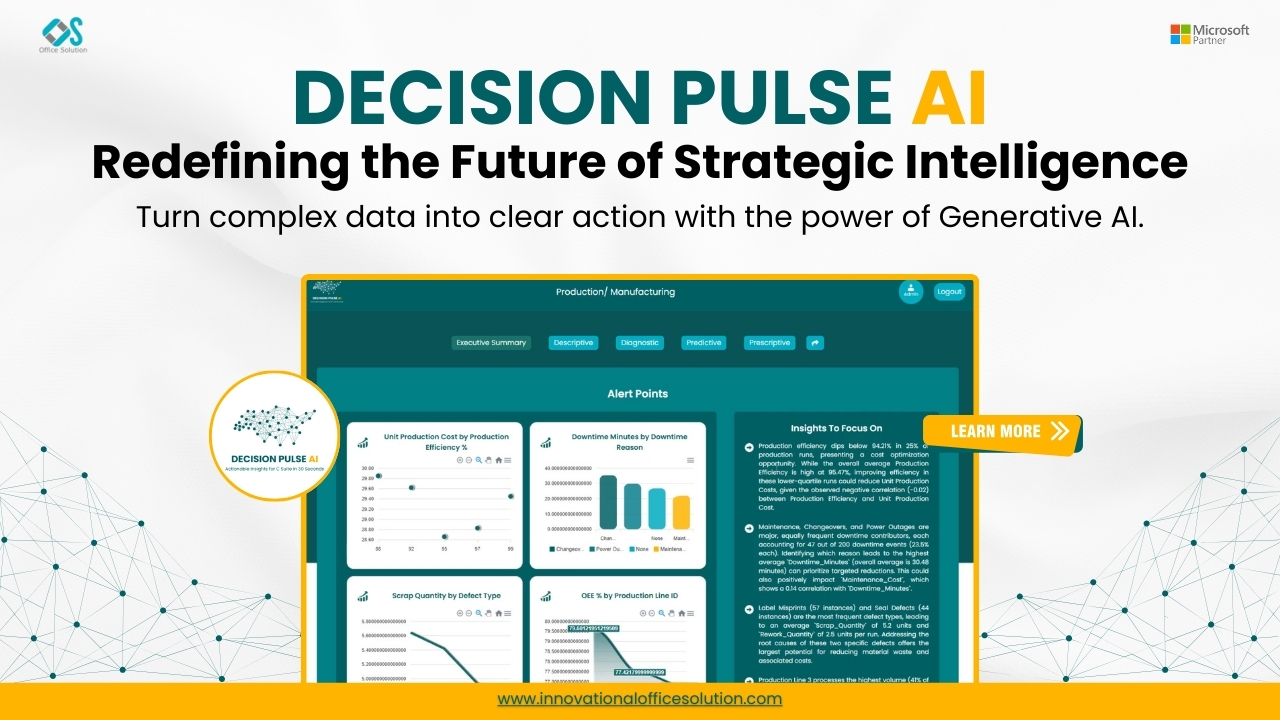
Table of Contents
The Strategic Shift From Passive Dashboards to Autonomous Execution
Modern corporate environments do not suffer from a scarcity of information. For over two decades, organizations have poured millions of dollars into transactional infrastructure, data warehouses, and visualization layers. Yet, a fundamental systemic flaw remains: charts do not make choices. Executive leadership teams routinely find themselves staring at beautifully rendered, color-coded graphs that highlight a multi-million dollar operational vulnerability, only to realize that the actual correction requires weeks of meetings, manual cross-departmental coordination, and retrospective consulting engagements.
This structural lag between discovering an issue and executing a solution is known as the "decision gap." When data sits idle while market conditions shift, profitability vanishes. The legacy methodology of relying on humans to extract context from charts, draft strategies, and manually input corrections across disparate software systems is no longer viable. To maintain a competitive edge, corporate entities are transitioning to a comprehensive framework where systems of record evolve into systems of action.
This is where an enterprise decision automation platform completely redefines modern corporate operations. Instead of leaving data locked behind visual interfaces, modern architecture allows a unified intelligence layer to process live metrics, calculate optimal operational responses, and deploy specialized digital workflows to resolve corporate inefficiencies immediately.
Deconstructing the Limitations of Traditional Business Intelligence
To understand why a change is required, one must audit the existing data stack. The conventional data pipeline is linear, brittle, and heavily dependent on human intervention at every stage.
[Raw Data Sources] → [Data Pipeline/ETL] → [Static Dashboard] → [Human Review] → [Manual Execution]
1. The Reporting Lag
Traditional corporate setups rely on extract, transform, and load (ETL) pipelines that batch process data overnight or weekly. By the time an anomaly appears on a leadership dashboard, the market event has already concluded, leaving teams to perform post-mortem analyses rather than active course corrections.
2. Cognitive Overload and Dashboard Fatigue
Enterprises routinely maintain thousands of individual dashboards across various departments. Operational leaders spend hours toggling between platforms, trying to correlate disparate pieces of information. When every metric is highlighted as critical, nothing receives proper attention.
3. The Execution Disconnect
A classic visualization tool operates strictly as a one-way mirror. It reveals what is occurring within an ecosystem but possesses no capability to interact with that ecosystem. If a dashboard flags a severe inventory shortfall, the supply chain specialist must close the visualization tool, open an ERP system, manually calculate purchase orders, and route approvals through email. This manual transition creates opportunities for human error and operational friction.
Implementing business intelligence automation using AI removes these friction points. By combining ingestion, logic processing, and transactional execution into a single loop, organizations can compress the time-to-resolution from days to milliseconds.
Architectural Breakdown of Decision Pulse AI
True operational autonomy requires a system that does more than parse semantic phrases or generate text. It demands a deterministic engine capable of contextual understanding, multi-variable optimization, and secure cross-platform workflow execution. The foundational architecture of Decision Pulse AI is engineered around a four-stage loop designed to completely automate corporate processes.
Stage 1: Continuous Contextual Ingestion
Rather than relying on isolated data tables, the platform links into the company's entire digital architecture. This includes customer relationship management (CRM) systems, enterprise resource planning (ERP) systems, financial ledgers, and external market indicators. This continuous ingestion provides the system with a complete overview of the company's operational state.
Stage 2: Pattern Isolation and Anomaly Detection
With background processing continuously running, the platform identifies micro-trends and operational anomalies that human analysts would miss. For example, it can detect a minor but steady margin contraction across a specific combination of product SKUs and regional distributors before it impacts the quarterly financial statements.
Stage 3: Prescriptive Logic Evaluation
Once an anomaly is identified, the platform shifts from diagnosis to resolution. It runs simulations across historical datasets to determine the financial and operational impact of various corrective measures, isolating the option that delivers the highest return with the lowest risk profiles.
Stage 4: Autonomous Transactional Action
This is the critical differentiator. Instead of producing an alert for a human to handle, the platform uses specialized digital agents to log directly into operational software and execute the necessary adjustments. Whether updating a pricing database, reallocating marketing budgets, or triggering supply chain purchase orders, the resolution is deployed automatically.
To discover how these technical layers combine to optimize core corporate processes, explore the framework details available through For more.
Domain-Specific Operational Use Cases
To appreciate the scale of this operational evolution, it is helpful to examine how an integrated automation layer behaves across specific corporate business units.
Supply Chain and Inventory Optimization
In global logistics, a delay at a single port or a sudden spike in raw material costs can disrupt production lines worldwide.
The Legacy Approach: A logistics manager views a monthly report showing a component shortage, leading to rushed shipping fees and production stops.
The Automated Approach: An enterprise decision automation platform tracks global shipping feeds alongside internal inventory levels. If a delay is detected, the platform automatically reviews alternative suppliers, verifies contract pricing, confirms quality metrics, and issues a backup purchase order within approved spending limits to avoid any manufacturing delays.
Dynamic Financial Margin Management
For businesses managing thousands of stock-keeping units (SKUs) across multiple digital commerce channels, static pricing models lead to missed revenue.
The Legacy Approach: Financial analysts review quarterly gross margin reports and manually adjust base prices weeks after competitor adjustments occur.
The Automated Approach: The platform monitors live competitor pricing, localized demand shifts, and real-time shipping cost changes. It then adjusts product margins instantly, protecting company profitability during market fluctuations without requiring constant manual oversight.
Eliminating the High Costs of Manual Consulting
For decades, mid-market and enterprise organizations have relied on external management consultants to resolve complex structural challenges. When a business unit encounters performance bottlenecks, external teams are brought in to interview staff, download spreadsheets, run offline analyses, and deliver a static slide deck of recommendations weeks later.
This traditional consulting model has significant downsides:
- Extreme Resource Drain: Corporate consulting fees routinely consume a large portion of operational budgets.
- Perishable Insights: By the time a slide deck passes corporate compliance and executive review, the market realities that created the issue have evolved, rendering the recommendations obsolete.
- No Execution Capabilities: External consultants provide suggestions, but they do not write code, configure database schemas, or update operational software. The burden of execution remains entirely on the internal IT and operations teams.
Replacing these slow, manual review cycles with an ongoing, programmatic intelligence layer allows organizations to address issues instantly. Businesses can learn more about moving away from human-dependent analytical frameworks by reading the detailed analysis at detailed blog.
Safeguarding Integrity: The Human-in-the-Loop Framework
Moving toward operational autonomy often raises reasonable concerns among risk management and compliance officers: How does an organization ensure an automated platform does not execute high-risk transactions during unusual market anomalies?
The solution lies in a strict, tiered human-in-the-loop validation model. Autonomy is not an all-or-nothing configuration; it is managed through precise operational thresholds.
| Transaction Risk Level | Financial Threshold | Action Mechanism | Human Involvement |
|---|---|---|---|
| Low Risk | Under $5,000 | Full Autonomy | Post-action notification log |
| Moderate Risk | $5,001 - $50,000 | Conditional Autonomy | Approval required via communication channel (e.g., Teams/Slack) |
| High Risk | Over $50,000 | Assisted Planning | System presents options; human signs off on execution |
This matrix guarantees that the platform handles repetitive operational tasks automatically, while high-stakes strategic choices remain firmly under human direction. To understand how automated systems integrate securely into enterprise workflows, explore explore.
Technical Integration and Deployment Frameworks
Integrating an enterprise-grade automation engine into a complex corporate infrastructure requires a structured deployment approach. A typical implementation follows a clear, four-phase path to ensure data security and operational reliability.
[Phase 1: Ingestion & Read-Only] → [Phase 2: Dark Mode Simulation] → [Phase 3: Guardrailed Automation] → [Phase 4: Full Autonomy]
Phase 1: Read-Only Ingestion and Schema Mapping
The engine connects to existing repositories, data warehouses, and application programming interfaces (APIs) in a strict read-only configuration. During this initial phase, the platform maps data structures and establishes baseline performance metrics without making any changes to the environment.
Phase 2: Dark Mode Operational Simulation
The platform actively monitors live data flows and calculates optimization decisions, but does not execute them. Instead, it records its planned actions to an audit log. Human analysts can then review these logged decisions against actual market outcomes to verify the platform's accuracy and logic.
Phase 3: Guardrailed Automation
The platform is granted execution privileges, but only within tightly defined operational parameters and low spending limits. If the platform suggests an action outside these boundaries, it automatically routes the decision to a human supervisor for manual approval.
Phase 4: Full Operational Autonomy
Once the platform consistently proves its reliability over several quarters, the guardrails are scaled up. This enables full automated execution across core business units, allowing the organization to achieve maximum operational efficiency.
To examine how real-time automation layers run safely across complex enterprise networks, refer to the technical breakdown at technical breakdown.
The Value of Streamlined Data Infrastructure
An automated execution engine is only as reliable as the data supporting it. Many organizations discover that their core operational data is fragmented across legacy database platforms, creating data silos that hinder automated workflows.
For instance, when a company maintains its historical datasets across fractured systems, an automation layer cannot properly assess past trends to make accurate predictions. Streamlining your underlying infrastructure--such as moving from fragmented visualization software to a single, unified enterprise environment--is a critical foundational step.
[Legacy Data Silos] → [Infrastructure Modernization] → [Unified Data Layer] → [Decision Automation]
This structural consolidation ensures that your operational data flows cleanly into your automated execution systems. For a detailed guide on modernizing your data architecture and migrating legacy reporting setups into a unified framework, see check this out.
Scaling Up Operational Efficiencies
Transitioning to an enterprise decision automation platform is a fundamental shift in how a modern corporation operates. By connecting data ingestion directly to transactional execution, companies eliminate the delays, overhead costs, and human errors associated with manual reporting.
The future of business efficiency belongs to organizations that treat data as an active asset rather than a static record. By deploying targeted digital agents to monitor, analyze, and resolve operational issues in real time, enterprises can lower analytical expenses, eliminate slow consulting cycles, and ensure their business adapts instantly to changing market conditions.
To evaluate these automated workflows within your current corporate infrastructure, you can set up an initial sandboxed environment by visiting the Free trial portal.
Frequently Asked Questions (FAQs)
1. How does an enterprise decision automation platform differ from a standard CRM or ERP workflow engine?
Standard CRM or ERP workflow engines rely entirely on rigid, pre-programmed "if-this-then-that" rules written by human administrators. They cannot analyze multiple data streams, handle unpredicted market shifts, or optimize transactions based on historical patterns. An enterprise decision automation platform uses advanced prescriptive logic to evaluate real-time conditions, run balance-sheet simulations, and design custom operational responses that cross multiple software platforms.
2. What security measures prevent the platform from sharing sensitive company data externally?
The platform uses enterprise-grade security protocols, including end-to-end data encryption, strict role-based access controls (RBAC), and deployment options within isolated cloud environments. The system acts on data to execute operational tasks without exposing internal business metrics or customer data to public networks.
3. Can the system operate alongside our existing data warehouses and business intelligence tools?
Yes. The platform is designed to sit on top of your existing data infrastructure. It connects directly to your current data warehouses, data lakes, and visualization setups via secure APIs, turning your existing reporting dashboards into active, operational execution systems.
4. How much human oversight is required once the system is fully deployed?
Human oversight is completely customizable through operational guardrails. Executives can set specific financial and risk thresholds where the platform can act fully autonomously on day-to-day tasks, while automatically routing complex, high-value strategic decisions to leadership teams for final approval.
5. What is the typical timeframe required to see measurable operational results?
Most organizations see measurable improvements within the first 30 to 45 days of deployment. Initial results usually come from identifying automated cost savings, such as optimizing digital marketing spend or detecting and correcting supply chain inefficiencies that human analysts had missed.


