Enterprise Decision Automation Platform: Beyond BI Dashboards
 0|
0| 0
0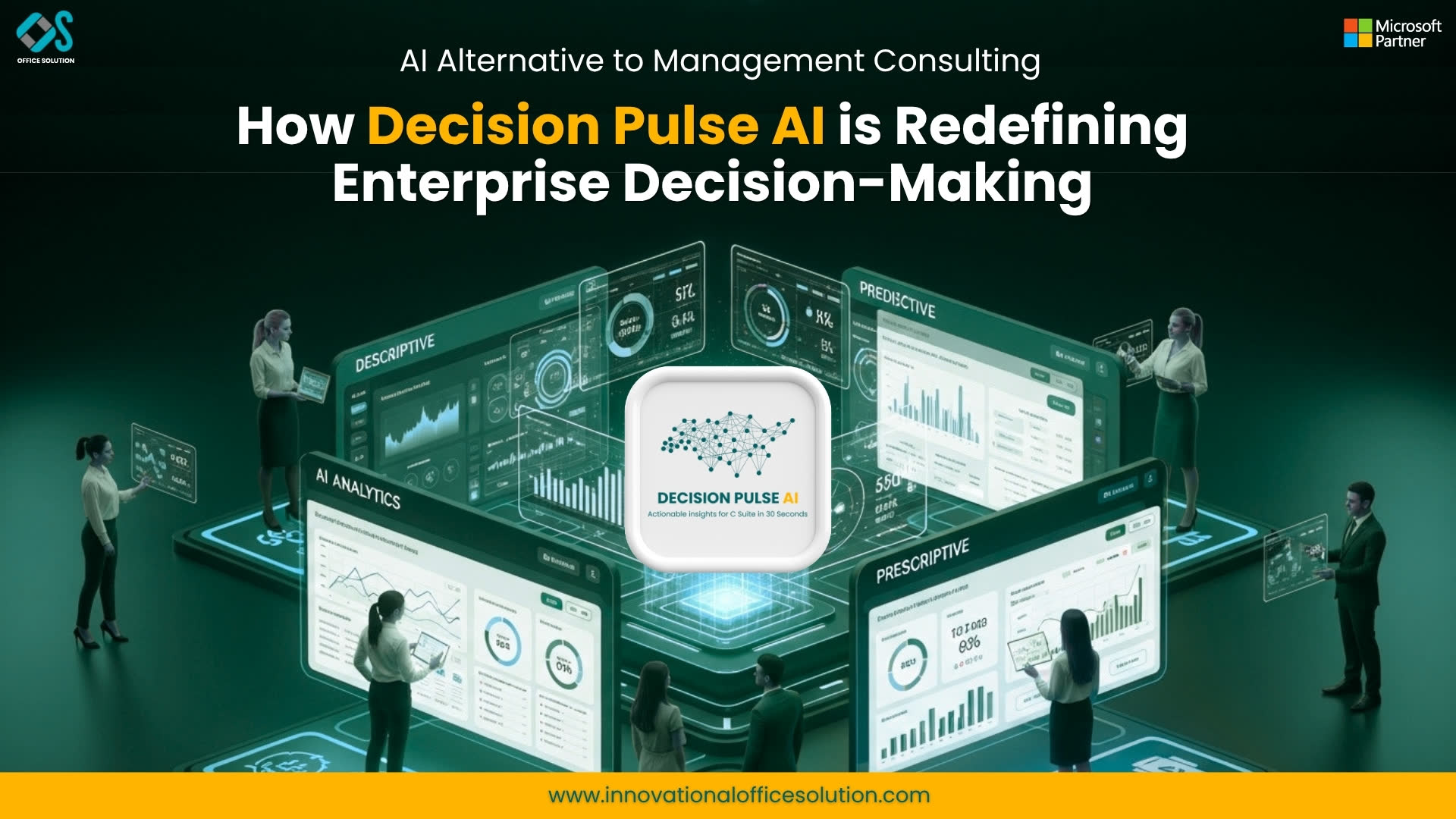
Table of Contents
Dismantling the Dual Friction: Legacy ETL and Advisory Overreliance
Modern enterprise organizations face a double bind that quietly erodes profitability and slows operational speed. On one side sits a technical debt crisis caused by legacy data integration tools; on the other lies an overreliance on slow, expensive external advisory retainers.
For years, enterprises relied on legacy data integration suites to move raw records from operational databases into enterprise warehouses. However, with major shifts in the open-source software ecosystem—specifically the deprecation and end-of-life support for open-source data integration frameworks—organizations are urgently searching for a modern Alternative to talend open studio and a long-term Alternative to talend. At the same time, when operational issues occur, leadership teams routinely bring in an external Business Management consultant or engage traditional Management Consulting firms to diagnose the friction.
This combined approach creates severe operational delay. Technical teams spend months maintaining complex ETL jobs, while external consultants spend additional months building static diagnostic decks. To build real operational agility, modern enterprises are unifying data pipeline automation and strategic execution into a single, autonomous platform via Decision Pulse AI.
The Modern Alternative to Talend Open Studio for Data Integration
Data pipelines form the backbone of any enterprise analytics ecosystem. When legacy tools become unsupported or prohibitively expensive to license, data engineering teams are forced to make a strategic choice: migrate to another complex ETL maintenance tool or upgrade to an automated decision intelligence layer.
Evaluating a modern Alternative to talend requires looking beyond basic batch data movement. Traditional ETL software focuses solely on extracting data from source A, transforming schema formats, and loading records into database B. An advanced decision automation engine reimagines this entire data pipeline process through AI-driven data harmonization:
- Automated Data Hygiene: AI Data Agents continuously monitor incoming data streams, automatically resolving schema drift, missing records, and formatting anomalies without manual scripting.
- Zero-Pipeline Latency: Moves away from slow nightly batch jobs to continuous streaming ingestion, making operational data available for instant analysis.
- Lower Infrastructure Costs: Eliminates the need to build, host, and maintain heavy custom ETL servers, reducing total data infrastructure expenditure.
- Unified Pipeline-to-Execution Architecture: Connects data ingestion directly to decision logic, ensuring clean data immediately triggers operational workflows.
Disrupted Advisory Models: Modern Management Consulting Software
To navigate strategic pivots or resolve operational inefficiencies, enterprise leadership has traditionally relied on top-tier Consulting Management consulting engagements. Organizations regularly contract a Business Management consultant to evaluate underperforming business units, analyze market shifts, and draft strategic recommendations.
While classical advisory engagements offer value, their delivery model suffers from inherent structural constraints:
An enterprise decision automation platform functions as a continuous, internal Management Consulting engine. Rather than waiting three months for an external team to deliver a diagnostic deck, automated decision platforms evaluate incoming data in real time, simulate thousands of hypothetical counter-measures, and present risk-weighted, actionable steps instantly.
Comparing Legacy Systems vs. Enterprise Decision Automation
To evaluate the strategic impact of moving away from fragmented tools and traditional consulting models, consider how a global business responds to a sudden supply chain disruption:
| Operational Metric | Legacy Tools & Traditional Consulting Workflow | Enterprise Decision Automation Workflow |
|---|---|---|
| Data Ingestion & Hygiene | Complex manual ETL pipeline builds using legacy frameworks. | Automated Data Agents harmonize multi-source data continuously. |
| Problem Diagnosis | Business Management consultant conducts multi-week root cause analysis. | Natural language diagnostic engines pinpoint root causes instantly. |
| Strategic Planning | Advisory team drafts static recommendations in slide decks. | Simulation engines run thousands of scenario models in real time. |
| Operational Execution | Staff manually input changes across legacy ERP and CRM systems. | Autonomous action agents deploy pricing and inventory updates automatically. |
| Financial Impact | High advisory fees, ongoing pipeline maintenance costs, delayed execution. | Cuts total analytics, pipeline, and consulting overhead by up to 90%. |
Demystifying the Four Tiers of Analytics Maturity
Understanding why enterprises are replacing legacy tools requires examining the four stages of analytics maturity:
- Descriptive Analytics (What happened?): Summarizes historical performance into visual graphs.
- Diagnostic Analytics (Why did it happen?): Drills into historical variance to identify root causes.
- Predictive Analytics (What will happen next?): Applies statistical models to forecast future trends.
- Prescriptive Analytics (What specific action should we execute?): Simulates alternative operational strategies and automatically executes the optimal path forward in real time.
Legacy data integration tools and basic reporting dashboards operate strictly within descriptive and diagnostic boundaries. An enterprise decision automation platform unifies all four tiers into a single closed loop, injecting prescriptive logic and automated execution directly into active operational software.
The ROI of Autonomous Execution Frameworks
Transitioning from fragile data pipelines and periodic consulting retainers to an automated decision layer yields dramatic financial and operational gains.
By consolidating data harmonization, scenario simulation, and workflow execution into a single platform, enterprises eliminate redundant technology layers. Highly skilled data engineers are freed from writing custom ETL scripts, and executive teams no longer need to spend millions on recurring advisory retainers for routine operational diagnoses. The platform continuously monitors business KPIs, protects profit margins during market shifts, and executes strategic decisions at software speed.
Building the Autonomous Enterprise of Tomorrow
Relying on legacy ETL software that lacks modern support while spending millions on slow consulting retainers is no longer a viable growth strategy.
Deploying an enterprise decision automation platform represents the definitive step forward for modern organizations seeking total operational agility. By combining automated data integration, real-time scenario simulation, and autonomous execution agents, Decision Pulse AI bridges the gap between raw data and real-world results. Upgrade your data stack and transform your organization into a self-executing operational engine today with Decision Pulse AI.
Frequently Asked Questions (FAQs)
1. Why are organizations seeking an Alternative to talend open studio?
With major shifts and end-of-life support changes in open-source data integration ecosystems, enterprises require an Alternative to talend open studio that eliminates complex manual ETL scripting and provides automated, AI-driven data hygiene and real-time streaming integration.
2. How does Decision Pulse AI serve as a modern Alternative to talend?
Decision Pulse AI serves as an advanced Alternative to talend by unifying data ingestion, AI-powered schema harmonization, and real-time operational execution into a single platform, eliminating the need to maintain separate, complex ETL servers and pipelines.
3. How does an enterprise decision automation platform disrupt traditional Management Consulting?
Traditional Management Consulting engagements require multi-month study periods and high billable fees to deliver static diagnostic reports. An enterprise decision automation platform acts as a continuous internal advisor, analyzing operational inputs, running scenario simulations, and providing actionable steps in real time.
4. What is the business impact of replacing a traditional Business Management consultant with decision software?
By deploying an automated decision layer, organizations reduce their reliance on expensive external advisory retainers for routine operational diagnoses, accelerating strategy execution from months to seconds and cutting overall analytics and advisory costs by up to 90%.
5. How do autonomous action agents execute workflows across enterprise systems?
Autonomous action agents operate as specialized digital operators across core corporate functions—such as pricing, supply chain, and marketing. Once an optimal strategy is selected, these agents interact directly with connected CRMs, ERPs, and marketing tools to execute required updates automatically.


