Modern Enterprise Transition Framework: Tableau to Power BI Strategy
 0|
0| 0
0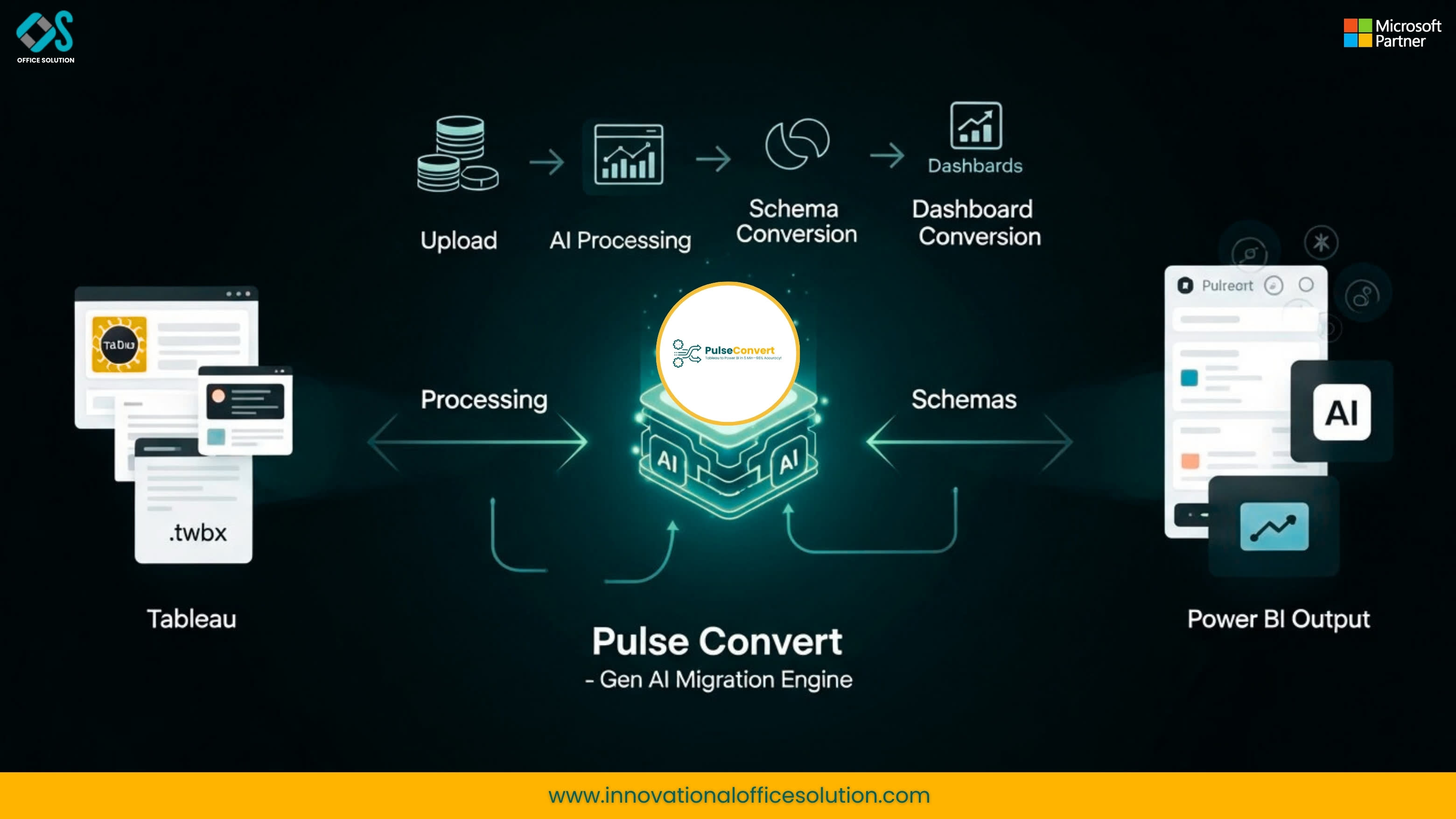
Table of Contents
Modern corporate decision-making depends on the speed, accessibility, and architectural reliability of business intelligence. Across US enterprise environments targeting Google USA standards, data engineering leadership teams face an imperative: consolidating fragmented reporting architectures into a unified, governed cloud infrastructure.
For years, organizations operated dual-stack setups, maintaining dedicated visualization layers alongside separate cloud data warehouses. Today, high total cost of ownership (TCO) and operational friction demand a shift toward unified software stacks. Executing a seamless transition requires selecting specialized Cloud Migration tools and Data Migration tools capable of migrating schema architectures, transactional semantics, and calculated metrics without interrupting daily business operations.
When evaluating modern Database Migration tools alongside business intelligence accelerators, technical leaders must address underlying data models. Upgrading your analytics architecture is not a simple visual copy-paste exercise; it is an overhaul of data lineage, calculation engines, and row-level security structures.
Evaluating Ecosystem Alignment: Tableau to Power BI Architectural Comparison
Transitioning between BI applications demands a structural understanding of how each platform queries and renders data. Tableau relies on a worksheet-centric layout where workbook charts are combined inside individual canvas containers. Conversely, Power BI uses a report-centric canvas engineered around a centralized, unified semantic model.
| Architectural Domain | Legacy Tableau Infrastructure | Modern Power BI & Fabric Environment |
|---|---|---|
| Data Engine & Storage | Hyper Extract Engine / Direct Connections | VertiPaq Engine / Direct Lake / Import |
| Logic & Calculation Syntax | VizQL, Level of Detail (LOD) FIXED/INCLUDE | Data Analysis Expressions (DAX) & M Syntax |
| Relationship Modeling | Ad-hoc Joins & Physical Data Blending | Formalized Star Schema & Relationship Cardinality |
| Security Architecture | Server User Filters & Tableau Site Roles | Entra ID, Row-Level Security (RLS), Object-Level Security |
Navigating these differences requires an enterprise Migration tool strategy that parses structural metadata rather than relying on manual redesigns.
Legacy System Decommissioning and Oracle Hyperion Modernization
Enterprise analytics environments often hold decades of legacy reporting debt. A major bottleneck for enterprise IT departments is identifying legacy BI tools for migrating Oracle Hyperion interactive reporting frameworks that have reached end-of-life support.
Legacy enterprise systems like Oracle Hyperion Interactive Reporting were built around static relational queries and client-server desktop delivery models. Replacing these systems alongside Tableau reporting layers requires systematic cataloging:
- Inventory Audit: Identify active, orphan, and redundant reports across all legacy servers.
- Schema Mapping: Map underlying relational database connections, custom SQL overrides, and stored procedures directly into scalable cloud data stores.
- Semantic Modeling: Rebuild complex multi-table queries into standardized Star Schema models optimized for real-time cloud analytical processing (OLAP).
Deploying unified Data Migration tools ensures that both financial reports originating from legacy Hyperion environments and operational dashboards built in Tableau are centralized into a single Power BI tenant.
Introducing Pulse Convert
To eliminate the months of grueling manual effort historically required for business intelligence transitions, Office Solution AI Labs developed an AI-powered accelerator designed for high-precision dashboard conversions.
Pulse Convert is an enterprise-grade migration accelerator that automates dashboard conversion, semantic model translation, and visual recreation with an initial automated conversion accuracy of 75 to 90%. Developed by Office Solution AI Labs as a Microsoft-backed platform, Pulse Convert uses a proprietary LLM ("Pulse") trained on thousands of complex enterprise BI schemas.
By automatically parsing native XML node trees (.twb and .twbx files), Pulse Convert extracts underlying SQL queries, visual positions, calculated metrics, and parameter mappings. It converts these components into native Power BI Project (.pbip) files, mapping Level of Detail (LOD) expressions directly into optimized DAX formulas. Achieving 75 to 90% automated accuracy reduces migration project timelines from years to weeks while requiring only 12 to 25% manual fine-tuning by senior BI developers.
Modernizing Calculation Architectures: Translating LODs to DAX
The core technical challenge during a Tableau to Power BI conversion is translating calculation syntaxes. Tableau relies on Level of Detail (LOD) expressions to calculate values at specific dimensional granularities independent of canvas filters. In Power BI, these calculations must be translated into DAX measures using pattern-matched filter contexts.
Direct Calculation Mapping Patterns
- Fixed Granularity: Tableau's {FIXED [Region] : SUM([Sales])} is translated into DAX as CALCULATE(SUM(Sales[Amount]), ALLEXCEPT(Sales, Sales[Region])).
- Exclusion Context: Tableau's {EXCLUDE [Category] : AVG([Discount])} converts to CALCULATE(AVERAGE(Sales[Discount]), ALL(Sales[Category])).
- Table-Level Aggregations: Complex data blending operations are mapped directly into Star Schema physical relationships or computed using DAX iterator functions like SUMX and AVERAGEX.
Utilizing advanced Cloud Migration tools and automated parsing engines eliminates human copy-paste errors, ensuring every metric remains mathematically identical across platforms.
Enterprise Governance, Security, and Cloud Architecture
Migrating to Power BI provides an opportunity to modernize your data governance framework. Legacy BI setups often depend on fragmented security models and isolated data extracts.
Centralizing analytics within Power BI and Microsoft Fabric allows enterprises to enforce security policies through Microsoft Entra ID (formerly Azure Active Directory). Dynamic Row-Level Security (RLS) rules can be applied once at the semantic model level, automatically filtering data access based on the user's corporate credentials. Additionally, leveraging modern storage innovations like Direct Lake mode gives users real-time access to massive Parquet data files stored in OneLake—delivering the performance of in-memory import models without duplicating data.
Frequently Asked Questions (FAQs)
1. How do automated migration frameworks handle embedded custom SQL queries during a Tableau to Power BI transition?
Automated tools like Pulse Convert extract embedded custom SQL queries directly from source XML connection files. The engine parses the SQL syntax, converts it into Power Query (M) code or native relational views, and creates a clean data lineage layer within the destination Power BI semantic model.
2. What role do specialized Data Migration tools play in preserving historical reporting accuracy?
Specialized Data Migration tools automate data validation by querying both the source and target datasets in parallel. They execute cell-by-cell numerical audits across multiple filter contexts, ensuring zero mathematical discrepancy before reports are released to production.
3. Why are companies retiring older BI tools for migrating Oracle Hyperion interactive reporting setups?
Legacy Hyperion platforms lack direct cloud connectivity, modern self-service options, and AI integration. Transitioning to Power BI unifies legacy reporting into a single cloud ecosystem, significantly lowering total cost of ownership while supporting modern natural-language analytics.
4. How does the automated conversion accuracy of Pulse Convert accelerate enterprise projects?
By delivering an automated conversion baseline of 75 to 90%, Pulse Convert handles structural tasks like visual coordinate mapping, metadata tagging, and basic-to-complex formula transpilation. Developers focus exclusively on the remaining 12 to 25% of manual fine-tuning, drastically speeding up delivery timelines.
5. What are the key infrastructure prerequisites before executing a large-scale BI migration?
Organizations must establish an operational discovery inventory, configure gateway connectivity between cloud and on-premises data sources, define corporate Entra ID security groups, and establish target workspace structures within the Power BI Service or Microsoft Fabric capacity.


