Redefining Semantic Layer Intelligence: The Technical Manual to Transition from Distributed Data Sources to Governed Cloud Architecture
 0|
0| 0
0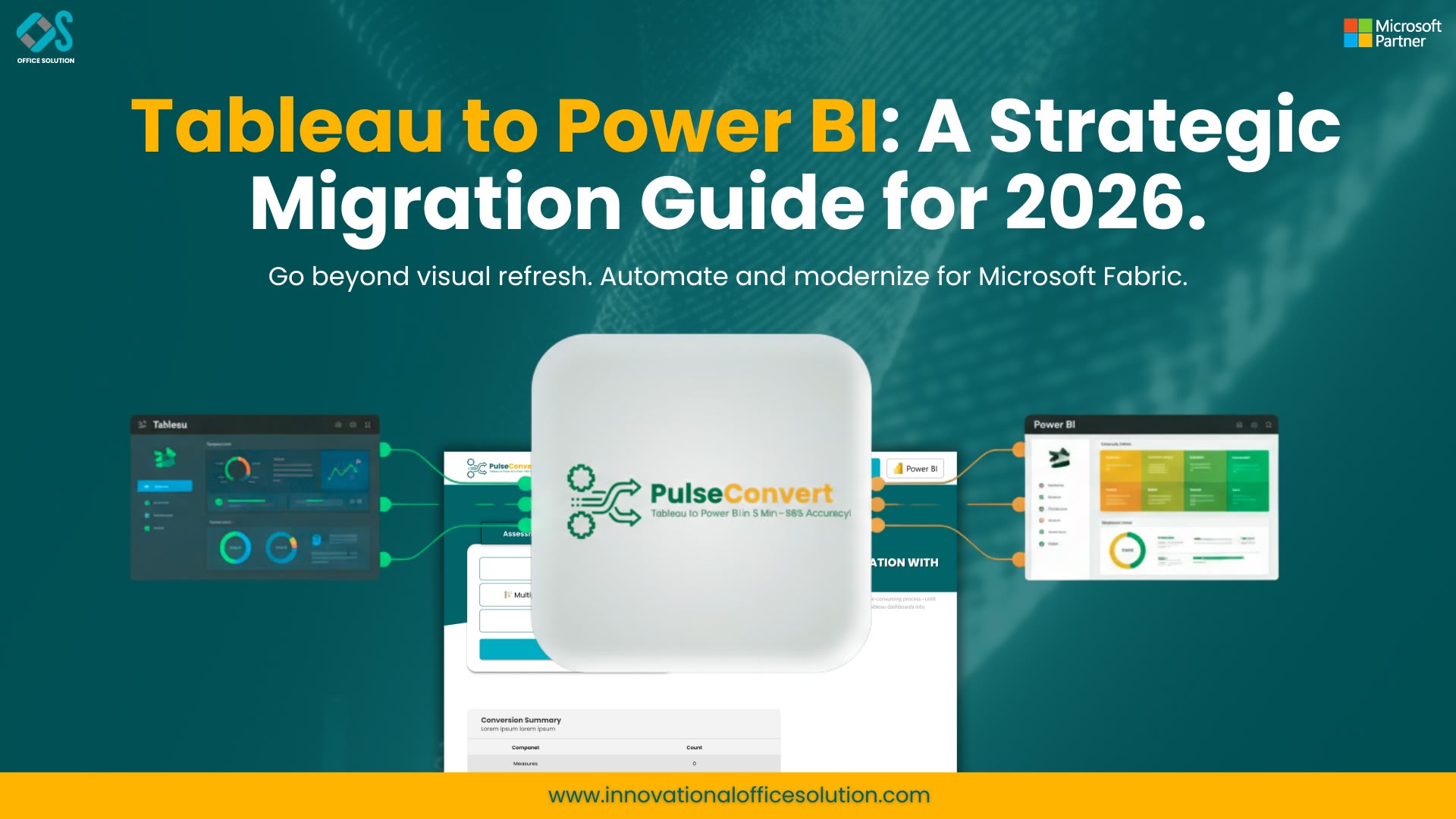
Table of Contents
Developing an Engineered Tableau to Power BI Migration Approach
Modern enterprise architectures are rapidly moving away from distributed, desktop-managed reporting applications. For years, running isolated analytical instances allowed individual business teams to construct custom dashboards rapidly. However, this decentralized approach created massive technical friction, resulting in conflicting metric definitions, unmanaged database query strains, and high software licensing costs. To resolve these challenges, forward-thinking corporate technology leads are adopting a highly strategic Tableau to power bi migration approach. This model moves beyond basic interface redesigns, prioritizing the construction of a robust, unified data engine that delivers high availability and single-source metrics data globally.
Choosing to migrate from Tableau to Power BI involves a major change in how calculations are processed. The legacy architecture relies heavily on local, sheet-level parameters that calculate formulas dynamically based on whatever visual objects are placed on the canvas. The modern target ecosystem relies on a model-first architecture, where relationships, security profiles, and calculation rules are built into a shared cloud semantic model before any front-end dashboards are generated. Transitioning between these models requires breaking down historical reporting layers, mapping raw business logic, and deploying streamlined, scalable data pipelines.
This structural evolution demands complete alignment between data engineering groups, security compliance officers, and executive leadership teams. Executing a rapid migration from Tableau to Power BI without resolving existing data debt simply moves old performance bottlenecks over to the new cloud tenant. Unoptimized custom queries and redundant table connections will continue to strain system memory regardless of the front-end software used. Treating this data transformation with strict engineering discipline ensures your updated data architecture remains fast, stable, and ready to support advanced analytical needs across every corporate division.
Resolving Calculation Engine Mismatches via Advanced DAX Engineering
The primary technical challenge when working through an enterprise migration from Tableau to Power BI centers on the complete differences between their underlying calculation frameworks. The source application relies on a visual engine optimized to process dimensions and level-of-detail fields on the fly. The modern target platform uses Data Analysis Expressions (DAX), a functional language engineered to navigate complex relational databases using explicit row and filter contexts. Because these systems are entirely different, direct text copying of calculated fields will cause critical data errors.
Data developers must carefully review how to migrate Tableau to Power BI without breaking complex calculations. Legacy level-of-detail (LOD) formulas that calculate metrics across specified dimensions must be entirely rewritten into clean DAX strings using functions like CALCULATE, FILTER, and SUMMARIZE. This manual or automated translation ensures that calculation filters propagate accurately across the entire relational data model, preserving perfect numerical alignment and protecting data integrity across all business reports.
Schema Extraction & Structural Audit
Scan legacy workbook XML to isolate data connection logic.
Relational Schema Normalization
Flatten custom query overrides into structured star schemas.
DAX Conversion Engine Parsing
Map legacy formulas into row-and-filter-context DAX syntax.
UI Alignment & Interactive Mapping
Wire extracted elements to native visual cloud components.
Directory Integration & Security Deploy
Sync Row-Level Security rules to Microsoft Entra ID.
Data connection methods also require complete engineering restructuring during the modernization lifecycle. The legacy system frequently uses isolated data extracts or custom SQL overrides to join disconnected database tables directly within the visual interface. When scaling up to process hundreds of millions of data rows, these unindexed connections cause significant layout lag. Shifting to a star-schema design moves data blending tasks upstream to database and ETL layers, minimizing frontend processing strain and keeping executive dashboards lightning-fast.
Strategic Asset Inventory Audits and Portfolio Optimization
A common mistake during large-scale business intelligence transformations is the unexamined decision to migrate every single historical workbook. Over years of active operation, enterprise data environments naturally collect massive amounts of data waste, including abandoned development sandboxes, duplicate report variations, and outdated dashboards that are completely unread by corporate leadership. Beginning a technical migration without executing a comprehensive inventory cleanup will cause organizations to waste hundreds of thousands of dollars in engineering hours migrating reports that provide absolutely zero business value.
To protect engineering resources, project managers must implement a rigorous asset discovery and rationalization workflow using automated server-side usage metadata. By pulling comprehensive audit logs directly from your reporting server, data leads can precisely map report engagement, pinpoint zero-use dashboards, and formally retire dead assets from the active development pipeline. This evaluation phase divides the validated corporate report inventory into clear execution paths:
- Decommission: Purge completely unread or redundant workbooks.
- Consolidate: Merge highly overlapping department views into a single, comprehensive semantic model.
- Migrate: Promote highly critical operational dashboards to the automated modernization track.
Once the active report estate is fully optimized, developers must document a thorough technical schema for every validated asset. This technical blueprint must list every database connection string, underlying cloud repository path, query dependency, and embedded calculation rule tied to each workbook. Gathering these configuration details before beginning development permanently eliminates broken pipeline connections, reduces deployment downtime, and gives the engineering team a clean, standardized blueprint to reference throughout the construction cycle.
Introducing Pulse Convert:
The definitive bottleneck preventing large-scale corporate data modernizations has always been the immense volume of manual developer hours required to reconstruct sophisticated reporting setups from scratch. Enterprise data professionals historically had to spend weeks manually dissecting legacy workbook properties, mapping complex visual layouts, and painstakingly typing identical formula rules line by line into a new developer tool, driving up consulting expenses and stretching out deployment timelines. To eliminate this manual friction, modern data infrastructure teams leverage Pulse Convert, a highly specialized, enterprise-grade BI migration automation tool developed by Office Solution AI Labs to automate the extraction and conversion of legacy workbook structures.
Operating as an advanced automated BI conversion platform, Pulse Convert completely bypasses manual redevelopment by directly reading and parsing the underlying XML code of legacy workbook files (.twb and .twbx). The automated BI conversion platform instantly extracts visual layouts, filter parameters, and relational connections, translating complex source formulas into optimized DAX measures with an extraordinary 75% to 90% automated accuracy . This cutting-edge BI migration automation tool handles the heavy lifting of structural schema translation in under five minutes, reducing months of development risk down to minutes of automated processing. Corporate technology leaders can test this high-fidelity transformation system on their own production dashboards by utilizing a free trial, which provides an accelerated engineering path that leaves developers to focus exclusively on minor post-migration polishing and user acceptance validation.
Enterprise Staging and Parallel Data Validation Pipelines
Deploying an enterprise business intelligence platform update requires running an exhaustive data verification process before decommissioning any legacy systems. Even when relying on highly accurate automated translation tools, engineering teams must establish strict validation checks to prove the mathematical accuracy of the updated dashboard suite. If an internal user discovers a difference between historical sales ledgers and the new system, corporate adoption will immediately drop.
To eliminate this data risk, QA teams must establish parallel verification environments where identical operational queries are executed across both platforms simultaneously. Technical specialists cross-check row summaries, verify calculations across extended date windows, and ensure custom parameter options behave identically under different regional visual selections. This thorough testing lifecycle guarantees complete numerical alignment across every branch of the business before reports go live.
Beyond validating backend metrics, structured user acceptance testing (UAT) is crucial to achieve rapid employee adoption and smooth organizational change management. Department leads, operations analysts, and executive stakeholders must be brought into a secure staging sandbox early to evaluate report workflows. Gathering this direct feedback allows developers to fix layout alignments, clarify new interactive filtering paths, and ensure the final product matches everyday corporate workflows perfectly, driving total organizational confidence in the system.
Production Security Infrastructure and Unified Cloud Governance
Moving your entire reporting layout into a unified corporate cloud workspace requires setting up highly disciplined platform governance protocols. Without clear administration rules, cloud environments can quickly become cluttered with unverified test files, unoptimized queries, and duplicate reports. Data administrators must implement formal deployment pipelines across distinct development, testing, and production environments, ensuring that no modifications go live without undergoing thorough quality reviews.
Security configurations must be coded directly into the shared data model layer rather than being treated as superficial settings on individual visual pieces. Data engineers must carefully translate legacy user group parameters into highly secure Row-Level Security parameters within the cloud ecosystem. Linking these analytical security profiles to central directory tools like Microsoft Entra ID ensures that whenever an employee changes departments or exits the company, their report viewing privileges update instantly, eliminating security compliance gaps.
Furthermore, global enterprise architectures must address regional data residency and compliance laws. Many international data protection frameworks place strict limitations on where sensitive consumer profiles or financial records can be physically processed or stored. Cloud administrators solve this by configuring dedicated data capacities across explicit physical server regions, satisfying local compliance mandates while providing global corporate networks with a thoroughly secure, optimized, and scalable business intelligence ecosystem.
Maximizing Enterprise Velocity and System Capacity Tuning
The ultimate success of an enterprise data modernization is measured by how effectively your corporate workforce uses the updated platform to drive daily operational efficiencies. Simply deploying an optimized data architecture yields zero commercial value if your internal business units resist the platform shift and slip back into using unmanaged local spreadsheets. Overcoming this internal friction requires a structured change management playbook that combines ongoing technical training with active organizational support.
Establishing a cross-functional center of excellence gives power users, data analysts, and corporate leaders a centralized hub to share design patterns, troubleshoot DAX optimizations, and collaborate on advanced custom metrics. This collaborative network breaks down old departmental silos and empowers business units to continuously improve their own analytics assets. Providing specialized training tracks tailored to specific technical skill levels ensures that every employee—from front-line supervisors to C-suite executives—can confidently navigate the new platform to extract actionable business insights.
Finally, platform administrators must implement continuous cloud capacity monitoring to keep infrastructure costs highly predictable. IT teams should run regular audit scripts to locate unused dashboards, tune poorly written queries that trigger server resource bottlenecks, and adjust partition strategies to ensure lightning-fast performance during critical monthly planning sessions. By combining intelligent automation tools with disciplined administrative oversight, global enterprises can maximize the return on their modern cloud investments, protect critical data integrity, and turn their consolidated business intelligence ecosystem into a powerful driver of long-term commercial growth.
Verified Technical Document Directories
To read further about enterprise data architecture, framework optimization, and migration paths, explore our verified technical document repositories:
- For a definitive overview of enterprise transition strategies, consult the tableau to power bi migration 2026 guide.
- To learn step-by-step development rules for modernizing systems, review the comprehensive guide using tableau to power bi migration.
- For an exhaustive evaluation of platform features and differences, read the tableau vs power bi 2026 comparison.
- For a deep architectural breakdown of modern semantic modeling, review the complete guide enterprise tableau to power bi migration.
- To avoid common calculation logic errors during large-scale updates, read the tableau to power bi migration comprehensive technical guide 2026.
- To connect directly with senior data engineering specialists and map out a custom modernization strategy, please contact us immediately.
Frequently Asked Questions (FAQs)
1. What defines an optimized Tableau to Power BI migration approach for large portfolios?
An optimized approach relies on a model-first architecture. Instead of just manually rebuilding visual sheets, engineers prioritize cleaning up data layers, converting legacy queries into star schemas, and using automation tools to accurately parse calculation logic into clean DAX strings.
2. Why is an automated BI conversion platform recommended for enterprise data transformations?
Manual conversion projects require developers to copy layout properties and type formula rules line by line, which increases engineering costs. An automated platform reads workbook XML files directly, translating configurations and visual fields in minutes to speed up project delivery.
3. What specific performance benefits are achieved when you migrate from Tableau to Power BI?
Moving metrics logic to a centralized cloud semantic layer allows organizations to utilize powerful column-store compression. Standardizing data structures into clear star schemas reduces frontend computing strain, providing rapid page load speeds during high-traffic usage windows.
4. How does the Pulse Convert engine handle custom formulas and data source links?
Pulse Convert scans the background XML layer of source workbook files, instantly extracting relational pathways, layout properties, and metric configurations. It automatically converts source logic into optimized DAX measures with an accuracy level of 75% to 90%.
5. What is the most effective way to learn how to migrate Tableau to Power BI safely?
The safest methodology involves executing development across structured phases. Teams must first set up secure cloud gateways, establish a clean relational data model, automate formula translations, refine visual formatting, and complete parallel verification checks before going live.


