The Automation Core: Accelerating Enterprise Modernization with an Automated BI Conversion Platform
 0|
0| 0
0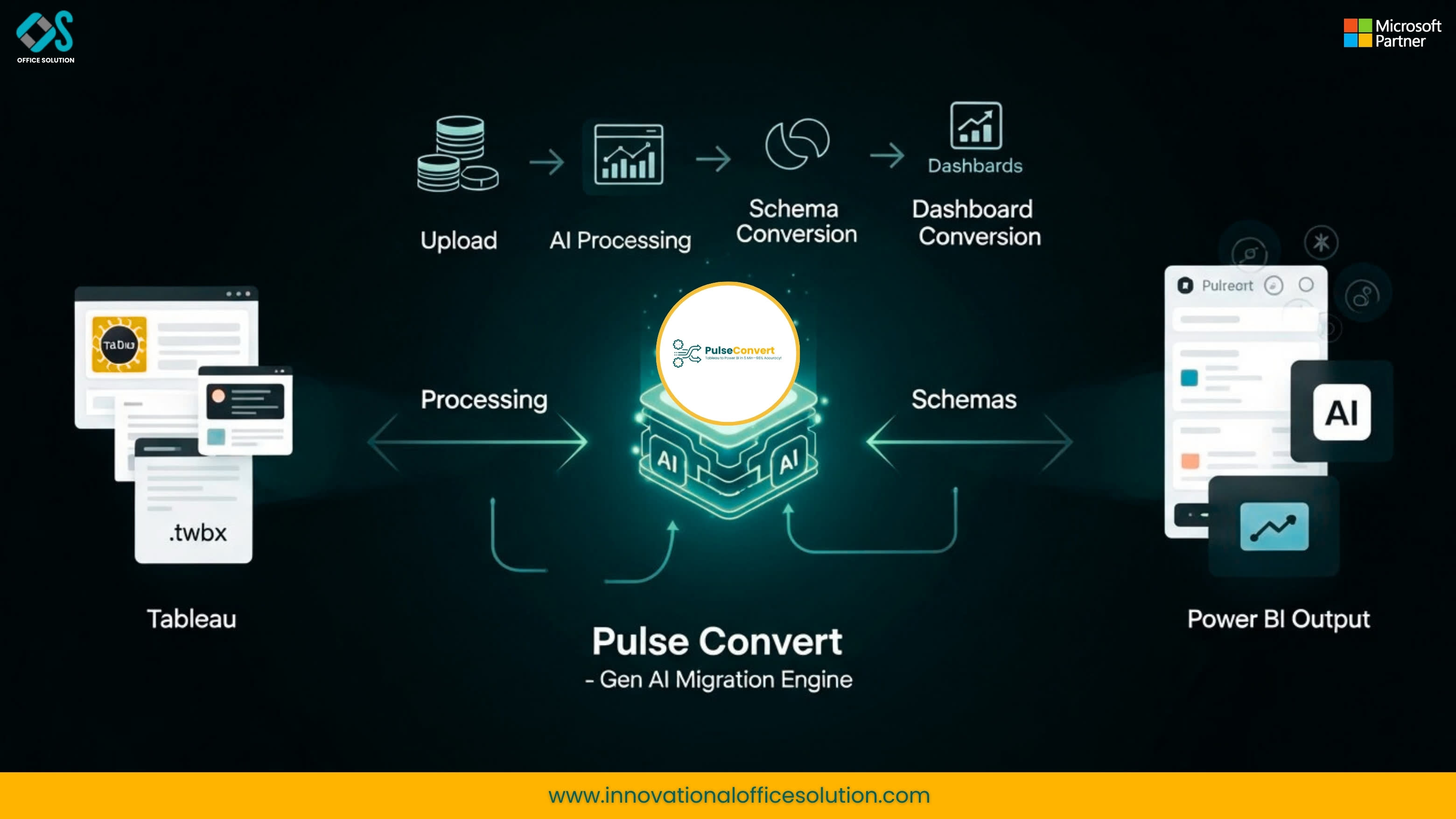
Table of Contents
The Strategic Framework of a Modern BI Modernization Strategy
As businesses navigate rapid digital updates, legacy business intelligence architectures are struggling to match the scalability of cloud storage warehouses. Maintaining reporting infrastructures across disconnected visual platforms introduces significant development blockages, slows down updates, and isolates operational logic within different teams. To restore speed, data leaders are executing a comprehensive, firm-wide BI modernization strategy built around standardized cloud semantic definitions. The ultimate goal is to systematically migrate Tableau to Power BI, moving away from desktop-bound report workbooks and establishing unified analytics within a governed corporate cloud framework.
Historically, the sheer scale of rewriting legacy reports stood as a massive roadblock to modernization projects. Database teams faced the painful requirement of rebuilding complex data schemas, manually transferring layout coordinates, and re-typing intricate calculation formulas line by line. This manual friction routinely resulted in extensive project delays, high engineering expenses, and calculation errors. To solve these migration roadblocks, progressive corporate IT divisions are deploying advanced Power BI migration automation systems, replacing manual code work with automated, file-level translation technologies.
Transitioning to an automated model allows companies to reallocate specialized technical specialists away from basic rebuilding tasks and toward high-value data modeling projects. This shift changes the core nature of software modernization. By treating analytics infrastructure with the same engineering discipline used in formal software development, companies can build highly responsive data frameworks that easily handle massive data volume shifts without requiring massive consulting investments.
Execution Frameworks: Structural Tableau to Power BI Migration Steps
Successfully moving an entire corporate reporting layer requires following strict, reproducible Tableau to Power BI migration steps to eliminate data gaps and protect everyday business operations. The modernization roadmap begins with an exhaustive automated asset inventory scan. This discovery phase evaluates usage logs across enterprise reporting servers, helping managers identify active operational dashboards, flag redundant assets for deletion, and group core data models based on structural complexity.
Catalog Extraction & Inventory Rationalization
Identify active vs. dead assets using server logs.
Semantic Target Mapping
Align raw query layers into high-compression star schemas.
Automated Conversion via Pulse Convert
Parse workbook XML structures and generate native DAX.
Interface Refinement
Adjust custom layouts and optimize interactive paths.
Verification & Production Rollout
Run dual-system parallel testing and sync cloud security.
Once the reporting catalog is clean and organized, engineers execute the foundational step of building the cloud data infrastructure. This layer relies on clean star-schema designs where central transaction tables connect directly to descriptive dimension views. Standardizing data structures before building any frontend views reduces calculation lag, prevents query timeouts, and establishes a secure, unified semantic data foundation for all downstream analytical reports.
The next step centers on using a dedicated BI migration automation tool to extract visual layouts and translate calculation formulas into matching cloud syntax. This step converts source workbook components into a structured, easily modified workspace layout. From there, designers can polish interactive features, adjust formatting elements, and implement cloud security controls to ensure the final application operates safely, performs exceptionally well, and remains ready for broad corporate use.
Deconstructing the Technical Mechanics of Power BI Migration from Tableau
The hidden engineering difficulty of executing a clean Power BI migration from Tableau stems from the complete mismatch between their internal calculation engines. The source platform utilizes a specialized visual engine that processes calculation attributes and level-of-detail functions dynamically based on the exact configuration of fields on a report sheet. The modern target ecosystem relies on a model-first architecture driven by Data Analysis Expressions, a functional programming language built to evaluate relational databases using deep row and filter contexts.
Because these engines are completely different, direct text copying of calculated fields will cause major reporting failures. For example, legacy expressions built to lock calculations across explicit dimensions must be broken down and rewritten into efficient DAX expressions using functions like CALCULATE and ALLEXCEPT. This technical conversion ensures that the calculation filters propagate perfectly across the relational model, preserving complete data consistency between the old and new platforms.
Data connection methods also require complete engineering restructuring during the modernization lifecycle. The legacy system frequently uses isolated data extracts or custom SQL overrides to join disconnected database tables directly within the visual interface. When scaling up to process hundreds of millions of data rows, these unindexed connections cause significant layout lag. Shifting to a star-schema design moves data blending tasks upstream to database and ETL layers, minimizing frontend processing strain and keeping executive dashboards lightning-fast.
Introducing Pulse Convert :
To bypass the expensive manual labor historically required to execute analytics updates, advanced technical deployments rely on Pulse Convert, a highly advanced, enterprise-grade BI migration automation tool.
Functioning as a high-performance automated BI conversion platform, Pulse Convert completely eliminates manual layout copying by directly scanning the internal XML code of source workbook files. The platform instantly extracts formatting properties, filter paths, and data connections, translating legacy logic formulas into highly efficient DAX scripts with an impressive 75 to 90% automated accuracy. This automated acceleration reduces months of development risk down to minutes of processing, letting enterprise teams view this streamlined engineering workflow firsthand via a free trial. Using this automation core helps businesses bypass development blockages, cut project implementation costs, and deploy fully governed analytical cloud environments in record time.
Parallel Testing and Quality Control Staging Environments
No enterprise business intelligence update can be considered successful without implementing a rigorous, multi-layered data verification and quality control process. Even when utilizing highly accurate automated translation tools, engineering teams must establish clear checking milestones to verify the mathematical accuracy of every single migrated report. If a business unit discovers even minor discrepancies in historical revenue figures, corporate trust in the new analytics platform will immediately break down.
To prevent calculation discrepancies, quality assurance teams must build parallel testing environments where identical business queries are executed simultaneously across both old and new systems. Engineers cross-reference final row outputs, verify calculated totals across wide historical date boundaries, and confirm that custom parameter selections behave identically under various regional filters. This thorough cross-checking process ensures absolute data consistency before any production environments go live.
Beyond validating backend calculations, structured user acceptance testing is a vital requirement for long-term project success. Department heads, business analysts, and executive users must be brought into a secure sandbox environment early to evaluate the updated dashboards. Collecting direct user feedback lets the development team fix layout quirks, clarify new interactive filtering paths, and ensure the final product matches everyday corporate workflows perfectly, driving high user adoption across the entire company.
Enterprise Tenant Governance and Row-Level Security Management
Moving your entire reporting layout into a unified corporate cloud workspace requires setting up highly disciplined platform governance protocols. Without clear administration rules, cloud environments can quickly become cluttered with unverified test files, unoptimized queries, and duplicate reports. Data administrators must implement formal deployment pipelines across distinct development, testing, and production environments, ensuring that no modifications go live without undergoing thorough quality reviews.
Security configurations must be coded directly into the shared data model layer rather than being treated as superficial settings on individual visual pieces. Data engineers must carefully translate legacy user group parameters into highly secure Row-Level Security parameters within the cloud ecosystem. Linking these analytical security profiles to central directory tools like Microsoft Entra ID ensures that whenever an employee changes departments or exits the company, their report viewing privileges update instantly, eliminating security compliance gaps.
Furthermore, global enterprise architectures must address regional data residency and compliance laws. Many international data protection frameworks place strict limitations on where sensitive consumer profile or financial records can be physically processed or stored. Cloud administrators solve this by configuring dedicated data capacities across explicit physical server regions, satisfying local compliance mandates while providing global corporate networks with a thoroughly secure, optimized, and scalable business intelligence ecosystem.
Maximizing Operational Velocity and Continuous Performance Tuning
The true business value of an enterprise analytics modernization is realized when your entire corporate workforce actively utilizes the updated platform to drive daily operational choices. Simply building a highly responsive cloud data model provides zero business value if internal teams resist the change and revert to manually creating local spreadsheets. Overcoming this adoption friction requires deploying a structured change management playbook that combines hands-on technical training with continuous support.
Creating a cross-functional center of excellence gives power users, data analysts, and corporate leaders a shared space to swap design frameworks, troubleshoot complex DAX expressions, and collaborate on advanced custom metrics. This collaborative network breaks down old departmental silos and empowers different divisions to actively improve their analytics assets. Tailoring training tracks to specific technical skill levels ensures that every employee can confidently navigate the system to extract valuable operational insights.
Finally, platform administrators must maintain continuous capacity monitoring to keep infrastructure costs highly predictable. IT teams must run regular optimization scripts to locate unused dashboards, tune poorly written queries that cause server performance bottlenecks, and refine data refresh partitions to ensure instant page load speeds during critical monthly financial close cycles. Combining intelligent automation with disciplined human oversight lets global businesses maximize their technology investments, safeguard data assets, and ensure their modern cloud environment serves as a powerful driver of long-term commercial growth.
Verified Technical Document Directories
- To read further about enterprise data architecture, framework optimization, and migration paths, explore our verified technical document repositories:
- For a definitive overview of enterprise transition strategies, consult the tableau to power bi migration 2026 guide.
- To learn step-by-step development rules for modernizing systems, review the comprehensive guide using tableau to power bi migration.
- For an exhaustive evaluation of platform features and differences, read the tableau vs power bi 2026 comparison.
- For a deep architectural breakdown of modern semantic modeling, review the complete guide enterprise tableau to power bi migration.
- To avoid common calculation logic errors during large-scale updates, read the tableau to power bi migration comprehensive technical guide 2026.
- To connect directly with senior data engineering specialists and map out a custom modernization strategy, please contact us immediately.
Frequently Asked Questions (FAQs)
1. What are the essential Tableau to Power BI migration steps required to protect data integrity?
The process requires five main stages: inventory cleanup to remove dead reports, building a star-schema relational model, using automated conversion tools to parse code structures, adjusting interactive visual formatting, and executing dual-system parallel testing alongside directory security syncing.
2. How does Power BI migration automation lower total project expenses?
Automation completely bypasses manual developer layout copying and formula rewriting. Automated platforms read workbook file code directly and convert properties into clean cloud syntax in minutes, shrinking development timelines and cutting consulting fees.
3. What specific translation accuracy does the Pulse Convert platform provide?
Pulse Convert converts legacy data structures, visual positioning rules, and complex formula strings into optimized target schemas with 75 to 90% automated accuracy. This leaves developers to handle only minimal post-migration design polishing and final user testing validation.
4. Why should a BI modernization strategy prioritize a star-schema layout over flat files?
Flat files or heavy custom SQL strings create massive processing lag as data volume scales. A star-schema links lean transaction fact tables directly to descriptive dimension views, optimizing column compression and keeping page interactions fast.
5. How do administrators track and control cloud capacity costs post-migration?
IT administrators run continuous usage logs to pinpoint unused dashboards, adjust data refresh schedules via incremental partitions, and optimize inefficient calculation expressions to prevent server performance spikes during peak business hours.


