The Blueprint for Enterprise Data Maturity: Why Architecture Trumps Dashboards in Business Intelligence
 0|
0| 0
0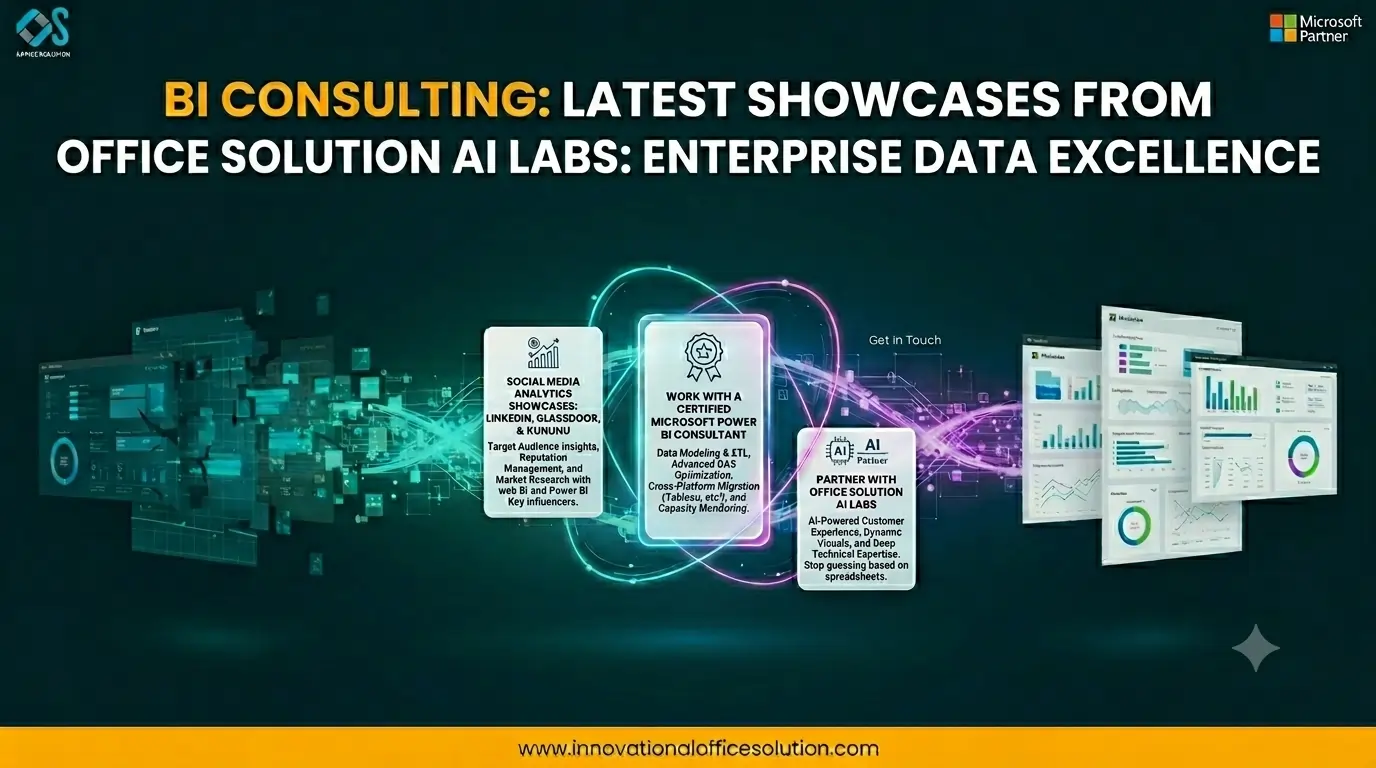
Table of Contents
When enterprise leadership teams run into operational bottlenecks, their first instinct is often to build another dashboard. If shipping delays drag down regional fulfillment numbers, or customer churn ticks up unexpectedly in a specific market segment, the immediate reaction is to compile a new set of data visualizations. However, simply adding more visual graphs on top of a broken, unoptimized data framework doesn't solve structural problems. It usually makes them worse.
Most companies are not suffering from a shortage of raw data; they are overwhelmed by a chaotic sprawl of fragmented spreadsheets, isolated data storage systems, and conflicting performance metrics. When distinct departments argue during quarterly reviews because their revenue or customer retention numbers do not match, the issue is not visual presentation. The issue is the underlying architecture. Real corporate transformation requires moving past simple reporting and designing a unified, governed, and highly scalable data infrastructure.
For scaling organizations looking to establish a single source of truth, partnering with an expert Business Intelligence consulting company like Office Solution AI Labs ensures that your data pipelines are built for deep analytical depth, long-term stability, and complete corporate visibility.
The Strategic Shift: Moving From Cosmetic Reports to Enterprise-Grade Architecture
Many companies fall into the trap of treating analytics as a cosmetic design project. A basic report can be assembled quickly by an internal generalist using standard data connectors, but relying on surface-level setups inevitably creates deep operational problems down the road. As data volume expands across an organization, unmanaged models become sluggish, data refresh schedules fail during critical morning forecasting windows, and users begin to distrust the numbers they see on their screens.
True business data maturity requires structured business analytics consulting services that treat information design as a core software engineering practice. To better understand this framework, you can read our deep dive into data strategy: BI Consulting Services Enterprise Data Framework Strategy. This shift in perspective means moving away from reactive, localized reporting and moving toward proactive, unified data modeling.
Building an enterprise-ready analytics engine requires mapping out every point of data movement, from initial collection to executive view. By optimizing this data transition, organizations can stop wasting hours manually cleaning up messy spreadsheets and start making accurate, proactive operational decisions based on reliable data.
Engineering a Modern Data Framework: Star Schemas and Data Cleansing
At the core of any highly efficient business analytics system is a clean, reliable data structure. Many under-optimized setups suffer because they rely on massive, flat tables containing hundreds of columns packed with repetitive, unorganized information. These flat formats force the analytical engine to process massive amounts of redundant data every time a user applies a simple filter, which slows down system performance.
Professional Business Intelligence solutions consulting fixes these underlying issues by restructuring unorganized systems into high-performing star schemas. This methodology divides data elements into two specific types of tables:
- Fact Tables: These sit at the very center of your analytical model. They house the quantitative, numerical metrics of your business transactions—such as revenue amounts, unit counts, shipping durations, or medical claim values—alongside specific identification keys that connect them to surrounding dimensions.
- Dimension Tables: These act as the contextual reference points surrounding the fact tables. They contain the descriptive attributes of your business—such as customer names, geographic locations, product categories, or fiscal calendars.
By separating transactional metrics from descriptive attributes, data calculations become incredibly fast. When an executive filters a corporate report by region or product line, the system scans tiny, highly indexed dimension columns instead of dragging through millions of rows of unorganized data.
Additionally, strong data cleansing rules must be applied during the early extraction phases. This means handling empty data cells cleanly, fixing mixed date formats across different international systems, and establishing consistent naming standards for every metric across all business units.
Turning Social Sentiment Into Structured Assets: Office Solution AI Labs Showcases
Modern business analytics extends far beyond internal financial ledgers. To stay ahead of the market, companies must track outside variables, such as public brand perception and workforce sentiment. However, social sentiment data is famously unorganized, text-heavy, and difficult to blend with internal operational metrics.
To bridge this gap, Office Solution AI Labs built targeted, production-ready analytics solutions that turn unstructured web data into clear, actionable business assets. You can view our core capabilities and full suite of service offerings directly at BI Consulting.
LinkedIn Social Media Analytics
Understanding your audience is essential for targeted growth. Our LinkedIn Analytics engine functions as a powerful web BI solution that extracts deep audience insights, utilizing built-in Power BI Key Influencers to analyze engagement data. Instead of just tracking vanity metrics like generic page views, this solution identifies the exact content styles and industry demographics driving your highest lead conversion rates. By establishing solid Power BI Relationships between post topics, employee shares, and inbound inquiries, companies can optimize their B2B marketing strategies with absolute confidence.
Glassdoor Sentiment Tracking
Employer branding directly affects a company's bottom line through recruitment costs and talent retention. Our Glassdoor Analytics platform converts unstructured employee reviews into structured data assets to guide your ongoing human resources strategy. By using web BI tools, human resource executives can monitor corporate reputation across different regions and departments. The tool applies Power BI Key Influencers to pinpoint the specific factors—such as management communication, compensation structures, or work-life balance—that correlate with positive or negative workforce feedback, letting leadership address internal cultural issues before they impact productivity.
Kununu Competitor and Market Research
For brands expanding into international markets, tracking localized workplace feedback is a major competitive advantage. Our Kununu Analytics tool provides a structured approach to competitive research and target audience tracking. Using advanced web BI integration, companies can pull valuable data directly into their central analytical ecosystem. Leveraging Power BI Key Influencers allows product development and operational teams to spot emerging market trends and understand talent expectations across competitive landscapes, keeping your corporate growth strategy highly responsive.
Vertical-Specific Analytical Frameworks: Driving Value Across Key Industries
Data models must be tailored to the specific operational realities of the industries they serve. A framework built for high-speed retail inventory management will not fit the compliance and regulatory demands of an international bank or a healthcare network. Specialized enterprise BI consulting services adapt architectural blueprints to solve the unique operational pain points of individual industries.
Healthcare
— Enhancing Patient Care and Data IntegrationIn the clinical space, data fragmentation can directly impact operational efficiency and patient care. Healthcare organizations often struggle with information trapped across separate Electronic Health Records (EHR) platforms, scheduling databases, and pharmacy ledgers. By applying web BI strategies, providers can safely combine these distinct data flows into a unified data environment. Utilizing Power BI Relationships allows clinical analysts to cross-reference patient outcomes against treatment plans and admission speeds, which reduces re-admission rates and optimizes staff scheduling across busy emergency rooms.
Manufacturing
— Maximizing Production Throughput and EfficiencyOn a fast-moving factory floor, equipment downtime and material waste create massive financial strains. Manufacturers require continuous clarity into every production line and supply chain loop. By leveraging Power BI Key Influencers, operations managers can look past basic historical reports and actively discover the underlying causes of production bottlenecks or sudden equipment failures. Analyzing variables like ambient room temperature, raw material batches, and operator shifts reveals exactly which conditions lead to parts defects, allowing teams to adjust setups proactively and reduce scrap costs.
Retail
— Mastering Supply Chains and Pricing MechanicsRetail brands operate in high-volume environments where consumer trends change rapidly, making long data delivery delays highly problematic. Retailers must track regional inventories, changing market prices, and customer behavior continuously. With web BI insights, retail teams can build predictive pricing systems and automated supply chain models. Using clean Power BI Relationships allows inventory managers to connect real-time point-of-sale data with upstream warehouse levels, ensuring high-demand items stay in stock while preventing costly overstock situations on slow-moving products.
BFSI (Banking, Financial Services, and Insurance)
— Elevating Financial SecurityFinancial institutions manage massive data volumes under strict regulatory oversight. For these organizations, security and data reliability are paramount. Using advanced Power BI features allows financial firms to analyze market trends and track customer engagement safely. Incorporating Power BI Key Influencers gives risk officers the ability to screen incoming transactions and loan applications for anomalies, improving fraud detection models and credit risk assessments while ensuring complete regulatory compliance.
FMCG (Fast-Moving Consumer Goods)
— Accelerating Product DistributionFMCG companies operate on thin margins where distribution speed determines market success. Success requires matching high-volume factory outputs with fast-moving retail consumer demand. Deploying modern BI tools allows brand managers to optimize regional inventory placements, predict shifting consumer preferences, and measure the performance of promotional campaigns. Web BI solutions give distribution teams a clear view of logistics networks, helping them streamline delivery paths and minimize product expiration rates.
Departmental Visibility: Aligning Sales, Marketing, Finance, and Operations
An enterprise data framework should serve every level of an organization, breaking down information silos so that all departments pull from the exact same validated data definitions.
| Department | Key Analytical Metrics Covered | Primary Business Objective |
|---|---|---|
| Sales | Pipeline velocity, customer acquisition cost (CAC), sales cycle length | Identifying expansion opportunities, managing real-time revenue forecasts |
| Marketing | Customer lifetime value (CLV), multi-channel attribution, campaign ROI | Personalizing target campaigns, optimizing marketing spend across digital channels |
| Finance | Cash flow runway, departmental budget variances, working capital ratios | Maximizing investment strategies, automating accurate corporate forecasting |
| Operations | Supply chain lead times, equipment utilization rates, inventory turnover | Eliminating fulfillment bottlenecks, increasing production efficiency |
When these core departments align under a single data environment, leadership teams spend zero time debating whose spreadsheets are correct during meetings. Instead, the focus shifts immediately to executing corporate strategies backed by verified data. To learn more about connecting your raw analytical data directly to executive planning, explore our resource: Transforming Raw Analytics into Corporate Strategy Microsoft Power BI Consulting Services.
Operational Excellence: Work with a Certified Microsoft Power BI Consultant
Building dashboards is simple; architecting an enterprise data framework requires deep expertise. Every Microsoft Power BI consultant on our engineering team brings deep hands-on experience in database management, data engineering, and predictive analytics.
When you collaborate with our consulting team, you gain direct access to technical specialists who specialize in:
- Data Modeling and ETL Pipelines: Extracting, transforming, and loading structured and unstructured data using Power Query and SQL.
- Advanced DAX Optimization: Writing clean, efficient Data Analysis Expressions to minimize processing overhead and maximize query speeds.
- Cross-Platform Migration: Seamlessly shifting your corporate reports from legacy systems—such as Tableau, QlikView, IBM Cognos, or SAP Business Objects—directly into Microsoft Fabric and Power BI without data loss.
- Capacity Monitoring: Running comprehensive load testing tools and monitoring premium capacity usage to control enterprise cloud computing costs.
Conclusion: Partner with Office Solution AI Labs
Stop guessing based on incomplete spreadsheets. Partner with a dedicated Power BI consultancy that understands data engineering, advanced visuals, and smooth enterprise software integration. As an established implementation partner across major cloud and data platforms, Office Solution AI Labs has the deep technical expertise required to make your data work for you.
Get clear visibility into your operations, control your premium capacity overhead costs, and give your executive leadership team the real-time insights they need to execute corporate strategies successfully.
Ready to transform your data architecture from basic, slow reports into a highly efficient, automated enterprise engine? Contact our engineering team today to schedule an initial technical infrastructure audit.
Frequently Asked Questions (FAQs)
1. Why should an enterprise hire a specialized Business Intelligence consulting company instead of relying on internal IT generalists?
An internal IT team or general developer is excellent at maintaining everyday networks, but an enterprise-tier Business Intelligence consulting company understands performance-driven data modeling, high-throughput extraction pipelines, and cluster governance. They ensure that your databases do not experience processing bottlenecks, and they architect secure semantic layers so that your data models scale seamlessly with your growing computational volume.
2. What exact foundational elements are included in professional Business Intelligence solutions consulting?
When implementing Business Intelligence solutions consulting, our engineering focus is directed at shifting raw, unorganized corporate information into optimized relational database structures. This process includes moving flat, heavy tables into high-performance star schemas, cleaning bad data fields, applying clear schema normalization, and establishing verified primary and foreign key relationships across your enterprise transactional datasets.
3. How do modern business analytics consulting services transform unstructured public web feedback into core strategic assets?
Modern business analytics consulting services use custom web BI architectures to securely capture, clean, and analyze qualitative data from public platforms like LinkedIn, Glassdoor, and Kununu. By extracting unstructured reviews and professional metrics, the system applies built-in data patterns and driver analysis to track public brand sentiment, calculate recruitment metrics, and evaluate competitor pricing trends in real time.
4. What are the main strategic objectives delivered by enterprise BI consulting services across commercial business units?
Advanced enterprise BI consulting services bridge the operational gaps between isolated corporate silos. For finance teams, it automates cash flow forecasting and risk metrics; for sales divisions, it uses relationship tracking to optimize pipeline velocities; for marketing groups, it builds multi-touch attribution models; and for operational units, it monitors production line speeds to eliminate material bottlenecks instantly.
5. How do Power BI Key Influencers help executives make faster, data-driven decisions?
The built-in Key Influencers engine applies advanced statistical metrics directly within your analytics reports. Instead of forcing your management team to manually sort through flat files or spotty spreadsheets, this tool automatically scans your active data tables to pinpoint the exact operational variables that are driving your customer retention drops, product line defects, or sales conversion spikes.


