The Enterprise Architecture Shift: Transitioning Data Assets from a Visual-First to a Model-First Analytics Ecosystem
 0|
0| 0
0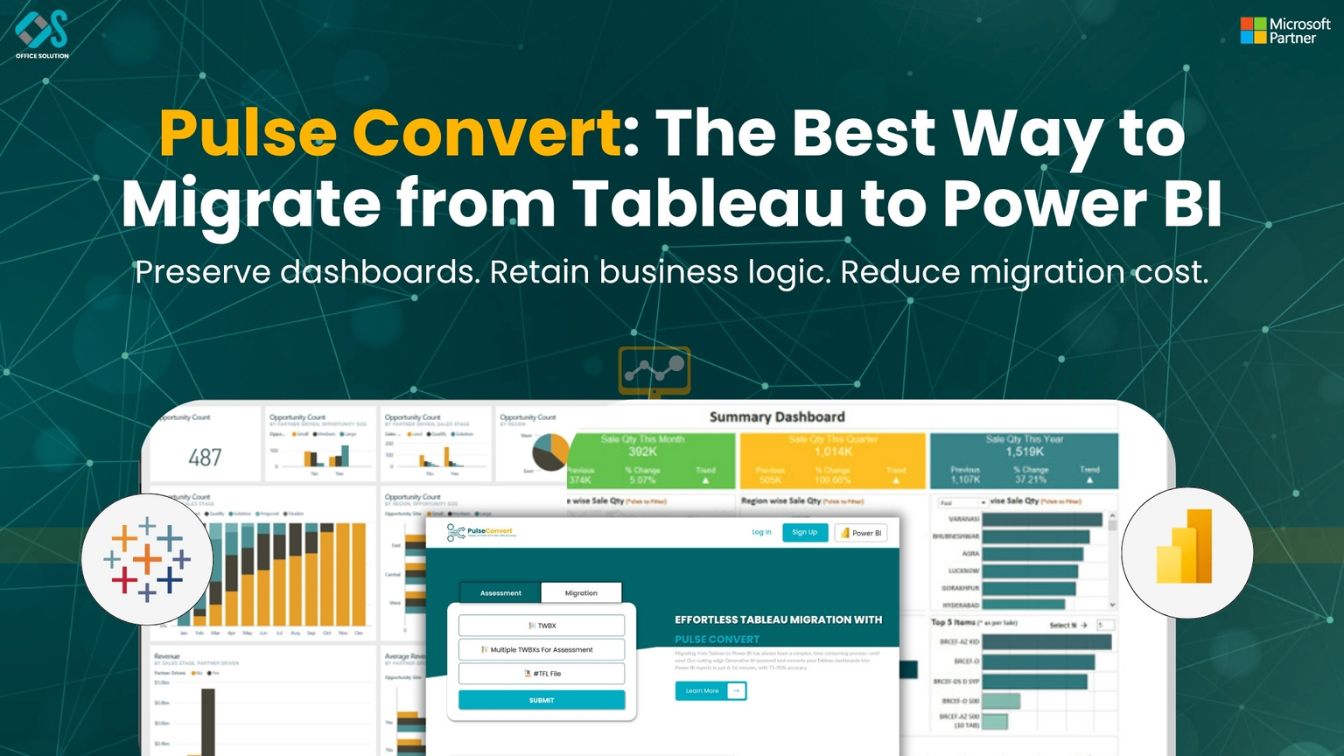
Table of Contents
The Core Foundations of a Modern BI Modernization Strategy
The global corporate data environment is undergoing a massive consolidation phase. Over the past decade, rapid growth across independent business departments led many companies to implement multiple business intelligence visualization platforms. This organic expansion created severe technical fragmentation, marked by massive spending on software licenses, isolated query definitions, and inconsistent operational metrics across regional divisions. To regain operational speed and lower overall infrastructure overhead, enterprise data leaders are rolling out a comprehensive BI modernization strategy. This roadmap focuses on consolidating historical analytics assets, eliminating data redundancies, and creating a unified, reliable framework across the entire company.
Moving analytics assets away from localized visual environments to a single cloud-based repository involves far more than simply recreating layouts on a new canvas. It marks a critical structural transition from a presentation-centric workspace to an enterprise-grade semantic layer. In old reporting platforms, complex formulas and data transformations are frequently hardcoded directly into individual sheets and workbooks. This layout makes central governance almost impossible to enforce. Standardizing your analytics ecosystem requires a disciplined approach that completely separates raw underlying database connections from the visual presentation layer.
Successfully navigating this operational change requires direct alignment between system administrators, data engineering teams, and corporate executives. Treating an intensive modernization program as a simple clerical task inevitably leads to project bottlenecks, broken pipelines, and major dashboard load lag during busy operational windows. By approaching this platform change with the same strict governance applied to production software engineering, global enterprises can dismantle data silos, protect critical metrics, and ensure that their analytics infrastructure remains exceptionally fast while processing hundreds of millions of transactional records.
Deconstructing the Engineering Shift: Power BI Migration from Tableau
The hidden technical friction encountered when an organization decides to Power BI Migration from Tableau stems from the absolute divergence of their core calculation models. The source application relies heavily on a flexible visual framework where logic and level-of-detail metrics are calculated on the fly based directly on the fields pulled onto a visualization page. Conversely, the modern target ecosystem operates on a highly disciplined relational structure powered by Data Analysis Expressions (DAX). DAX functions operate on strict row and filter contexts across a centralized data model, requiring logic rules to be defined at the data layer rather than on the fly within presentation sheets.
Because of this profound structural difference, a simple text-to-text copying of calculation fields is technically impossible. For example, legacy expressions that isolate metrics across specific dimensional boundaries must be completely deconstructed and rewritten. Data engineers must carefully convert these expressions into optimized DAX strings using functions like CALCULATE, ALLEXCEPT, and SUMMARIZE to enforce identical operational limits. Failing to properly handle the subtle differences in filter propagation between these two calculation engines will lead to critical calculation errors, destroying user trust in the updated reporting ecosystem.
Furthermore, how underlying data relationships are structured requires complete system normalization during a Power BI migration from Tableau. The legacy system frequently uses local data blending or custom SQL queries to join disconnected database tables right inside the visual canvas, which causes major processing slowdowns as data volumes grow. The modern target ecosystem achieves peak performance exclusively when data sources are organized into a clean star-schema design, separating transactional metrics into central fact tables and descriptive attributes into independent dimension tables. Consequently, database engineering teams must prioritize upstream data curation and optimization to keep the new cloud models highly responsive.
Proven Phases of Success: Detailed Tableau to Power BI Migration Steps
Executing a reliable change management lifecycle across complex multinational operations requires following clear, repeatable Tableau to Power BI migration steps. Attempting a broad rollout simultaneously across every department strains technical support teams and introduces unnecessary operational risks. Instead, the transition lifecycle must be executed across dedicated milestones designed to preserve system uptime and ensure that corporate analysts maintain continuous access to historical metrics throughout the development lifecycle.
Target Environment Preparation
The initial phase focuses entirely on preparing the target cloud tenant and setting up secure enterprise data gateway connections. Engineers must configure access properties across cloud storage layers, relational databases, and data warehouses, ensuring transport-layer encryption is active across all pipelines to satisfy global data privacy standards.
Data Model Normalization
Next, technical leads normalize raw query layers into high-compression star schemas. This step involves setting uniform field formats, establishing proper calendars, and configuring incremental refresh parameters to prevent server capacity bottlenecks.
Transformation and Dashboard Modernization
With the data foundations securely staged, developers transition into the core transformation phase, passing legacy files through advanced parsing pipelines to convert embedded calculation rules directly into clean DAX syntax. From there, front-end designers take over to refine dashboard interfaces, leveraging native visual components to maximize page load speeds.
Deployment and Security Configuration
The final step involves promoting verified workspaces into official apps and connecting row-level data access permissions directly to central identity tools, ensuring that user security clearances update dynamically based on corporate roles.
Meet Pulse Convert:
The most significant constraint preventing rapid enterprise data updates has always been the immense volume of manual developer hours required to rebuild complex legacy reporting architectures from scratch. Enterprise data professionals historically spent weeks manually opening old workbooks, mapping layout positions, and typing matching formula syntax line by line into a new developer tool, driving up project consulting costs and stretching out deployment timelines. To eliminate this manual friction, modern data infrastructure teams rely on Pulse Convert, a highly advanced, enterprise-grade translation tool built by Office Solution AI Labs to streamline data infrastructure modernizations.
Operating as an advanced Power BI migration automation platform, Pulse Convert completely eliminates manual redevelopment by directly reading and parsing the underlying XML code of legacy workbook files (.twb and .twbx). The automation framework instantly extracts layout structures, filter parameters, and relational pathways, translating complex source formulas into optimized DAX measures with an extraordinary 75% to 90% automated accuracy This advanced tool handles structural schema translation in under five minutes, reducing months of development risk down to minutes of processing. Corporate technology leaders can test this high-fidelity translation system on their own dashboards by using a free trial, providing an accelerated engineering path that lets developers focus exclusively on minor design polishing and user acceptance validation.
Dual-System Data Reconciliation and Quality Assurance Staging
A successful business intelligence modernization demands a thorough, multi-layered data reconciliation process before moving reports to a live production state. Even when utilizing advanced migration automation systems, engineering teams cannot skip strict validation checkpoints. If a business manager finds even a small discrepancy between historical operational metrics and the updated reporting platform, corporate trust in the entire data upgrade will immediately disintegrate.
To remove this project risk, data teams must implement parallel testing pipelines where identical business queries are evaluated across both old and new reporting environments simultaneously. Quality assurance specialists must cross-reference exact row counts, review calculation outcomes across extended historical dates, and ensure custom parameter configurations behave identically under extreme data views. This exhaustive verification guarantees complete mathematical continuity across every branch of the business.
Beyond testing backend calculations, structured user acceptance testing (UAT) is essential to achieve smooth organizational change management and rapid tool adoption. Key business analysts and department leads must be brought into a dedicated staging sandbox to evaluate report layouts early in the process. Collecting this direct feedback allows developers to fix layout alignments, clarify interactive filtering features, and ensure the final dashboard configuration matches real-world workflows perfectly, giving teams total confidence in their modern analytics system.
Establishing Robust Cloud Workspace Governance and Identity Management
Transitioning your enterprise reporting assets into a unified cloud environment requires a permanent commitment to strict platform governance. Without a structured administrative model, even the most capable data networks can quickly become cluttered with ad-hoc test datasets, uncertified reports, and unoptimized DAX variations. Systems administrators must build clear deployment pipelines that separate individual creation, staging, and production workspaces, ensuring no modifications are rolled out to executive users without undergoing extensive quality controls.
Data access rules must be built directly into the shared semantic model layer rather than being applied as superficial settings on front-end components. Data engineers must carefully map legacy user profiles to secure, cloud-hosted Row-Level Security (RLS) definitions. Connecting these security parameters to your organization's central identity management directory ensures that when an employee switches divisions or leaves the company, their report viewing privileges adjust automatically, closing security vulnerabilities.
Furthermore, corporate governance must address global data residency regulations and cloud tenant processing limits. As analytics scale across international operations, certain data protection rules place strict boundaries on where physical financial or consumer profiles can be processed or viewed. Platform administrators must deploy targeted premium storage capacities across specific physical cloud server regions to satisfy local data laws while keeping query performance fully optimized, providing global corporate networks with a thoroughly secure and scalable analytics environment.
Sustaining Analytical Velocity and Infrastructure Optimization
The ultimate success of an enterprise data modernization is measured by how effectively your corporate workforce uses the updated platform to drive daily operational efficiencies. Simply deploying an optimized data architecture yields zero commercial value if your internal business units resist the platform shift and slip back into using unmanaged local spreadsheets. Overcoming this internal friction requires a structured change management playbook that combines ongoing technical training with active organizational support.
Establishing a cross-functional center of excellence gives power users, data analysts, and corporate leaders a centralized hub to share design patterns, troubleshoot DAX optimizations, and collaborate on advanced custom metrics. This collaborative network breaks down old departmental silos and empowers business units to continuously improve their own analytics assets. Providing specialized training tracks tailored to specific technical skill levels ensures that every employee—from front-line supervisors to C-suite executives—can confidently navigate the new platform to extract actionable business insights.
Finally, platform administrators must implement continuous cloud capacity monitoring to keep infrastructure costs highly predictable. IT teams should run regular audit scripts to locate unused dashboards, tune poorly written queries that trigger server resource bottlenecks, and adjust partition strategies to ensure lightning-fast performance during critical monthly planning sessions. By combining intelligent automation tools with disciplined administrative oversight, global enterprises can maximize the return on their modern cloud investments, protect critical data integrity, and turn their consolidated business intelligence ecosystem into a powerful driver of long-term commercial growth.
Verified Technical Document Directories
To further explore enterprise data engineering, framework optimization, and migration paths, consider referencing these comprehensive documentation repositories:
- For a definitive overview of enterprise transition strategies, consult the tableau to power bi migration 2026 guide.
- To learn step-by-step development rules for modernizing systems, review the comprehensive guide using tableau to power bi migration.
- For an exhaustive evaluation of platform features and differences, read the tableau vs power bi 2026 comparison.
- For a deep architectural breakdown of modern semantic modeling, review the complete guide enterprise tableau to power bi migration.
- To avoid common calculation logic errors during large-scale updates, read the tableau to power bi migration comprehensive technical guide 2026.
- To connect directly with senior data engineering specialists and map out a custom modernization strategy, please contact us immediately.
Frequently Asked Questions (FAQs)
1. How long do standard enterprise Tableau to Power BI migration steps typically take?
The overall timeline depends entirely on the size of your reporting portfolio and your level of tool automation. A manual reconstruction project for hundreds of reports can take several months. Using an automated conversion platform reduces the core layout and calculation translation phase to minutes, cutting overall project timelines by up to 70%.
2. Why should an enterprise BI modernization strategy focus heavily on a star-schema model?
Legacy setups often rely on flat data tables or custom SQL query overrides, which cause severe processing bottlenecks as data volume expands. A star-schema setup isolates metrics into central fact tables and separating attributes into distinct dimension tables, minimizing server memory overhead and keeping dashboards exceptionally responsive.
3. Can a Power BI migration automation tool perfectly transfer every legacy visual element?
No conversion tool provides 100% automated visual transformation due to proprietary chart differences unique to each software vendor. Pulse Convert delivers an initial conversion accuracy of 75% to 90%, accurately parsing data connections, complex metrics, and filter components. The remaining custom layout adjustments are completed quickly by developers manually.
4. How are complex legacy level-of-detail formulas translated during a data modernization?
Level-of-detail properties are automatically decoded from source metadata files and translated into performant DAX equations using functions like CALCULATE and ALLEXCEPT. This engineering process ensures your historical business metrics match perfectly across platforms while maximizing processing efficiency.
5. How is user security governance managed after moving reporting assets to the cloud?
User access configurations are lifted out of individual presentation templates and built directly into the shared data model using Row-Level Security rules. These parameters connect to central directory management networks like Microsoft Entra ID, ensuring user access rights update automatically whenever internal company roles change.


