The Death of the Dashboard: Why Enterprises Are Shifting to an AI Decision Intelligence Platform
 0|
0| 0
0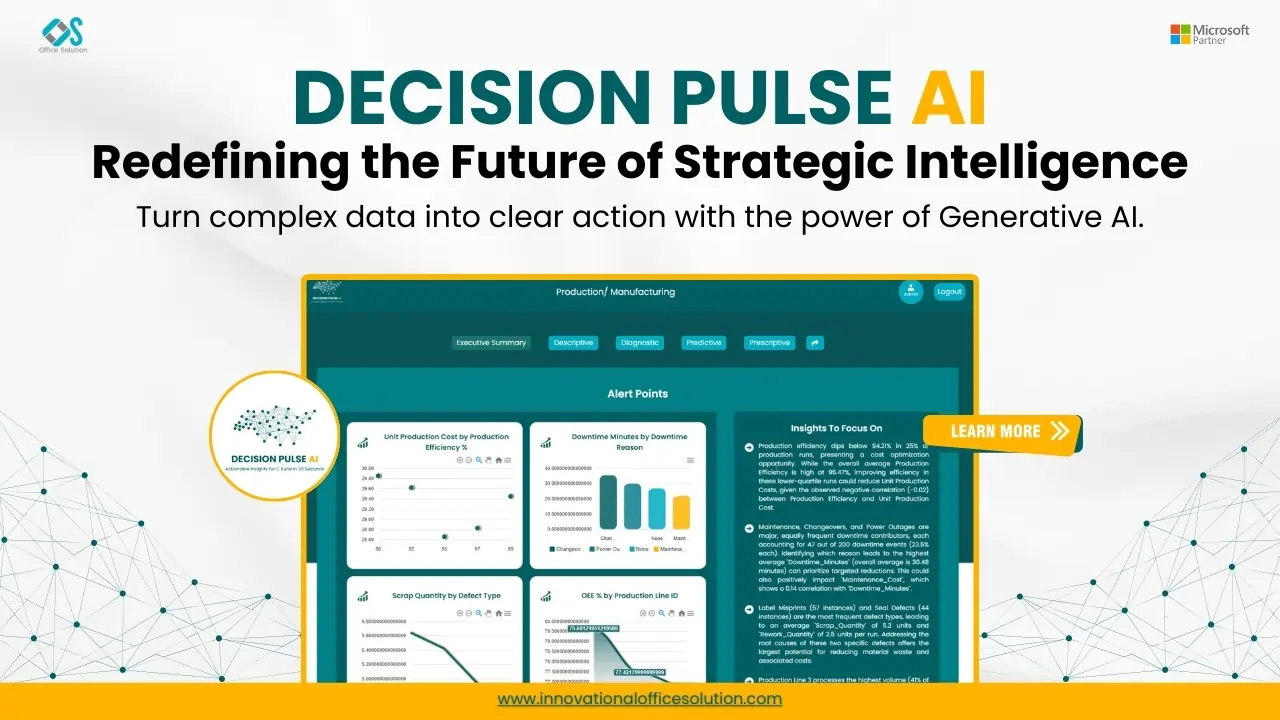
Table of Contents
For the past two decades, the corporate playbook for data-driven growth has remained unchanged: consolidate data, build visual dashboards, and task human analysts with extracting actionable insights. However, modern operations have outgrown this methodology. Enterprises today are drowning in visual data pipelines but starving for tangible operational execution. Traditional business intelligence tools excel at telling teams what happened yesterday, but they completely fail at executing what needs to happen next.
This widening operational latency is driving a massive architectural shift away from static reporting and toward a unified AI decision intelligence platform. Forward-thinking organizations are realizing that data shouldn't just inform internal teams—it should act. By integrating real-time visibility with autonomous operations, enterprises can finally bridge the gap between initial data engineering and final business outcomes.
The Failure of the Traditional Data Stack
The modern enterprise data stack has grown increasingly fragmented, fragile, and prohibitively expensive. A typical setup requires complex data ingestion pipelines, data warehouses, and semantic layers just to push metrics onto a visual chart. The flaws in this traditional model are structural:
- The Illusion of Action: Visual charts do not make business choices. They require human operators to log in, identify anomalies, deduce causes, and manually log into auxiliary software to fix problems.
- The Consultant Trap: When dashboards fail to provide clarity, corporations spend millions on external management consulting firms to perform slow, manual analysis that drains internal budgets.
- Severe Talent Burnout: Highly paid data scientists and analytics engineers spend roughly 80% of their working hours cleaning data pipelines and building repetitive reports rather than driving strategy.
- Disconnected Systems: Insights live in one environment (analytics tools) while operational execution happens in another (CRMs, ERPs, HRIS), creating a constant bottleneck.
The cost of maintaining this bloated ecosystem is unsustainable. Organizations require a continuous intelligence layer that eliminates manual middle steps, reducing traditional data stack costs by up to 90% while accelerating execution speeds from weeks to milliseconds.
How Decision Pulse AI Automates the Value Chain
Office Solution AI Labs built Decision Pulse AI specifically to replace this manual, broken loop with an automated system. Instead of forcing your leadership team to constantly monitor visual layouts, this enterprise decision automation platform serves as a centralized intelligence engine that understands, detects, decides, and acts without manual operational lag.
Understand
The system hooks directly into your existing enterprise data lakes, cloud architectures, and core transactional databases to absorb real-time operational context.
Detect
Using advanced business intelligence automation using AI, it monitors millions of data points to find invisible operational patterns, subtle market shifts, and emerging anomalies long before they appear on standard reports.
Decide
Instead of relying on human guesswork, the engine runs deep mathematical simulations and uses deterministic prescriptive logic to identify the single best operational path forward.
Act
Once a decision is finalized, the platform deploys autonomous specialized agents to execute workflows directly across your existing software systems.
Specialized Autonomous Agents Replacing Human Overhead
The core innovation behind this architecture is its deployment of modular, functional AI agents. These are not basic conversational chatbots; they are specialized algorithmic workers designed to completely replace consultants with AI solutions within targeted business domains:
Marketing Agent
This agent continuously analyzes customer acquisition costs, channel conversion rates, and retention trends. If a regional performance drop occurs, it immediately runs simulated scenarios and launches recovery campaigns across marketing channels.
Pricing Agent
Built to protect operating margins, this agent monitors live market fluctuations, competitor price points, and shifting inventory levels to adjust wholesale or retail margins dynamically.
Data Agent
This agent acts as an automated data quality engineer, validating information integrity and maintaining clean data hygiene across the ecosystem without human maintenance.
Approval Agent
This module ensures complete corporate safety by maintaining human-in-the-loop validation, sending direct high-level alerts for critical approvals before execution.
From Observation to Autonomous Execution
Consider a common scenario: a retail brand encounters an unexpected sales drop in a key geographic region. Under a legacy analytics infrastructure, the drop would take days to show up on a chart. Analysts would then spend a week arguing over why it happened, and executives would hire a consulting firm to design a recovery strategy weeks later.
By contrast, utilizing an integrated predictive and prescriptive analytics tools ecosystem like Decision Pulse AI changes the entire operational flow:
Simulate
The platform catches the dip immediately, evaluates external variables, and simulates the long-term margin impact of running a localized 5% discount campaign.
Launch
It builds, optimizes, and automatically deploys the discount campaign across connected CRM systems and promotional channels.
Notify
It instantly sends a concise, summarized notification to the regional Vice President detailing the exact anomaly discovered and the actions already taken to fix it.
Track
The system tracks the financial recovery curve in real-time against baseline trends to ensure the campaign hits target performance goals.
Redefining C-Suite Leadership
Moving from manual analysis to autonomous execution requires a mindset shift among executive leadership. Transitioning to a system where software confidently handles daily operational decisions allows executive teams to step back from manual fire-fighting. C-suite leaders can focus entirely on high-level corporate strategy and long-term business growth.
To learn more about how advanced automation is reshaping modern corporate leadership, explore the detailed breakdown of AI for C-Suite Decision Making: Redefining Leadership.
For a deeper dive into modern decision automation systems, review the comprehensive guide on Enterprise Decision Automation Platform.
Frequently Asked Questions (FAQs)
1. What exactly is an AI decision intelligence platform, and how does it differ from traditional Business Intelligence (BI)?
Traditional Business Intelligence tools are design-focused and descriptive; they aggregate historical data to create charts showing what happened in the past. An AI decision intelligence platform goes a step further by combining data engineering with machine learning to explain why something happened, predict what will happen next, and prescribe/execute the optimal business action automatically. It shifts your data stack from a passive visualization tool into an active execution engine.
2. Can an enterprise decision automation platform truly replace human consultants?
Yes, across a broad spectrum of repeatable, analytical operations. Traditional consultants spend weeks manually collecting data, interviewing teams, running spreadsheet models, and writing static slide presentations. An enterprise decision automation platform performs these exact steps continuously and in real-time—ingesting data, running predictive simulations, and outputting optimal strategic choices without human bias, slow turnarounds, or high recurring hourly billing.
3. How does business intelligence automation using AI ensure data security and compliance?
Advanced systems like Decision Pulse AI integrate directly with your existing enterprise data infrastructure, respecting established security protocols, role-based access controls (RBAC), and encryption standards. Furthermore, by automating workflows through deterministic logic and dedicated approval modules, the platform reduces human data-handling errors, ensuring complete compliance with global regulations such as GDPR and SOC 2.
4. What are predictive and prescriptive analytics tools?
Predictive analytics tools use historical data and machine learning to forecast future outcomes (e.g., “Inventory for Product X will run out in 12 days.”).
Prescriptive analytics tools take those forecasts and calculate the absolute best path forward to solve or exploit that scenario (e.g., “Automatically re-route 500 units from Warehouse B and issue a purchase order to Supplier C to prevent a stockout while protecting margin.”).
5. How long does it take to implement Decision Pulse AI within an existing enterprise data stack?
Because Decision Pulse AI connects natively via secure APIs to modern cloud architectures, enterprise data lakes, and transactional databases, baseline ingestion and setup can be achieved within weeks. The platform is built to sit on top of your existing data infrastructure, meaning you do not have to dismantle your current data pipeline or migrate legacy databases to start automating workflows.


