Case Study: Migrating from Oracle to Databricks Lakehouse Accelerator
 0|
 0
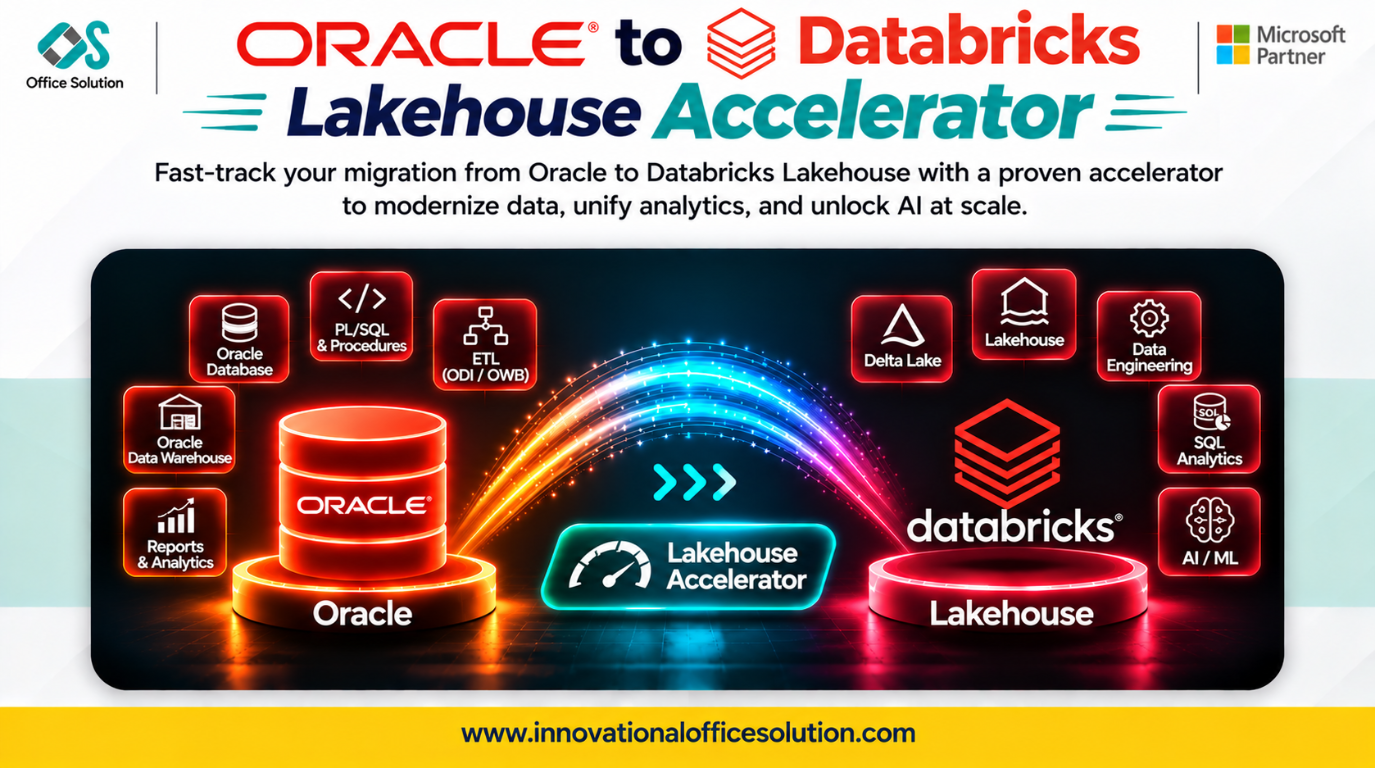
Table of Contents
Executive Summary
Traditional enterprise data warehouses built on Oracle face steep licensing costs, storage and compute coupling, and bottlenecks in supporting modern AI and streaming workloads. This case study provides a streamlined, step-by-step roadmap for migrating legacy Oracle architectures to the Databricks Lakehouse, outlines the critical engineering hurdles encountered, and demonstrates how Pulse Converter accelerates modernization while cutting delivery cycle times.
Key Migration Challenges: Oracle to Databricks Lakehouse
Migrating relational databases and enterprise data warehouses to a unified Lakehouse platform is rarely a direct lift-and-shift:
- Complex PL/SQL and stored logic translation: Decades of business rules nested in complex Oracle stored procedures, packages, triggers, dynamic SQL, and cursor-based loops have no direct row-by-row translation in Apache Spark or Databricks SQL.
- Proprietary ETL and pipeline dependencies: Workflows running on Oracle Data Integrator (ODI), Oracle Warehouse Builder (OWB), or proprietary orchestration engines must be decoupled and refactored into modular Delta Live Tables (DLT) or Databricks Workflows.
- Schema and data type incompatibilities: Proprietary Oracle types (NUMBER precision, VARCHAR2, CLOB/BLOB, complex timestamps) require mapping to Delta Lake data types without precision loss.
- Data parity and dual-run validation: Historical data extracts and Change Data Capture (CDC) streams must be reconciled during parallel execution without impacting live transactional systems.
Step-by-Step Migration Blueprint
- Phase 1: Discovery and Profiling
- Phase 2: Architecture and Medallion Design
- Phase 3: Automated Code and Schema Conversion with Pulse Converter
- Phase 4: Historical Data Extraction and Real-Time Sync
- Phase 5: Reconciliation, Parallel Run, and Decommission
Step 1: Discovery, Inventory, and Scope Rationalization
- Profile all Oracle schemas, tables, constraints, sequences, and database links.
- Catalog PL/SQL packages, functions, materialized views, and scheduled jobs (DBMS_SCHEDULER, cron).
- Rationalize inventory: deprecate unused reports and stale schemas before moving data.
Step 2: Target Architecture and Medallion Design
- Establish a multi-layer Delta Lake Medallion Architecture across Bronze, Silver, and Gold data layers.
- Configure identity management, fine-grained access policies, and audit governance through Databricks Unity Catalog.
Step 3: Automated Code and Schema Conversion
- Translate DDL, table definitions, views, and partitioning schemes to Spark/Delta format.
- Convert procedural PL/SQL scripts into high-performance, set-based PySpark notebooks, SQL scripting, or Delta Live Tables pipelines.
- Automate code migration using purpose-built transformation engines to minimize manual refactoring errors.
Step 4: Data Ingestion and Continuous Synchronization
- Execute bulk historical data extraction using JDBC extracts or optimized Parquet exports into cloud object storage.
- Implement Change Data Capture (CDC) via LogMiner/Lakeflow Connect or streaming partners (e.g., Striim, Fivetran) to maintain low-latency sync.
Step 5: Parity Validation, Cutover, and Sunsetting
- Run automated dual-run reconciliation comparing table counts, checksums, and aggregate financial/operational metrics across end-of-month cycles.
- Repoint downstream BI dashboards and machine learning pipelines to Databricks SQL endpoints.
- Decommission on-premises Oracle licenses and infrastructure.
How Pulse Converter Accelerates Your Lakehouse Migration
Manual code refactoring is the most expensive and error-prone component of an enterprise migration. Pulse Converter provides automated workload translation designed to bridge the gap between legacy proprietary databases and modern cloud Lakehouse architectures.
- Automated code conversion accuracy: Pulse Converter delivers 70%-90% automated conversion accuracy across complex Oracle schemas, views, PL/SQL scripts, stored procedures, and ETL pipelines into native Databricks PySpark and SQL.
- Refactoring bottleneck elimination: Replaces tedious row-by-row cursor translation with optimized, set-based Spark transformations.
- Time and cost savings: Cuts engineering rework and migration timelines by up to 60%, allowing data teams to focus on business logic validation and optimization.
- Lineage and dependency integrity: Maps cross-package dependencies and database links, structuring output to be ready for Unity Catalog and Databricks Workflows.
FAQ: Pulse Converter
Accelerate Your Modernization Journey
Take the risk out of legacy warehouse migration with proven automation frameworks and enterprise expertise.
- Explore solutions: Innovational Office Solution
- Claim your free Proof of Concept (POC): Request a free migration POC
- Get in touch: Email our architecture team at Admin@innovationalofficesolution.com


