Accelerating Retail Intelligence: A Real-World QlikView to Power BI Migration for a Munich Retail Enterprise
 0|
0| 0
0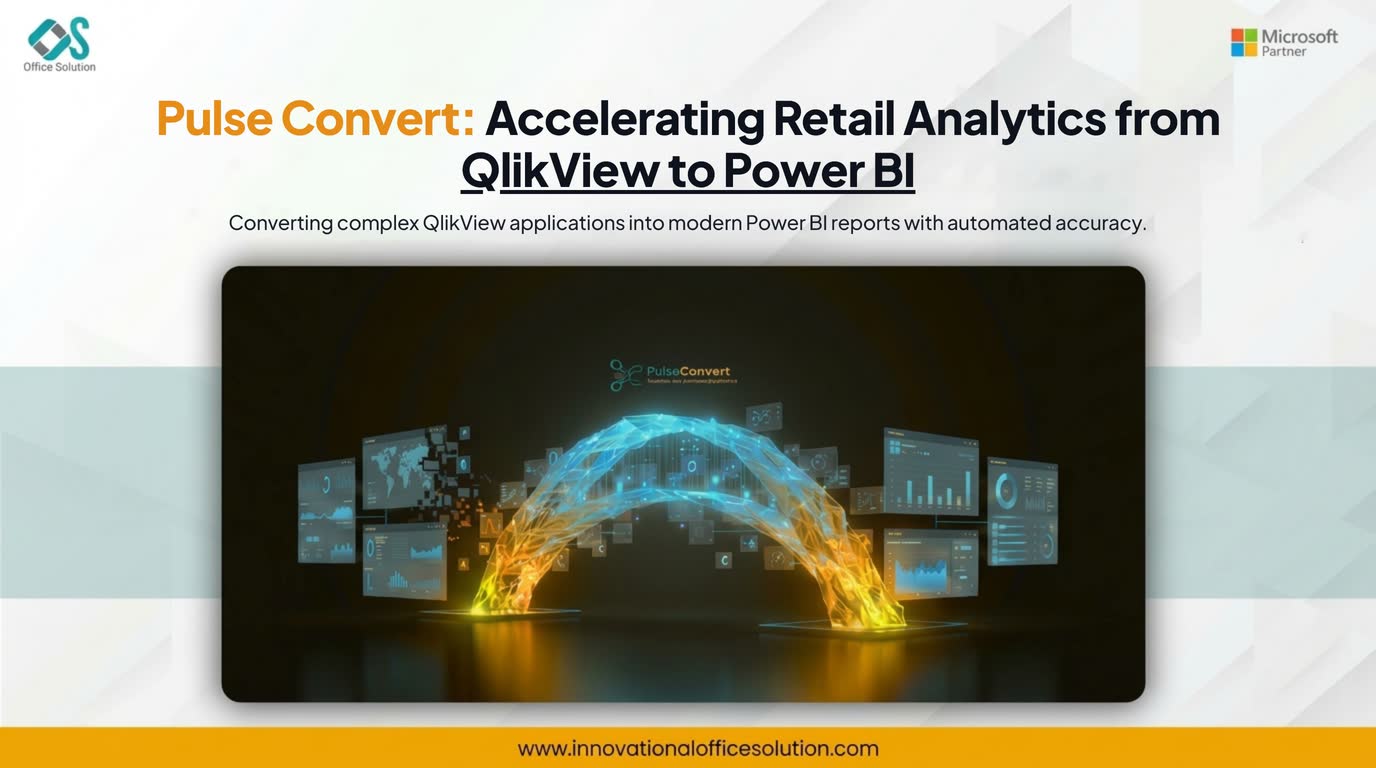
Table of Contents
Background and Operations Context
A major retail chain headquartered in Munich, operating over 240 physical stores across southern Germany and an e-commerce platform, relied on QlikView for over eight years. Their business operations required constant monitoring of store-level sales data, supply chain turnover, regional inventory levels, and real-time point-of-sale transactional metrics.
Over time, the analytics stack grew into a complex ecosystem comprising more than 180 QlikView applications (.qvw files), thousands of proprietary QVD files, and heavy load scripts containing embedded business rules.
The Operational Bottlenecks
Maintaining the legacy QlikView deployment became cost-prohibitive due to licensing fees and specialized maintenance requirements. The retail operations team faced severe reporting delays during peak shopping events like Black Friday and end-of-quarter cycles because reports relied on proprietary associative data models that stalled under large transaction volumes.
Furthermore, business units across departments struggled with limited self-service capabilities, requiring dedicated IT developers every time a new sales metric or store performance dashboard needed adjustments.
Evaluation and Strategic Selection
The IT leadership team decided to consolidate their entire analytics infrastructure into the Microsoft ecosystem by choosing Power BI Pro and Premium Capacity. The main objective was to streamline licensing costs, establish unified data governance, and enable store managers with self-service dashboards.
However, manually migrating years of legacy code—specifically converting intricate Qlik load scripts into Power Query/M code and translating complex Set Analysis expressions into Data Analysis Expressions (DAX)—was estimated to require 14 months of developer labor and substantial capital expenditure.
Automated Migration Execution with Pulse Convert
To accelerate the transition and eliminate manual rewriting, the enterprise implemented Pulse Convert, an automated QlikView to Power BI migrator. The software automatically extracted data models, scripts, and visual structures from the source QlikView applications.
Using advanced parsing algorithms, Pulse Convert translated Qlik load scripts directly into optimized Power Query transformations and converted complex Set Analysis expressions into clean, production-ready DAX measures. The tool achieved a 75% to 90% automated conversion rate on the target applications, handling heavy transformations, data model links, and page layouts without manual intervention.
Accuracy Guarantee and Industry Benchmark
During vendor evaluation, the client assessed multiple market options to migrate QlikView to Power BI. Most alternative tools on the market offered basic visual scraping or surface-level metadata mapping, failing to reach even a 30% 1-click migration accuracy on complex retail logic.
Pulse Convert guarantees a 75% to 90% direct conversion accuracy out of the box. In fact, our commitment stands firm: if any other tool achieves even 30% 1-click migration accuracy on your source files, we will do your entire migration completely FREE.
Validation, Testing, and Rollout Strategy
The migration project was completed in systematic phases over 10 weeks instead of the originally projected 14 months. During the validation phase, automated testing scripts cross-referenced historical sales data between QlikView and the new Power BI reports down to individual store transaction line items to ensure zero data drift.
The transition enabled the enterprise to retire its legacy Qlik infrastructure cleanly, migrating 180+ applications into unified Power BI workspaces integrated directly with their central enterprise data lake.
Realized Business Impact and Results
By leveraging Pulse Convert as a dedicated QlikView to Power BI Accelerator, the German retailer cut overall analytics infrastructure maintenance costs by 45% annually.
Store managers across Germany now access real-time inventory and sales performance reports directly on mobile devices with sub-second response times. The IT department reclaimed hundreds of engineering hours previously spent on manual script translation, allowing them to focus on advanced predictive demand modeling rather than legacy report maintenance.
Migrate QlikView to Power BI with Speed and Confidence
Automate script extraction, Set Analysis translation, and visual recreation with 75% to 90% accuracy using Pulse Convert.


