Accelerating Legacy Modernization: SAS to Databricks Lakehouse
 0|
 0
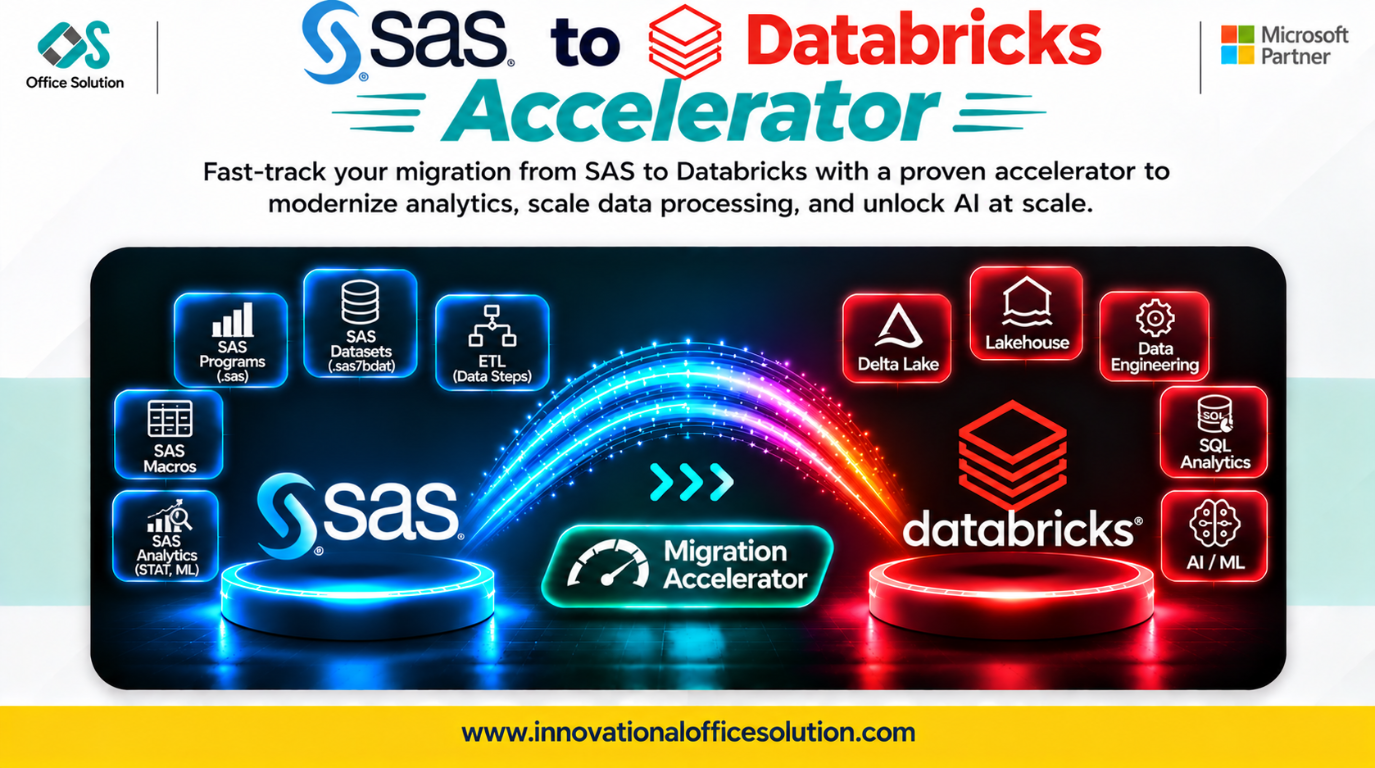
Table of Contents
Introduction
Migrating legacy SAS workloads to a modern Lakehouse architecture on Databricks enables enterprises to eliminate steep licensing overheads, unlock distributed Spark compute, and unify BI with advanced machine learning.
Step-by-Step Migration Process
A successful migration shifts procedural SAS code into modular PySpark, Spark SQL, and Delta Lake pipelines through four systematic phases:
- Phase 1: Discovery and Assessment
- Phase 2: Architecture and Setup
- Phase 3: Automated Conversion
- Phase 4: Validation and Cutover
1. Discovery and Portfolio Assessment
Inventory SAS programs, data sources, formats, macros, and scheduled jobs. Assess workload complexity, dependencies, and business criticality to establish migration priorities.
2. Lakehouse Architecture and Delta Foundation
Design the Databricks target environment, including data ingestion, Delta Lake storage, governance, compute, and the dependencies required by each workload.
3. Code and Pipeline Conversion
Convert SAS Data Steps, procedures, macros, and pipeline logic into modular PySpark and Spark SQL, adapting procedural execution patterns for distributed processing.
4. Automated Testing, Validation, and Cutover
Test converted workloads against source results, validate business logic and data outputs, optimize performance, and cut over only after migration criteria are met.
Core Migration Challenges
- Proprietary SAS built-ins: Legacy code relies heavily on SAS PROCs and format libraries that do not have direct, native one-to-one translations in PySpark.
- Complex nested macros: SAS macro execution uses compile-time string replacement, which can hide pipeline dependencies and introduce stateful side effects.
- Memory and execution paradigms: Traditional SAS often executes procedurally on single nodes. Moving workloads to distributed Spark can cause data skew and costly shuffle overhead unless the logic is redesigned appropriately.
- High manual refactoring overhead: Manual conversion requires expertise in both SAS and distributed Spark computing, consumes substantial developer time, and can increase the risk of human error.
How Pulse Convert Accelerates SAS to Databricks Migration
Developed by Office Solution AI Labs, Pulse Convert is an AI-powered migration and modernization accelerator designed to automate up to 70% of legacy migration effort while delivering 70% to 90% migration accuracy.
| Migration bottleneck | Manual approach | With Pulse Convert |
|---|---|---|
| Code translation | Manual line-by-line rewrite of SAS to PySpark or SQL | Automated, contextual code conversion into optimized Spark logic |
| Logic and macro parsing | High risk of syntax bugs and undetected logic drift | AI-assisted pattern mapping for complex SAS Data Steps and macros |
| Data and logic validation | Tedious spot checks and manual reconciliation scripts | Automated source-to-target comparison and regression testing |
| Project velocity | Typical enterprise timeline of 9–18 months | Up to 70% reduction in manual effort to accelerate time-to-value |
Pulse Convert helps reduce the risks of manual rewrites by mapping legacy procedural operations to cloud-native, distributed Databricks patterns with enterprise-grade security and governance.
Modernize with Pulse Convert
Modernize your analytics and data engineering workloads with speed and precision.
- Website: Innovational Office Solution
- Free POC offer: Claim your pilot at the Migration and Modernization Accelerator Portal
- Email: Admin@innovationalofficesolution.com


