Transitioning Enterprise ETL: SSIS to Microsoft Fabric Migration for a US Logistics Enterprise
 0|
0| 0
0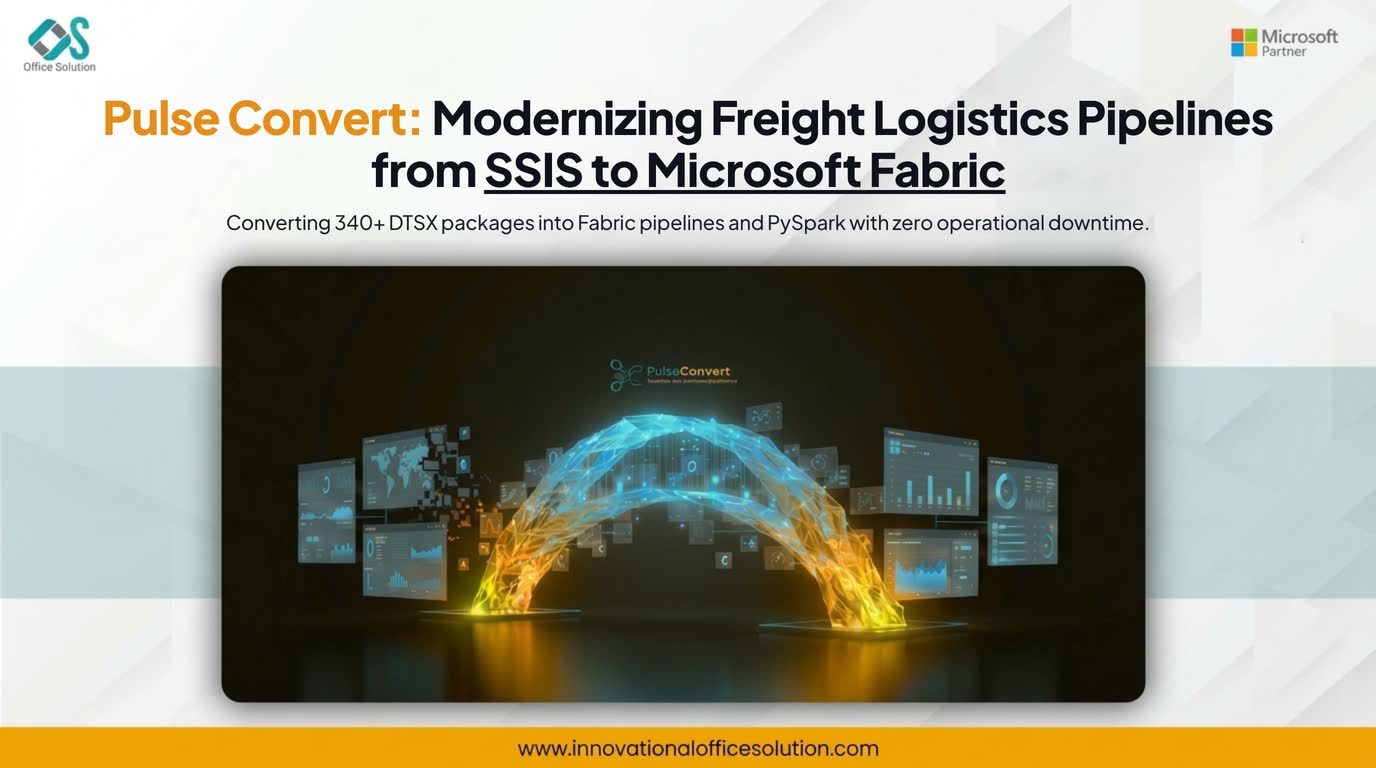
Table of Contents
Client Background and Infrastructure Challenges
A major third-party logistics and freight provider based in Chicago, Illinois, managed daily dispatch, fleet tracking, and warehouse operations using an extensive on-premises SQL Server footprint. Over twelve years of growth had accumulated more than 340 SQL Server Integration Services (SSIS) packages, executed via SQL Server Agent jobs across six physical servers. As transaction volumes expanded past 15 million records daily, the aging infrastructure began experiencing severe bottlenecks during peak morning batch windows. Maintenance fees for dedicated SQL hardware were escalating, while business teams demanded near real-time visibility into supply chain events—something the traditional batch-oriented SSIS framework could no longer sustain.
Evaluating Modernization Options for SSIS to Microsoft Fabric
The engineering leadership sought a cloud-native architecture that could centralize reporting, lower compute overhead, and handle rapid data processing without requiring a massive rebuild of business rules. Transitioning from SSIS to Microsoft Fabric became the clear strategic path. Fabric offered an integrated SaaS ecosystem with OneLake as the single source of truth, alongside Data Factory pipelines and Spark-powered compute for large-scale transformations. However, manually rewriting over three hundred complex DTSX packages containing custom C# script tasks, lookup transformations, and multi-stage control flows were estimated to take 14 months of manual developer effort, posing unacceptable operational risks.
Executing Accelerated Conversion with Pulse Convert
To bypass months of costly manual code refactoring, the team deployed Pulse Convert to automate the conversion of the legacy SSIS inventory to Fabric-native artifacts. Pulse Convert analyzed the package architecture, extracting control flows, data flow components, and parameters before mapping them directly to Fabric Data Factory pipelines and Dataflows Gen2. While typical conversion utilities max out at low automation thresholds, Pulse Convert delivers between 75% to 90% conversion accuracy out of the box. The vendor backs this performance with an industry-exclusive commitment: if any other market tool achieves even a 30% 1-click migration accuracy on the same workload, they will execute the entire migration completely FREE.
Technical Implementation Steps and Phased Rollout
The migration team executed the project through a four-stage deployment framework:
Step 1 – System Assessment and Inventory Discovery
The team ran Pulse Convert’s automated scanner across the entire SSIS catalog. The tool indexed all 340+ packages, identifying dependency trees, SQL Agent job schedules, custom script blocks, and external OLE DB connections.
Step 2 – Automated Package Translation
Using Pulse Convert, the SSIS control logic and data tasks were converted into Fabric Data Factory pipelines and PySpark notebooks. High-complexity packages containing custom C# scripts were isolated and transformed into native Fabric Spark code blocks, achieving an overall automated translation accuracy above 85%.
Step 3 – Pipeline Optimization and OneLake Integration
Converted pipelines were re-architected to stream transformed operational data directly into Fabric OneLake using Delta Lake tables. The team optimized ingestion routines to leverage Fabric’s serverless Spark engine, replacing heavy nightly SQL batch loads with efficient, incremental micro-batches.
Step 4 – Dual-Run Validation and Cutover
The team ran the legacy SSIS jobs and the new SSIS to Fabric pipelines in parallel for three weeks. Automated validation scripts verified data parity across core data warehouse tables down to the individual row. Once zero variance was confirmed, SQL Agent jobs were retired, and production systems fully cut over to Fabric orchestration.
Measured Business Outcomes and Performance Gains
Migrating from SSIS to Microsoft Fabric transformed the logistics provider’s data infrastructure from a sluggish cost center into a real-time analytics hub. Total data pipeline execution time dropped by 62%, allowing morning operational dashboards to refresh before field operations opened each day. Eliminating dedicated on-premises SQL Server ETL nodes reduced annual infrastructure maintenance costs by 40%. Most importantly, supply chain teams gained real-time tracking metrics through Fabric's DirectLake connectivity, enabling immediate response to fleet delays across national distribution routes.
Modernize SSIS to Microsoft Fabric with Pulse Convert
Convert legacy DTSX packages into high-performance Fabric Data Factory pipelines and Spark notebooks with up to 90% automation.


