Maximizing Commercial Reach: Implementing High-Fidelity Voice Infrastructure inside Enterprise Ecosystems
 0|
0| 0
0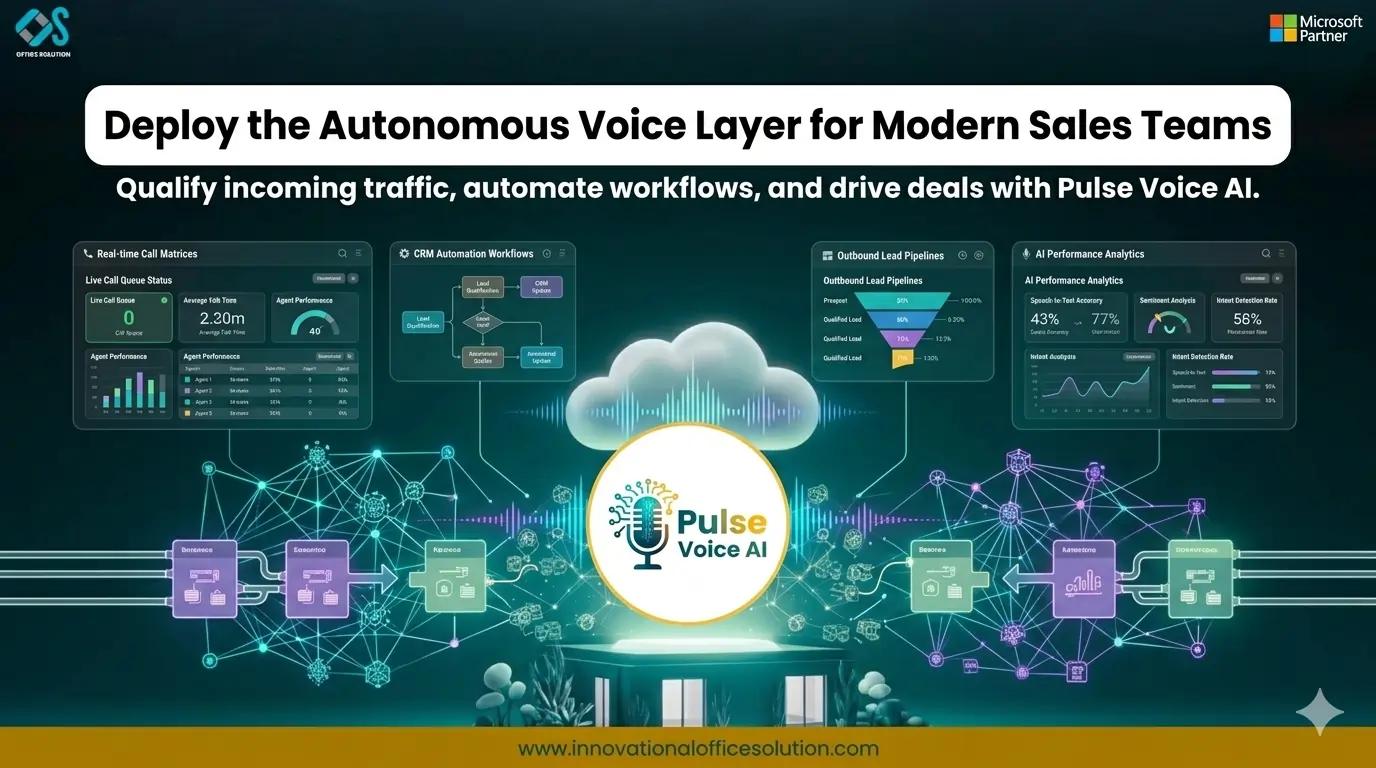
Table of Contents
Modern enterprise growth requires uncompromised operational velocity across every primary go-to-market layer. Corporate revenue teams consistently face systemic friction points: raw inbound inquiries vary significantly in quality, digital advertising campaigns face declining engagement rates, and inside sales representatives spend hours dealing with manual dialer mechanics. When professional development teams spend more time handling spreadsheet updates, administrative cleanup, and unanswered calls than leading deep strategic conversations, overall conversion velocity naturally drops.
To eliminate these capacity limits, forward-thinking market leaders are moving away from manual calling models to structured, automated voice communication platforms. Implementing Pulse Voice AI into your centralized business architecture provides an always-available operational layer that handles frontline prospecting and qualification instantly. By utilizing specialized speech processing software designed around clear business logic, organizations can maintain consistent market penetration, clean up old customer data, and empower their strategic account teams to focus entirely on closing complex opportunities.
Overcoming Headcount Limitations with Modern Voice Networks
Relying solely on manual dials to scale an outbound sales framework introduces deep operational vulnerabilities, high administrative overhead, and variable performance outcomes. Human inside sales capacity is naturally limited by standard business hours, cognitive fatigue, and the ongoing challenge of manual data logging inside CRMs. When an organization must rapidly launch a new product line or test a new market sector, relying on human hiring introduces recruitment friction and onboarding costs that slow down overall market agility.
Integrating reliable AI voice agent services for businesses removes these growth barriers by decoupling raw outreach capacity from manual headcount metrics. These platforms run hundreds of telephone calls simultaneously, sorting through busy signals, dead lines, and answering machines instantly to ensure your prospecting engine never stalls. When a real stakeholder answers, the system communicates with a natural, crisp cadence, presenting your brand value propositions clearly without variance. This systematic approach ensures that your market coverage remains steady every single day, completely insulated from internal team turnover or sudden hiring freezes. For an exploration of how automated tools align with enterprise strategies, consult the Pulse Voice AI autonomous enterprise guide.
Accelerating Inbound Lead Tractions with Automated Prospecting
Successful pipeline development depends heavily on rapid response times and methodical touchpoint management. When fresh inbound submissions, registration forms, or demo requests sit unaddressed in a CRM queue for hours or days, prospect interest cools significantly, dragging down total downstream conversion rates. Traditional inside sales setups often struggle to maintain the instantaneous reaction times necessary to engage modern buyers while their intent is highest.
Deploying specialized automated voice agents for lead generation creates an immediate, highly responsive triage layer for all incoming demand signals. Operating around the clock, these systems call back inbound leads within sixty seconds of data ingestion, initiating natural, conversational validation sequences to establish baseline project fit and buying authority. This instantaneous response captures high-intent accounts while their interest is fresh, while systematically keeping low-fit, incomplete, or spam submissions off your senior sales team's calendars. To review the comprehensive blueprint for setting up these services, check out the AI voice agent services for businesses guide.
Revitalizing Stale Marketing Data and Old Accounts
Every established business possesses extensive historical databases filled with past webinar attendees, cold inbound trials, and old leads that haven't been contacted in several quarters. Manually reaching out to these dormant records is an arduous task that human reps regularly avoid, preferring to spend their energy on fresh inbound prospects. Consequently, valuable data assets gradually lose their market relevance and decay inside the company database.
Using an AI voice agent for lead generation offers an efficient, systematic approach to re-engaging and cleaning up historic database assets at scale. The software dials through old databases at a high volume, verifying current corporate structures, identifying updated decision-makers, and uncovering hidden business challenges. When the platform uncovers renewed project timelines or budget expansions, it routes that warm interest over to internal account directors, instantly unlocking hidden revenue from data you already own.
Structuring a Multi-Channel Conversational Marketing Engine
Modern digital marketing strategies are most effective when they maintain unified, consistent messaging across every active channel. Separating your telephone outreach from ongoing email campaigns, mobile text interactions, and digital ad tracks breaks the user experience, dropping overall conversion efficiency across your campaigns.
Positioning an AI voice agent for marketing inside your primary data architecture allows your marketing team to build highly responsive, multi-channel user journeys. Instead of executing isolated phone blasts, the voice layer behaves as a dynamic touchpoint driven by real-time behavioral signals—such as an enterprise buyer opening a contract proposal email or viewing a specific pricing sheet. The resulting voice call incorporates specific details from that digital journey, offering a tailored interaction that bridges online intent with direct telephone conversations. To learn more about balancing voice automation with professional voice design, read the AI and voice talent guide.
Optimizing Cold Market Outreach with Predictable Voice Solutions
Building a dependable outbound business development engine requires exceptional persistence, absolute message alignment, and unbroken outreach volume. Human representatives frequently encounter psychological fatigue and stress during extensive cold calling campaigns, which can lead to shifting conversational tones, missed value points, and highly erratic daily output numbers.
Deploying an AI voice agent for outbound sales provides a stable, highly objective engine for your cold market expansion programs. The platform handles continuous outreach tracks without experiencing drop-offs in enthusiasm, focus, or verbal clarity. Every single discussion is delivered with optimal tone and complete corporate alignment, ensuring your brand message is communicated exactly as intended on every call. This predictable system allows companies to test new industries, roll out experimental products, and expand market share safely without taking on the major financial exposure of sudden team expansions. To study the core metrics behind autonomous voice systems, see the AI voice agent services for businesses scaling guide.
Strengthening Regulatory Compliance and System Security
Operating a high-capacity outreach framework requires total adherence to global telecommunication regulations and modern data privacy standards. Deploying unstructured, poorly encrypted voice applications exposes a business to heavy regulatory fines, data leaks, and lasting brand damage.
Enterprise voice networks mitigate these operational risks by embedding advanced data encryption, strict access privileges, and regional compliance logic directly into the software infrastructure. These systems automatically reference national do-not-call lists, observe regional calling hours, and log prospect opt-out choices in real time. By keeping all conversational data isolated inside secure corporate silos, the system allows large organizations to confidently expand their sales and marketing footprint while keeping regulatory risk at zero.
Scale Enterprise Voice Operations with Pulse Voice AI
Build an automated voice infrastructure tailored to your business goals with secure, enterprise-grade conversational AI.
Frequently Asked Questions (FAQs)
1. How do automated voice solutions integrate with our existing enterprise tech stack?
The voice platform interfaces with major CRM systems and marketing automation software through secure, bi-directional APIs. This connection allows the system to pull historical account context right before initiating a call and instantly write back comprehensive transcripts and status updates when the conversation finishes.
2. What mechanisms prevent the system from placing calls outside of compliant hours?
The software includes geographic time-gate controls that analyze the specific location and regional area code of each target number before placing an outbound dial. This automated check ensures that outreach runs strictly within legally mandated regional windows, avoiding out-of-bounds or late-night calls.
3. How does the conversational model manage unique industry acronyms or specialized terminology?
During system setup, the core platform undergoes deep training using your corporate product manuals, specific brand glossaries, and historical call data. This training calibrates the natural language models to ensure the system recognizes, understands, and pronounces technical terms and product lines accurately.
4. Can the platform support localized accents or multiple languages for global operations?
Yes. The platform provides access to an extensive selection of natural voices calibrated for specific regional accents, dialects, and international languages. This flexibility enables global marketing managers to match the voice profile with the precise regional expectations of their targeted customer base.
5. How does the system manage opt-out requests during a live conversation?
When a prospect expresses an opt-out preference or requests removal during a live discussion, the semantic engine detects that intent instantly. It flags the specific record within the central database and updates your integrated CRM, removing the number from all future outreach tracks.


