Pulse Voice AI: The Definitive Enterprise Guide to AI Voice Agent Services for Businesses
 0|
0| 0
0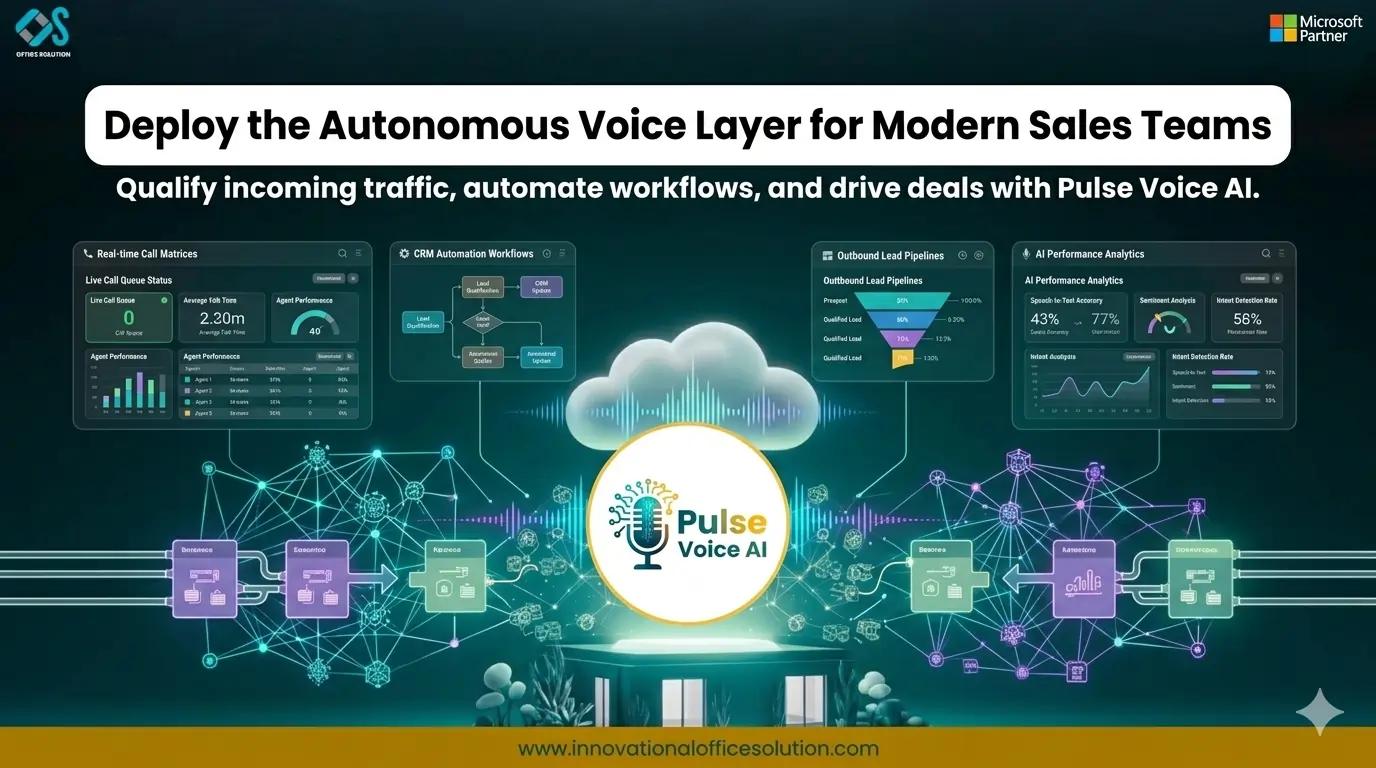
Table of Contents
The modern enterprise revenue engine is facing an operational bottleneck at the top of the sales funnel. Organizations invest heavily in multi-channel marketing campaigns, search engine optimization, and outbound data procurement, only to see their pipelines stall due to human capacity limits. When thousands of prospective leads interact with digital assets or enter a corporate database, the window of maximum engagement is measured in minutes. Yet, traditional human business development teams, burdened by manual workflows and administrative constraints, rarely achieve the instantaneous response velocity required to maximize conversions. This operational friction results in substantial revenue leakage and a diminished return on marketing expenditures.
To eliminate these structural constraints, forward-thinking enterprises are transitioning toward automated conversational infrastructures. Implementing specialized voice communication systems allows organizations to decouple their lead engagement capacity from linear headcount restrictions. Deploying Pulse Voice AI establishes a highly scalable, real-time engagement layer that operates continuously across all target markets. By shifting repetitive prospecting, initial validation, and multi-touch follow-up protocols to an autonomous framework, businesses can unlock unprecedented organizational velocity. This shift enables skilled account executives to dedicate their time exclusively to late-stage contract negotiations, complex relationship management, and strategic deal closure.
The Strategic Shift to Scalable Voice Platforms
For decades, the standard approach to corporate market expansion relied entirely on increasing headcount within internal sales development teams or outsourcing workflows to global contact centers. While this linear scaling methodology was effective in lower-volume environments, it introduces significant operational challenges when applied to modern enterprise data streams. Human outbound calling operations face natural physiological limits, including employee fatigue, emotional resistance to cold outreach, and unavoidable variation in messaging quality. These factors lead to erratic pipeline generation and inconsistent brand representation across the marketplace.
Furthermore, traditional phone system automations, such as legacy Interactive Voice Response (IVR) platforms, have historically alienated buyers rather than engaging them. These rigid structures rely on pre-programmed decision trees that force users through frustrating button-pressing menus or exact keyword requirements. If a caller asks a complex question or shifts the topic, legacy systems stall, resulting in a poor user experience.
Modern autonomous voice platforms solve these limitations by utilizing deep neural networks, contextually aware language parsing, and low-latency audio rendering to conduct unscripted, natural human conversations. This technical evolution transforms voice communication from a rigid automated transaction into an elastic, responsive asset for enterprise growth.
Deploying Specialized AI Voice Agent Services for Businesses
Moving from general, consumer-focused voice applications to a reliable, enterprise-grade communication layer requires deep custom engineering and seamless infrastructure integrations. Off-the-shelf software options frequently lack the specialized industry vocabulary, deep data security protocols, and advanced backend connections necessary to manage intricate business workflows safely and effectively.
Opting for professional AI voice agent services for businesses ensures that your automated communication systems align perfectly with your complex technical framework and corporate security requirements. This comprehensive implementation path involves custom natural language processing adjustments, tailored dialogue design, and secure API integrations into enterprise resource planning tools and central CRMs like Salesforce or HubSpot. Organizations can study the underlying structural architecture behind these large-scale systems by analyzing the design blueprint available.
During the onboarding phase, voice engineers construct tailored conversation pathways, load complex product documentation, and establish clear rules for managing common customer objections. This careful orchestration guarantees that the system communicates with absolute brand accuracy, preserves data integrity, and adheres to strict regulatory standards such as TCPA, GDPR, and local communications privacy laws. To learn how corporate sales teams roll out these advanced workflows across global markets, businesses can review the detailed analysis.
Driving Pipeline Scale via an AI Voice Agent for Sales
For enterprise revenue organizations focused on aggressive market expansion, maintaining a predictable flow of sales opportunities is an absolute necessity. Business development teams cannot afford pipeline slowdowns caused by staff turnover, shifting internal priorities, or uneven daily output. Deploying an AI voice agent for sales allows an organization to build a persistent, highly scalable pipeline engine that maintains optimal performance on every call.
When configured as an outbound tool, the platform scans extensive target account registries and opens hundreds of concurrent, low-latency call streams simultaneously. The system uses advanced signal detection to filter out unanswered lines, corporate gatekeepers, and automated answering machines within fractions of a second, ensuring connection optimization.
The moment a targeted decision-maker answers the line, the agent engages with natural cadence, appropriate inflection, and professional pacing. It presents structured value propositions clearly and handles unexpected objections or stalls smoothly without friction. This systematic approach allows an enterprise to expand its market reach and build a highly dependable foundation for continuous business development.
Maximizing Operational Outbound Velocity
Cold calling and market validation campaigns depend entirely on consistency, volume, and conversational precision. Human inside sales teams face significant logistical limitations, as a major portion of their daily routine is spent on manual dialing, sorting out dead numbers, or dealing with gatekeepers. This linear approach restricts the total market touchpoints an enterprise can achieve within a given timeframe, leading to missed opportunities and stagnant pipelines.
Deploying an AI voice agent for outbound sales solves this capacity constraint at the root level. These advanced systems run hundreds of concurrent call streams simultaneously, filtering out unanswered lines, ringbacks, and automated answering machines within milliseconds to instantly connect with active decision-makers. When an actual conversation begins, the agent communicates with natural cadence, tone, and pacing, delivering precise value propositions without fatigue, emotion, or human error. This systematic outreach dramatically expands pipeline volume and establishes a reliable foundation for business development.
Accelerating Capture Rates with an AI Voice Agent for Lead Generation
Corporate marketing investments only yield real strategic value when the resulting leads are quickly verified, qualified, and moved forward into active sales discussions. When an organization runs large-scale digital advertising, content syndication, or enterprise event campaigns, inbound lead submissions often sit unaddressed for hours or days because human development reps are busy with other tasks. This delay creates an operational bottleneck that lowers overall conversion rates and reduces return on marketing spend.
Using an AI voice agent for lead generation directly solves this bottleneck by establishing an instantaneous, voice-driven follow-up loop. The moment a potential buyer submits a web form or downloads an enterprise asset, the platform initiates an automated phone call to engage the prospect. This rapid transition shifts passive digital interest into an active, real-time discussion, capturing user intent when it is highest. By ensuring that every single inbound touchpoint receives an immediate response, the system prevents hot prospects from cooling off, significantly increasing conversion rates across all active marketing channels.
Revitalizing Corporate Databases via Automated Voice Agents for Lead Generation
Beyond managing immediate inbound inquiries, modern enterprise marketing requires constant nurturing of legacy databases, cold accounts, and past event registries. Manually assigning human representatives to call thousands of dormant contacts to check for new projects or budget shifts is rarely cost-effective, which means valuable secondary opportunities are often left unaddressed.
Deploying automated voice agents for lead generation gives marketing teams an efficient, scalable way to reactivate these underutilized assets. The conversational platform can systematically contact thousands of historical entries to introduce new product layers, offer targeted promotions, or verify if an organization's business requirements have changed. This continuous database maintenance turns static archives into active sources of qualified opportunities, ensuring your brand stays top-of-mind across your addressable market without pulling your core sales team away from active deals.
Maximizing Campaign Performance with an AI Voice Agent for Marketing
Enterprise marketing campaigns involve multiple moving parts, including webinar promotions, event invitations, account-based marketing coordinate loops, and broad brand awareness initiatives. To get the best results from these programs, teams need to maintain consistent communication across all channels. However, relying on email or digital ads alone can lead to message fatigue and lower response rates.
Integrating an AI voice agent for marketing into your multi-channel strategy adds a powerful voice component that complements your digital efforts. The system can call targeted account lists to confirm event registrations, deliver tailored post-download follow-ups, or conduct quick, conversational market research surveys. By combining natural voice engagement with traditional digital flows, marketing teams can cut through inbox noise, gather cleaner audience insights, and drive higher engagement rates for their campaign investments. For more insights on blending automation with conversational tools, you can review the guide.
Detailed System Performance and Engineering Architecture
The operational success of Pulse Voice AI rests on its sophisticated technical architecture, which balances speech recognition, natural language processing, and audio output into a low-latency communication engine.
Advanced Speech Processing
The platform's automatic speech recognition layer uses advanced deep learning models trained to handle diverse accents, industry-specific terms, and varying audio quality. This layer transcribes spoken words in real time while filtering out background noise, such as office chatter or transit sounds. This clean transcription ensures that the underlying natural language understanding engine can accurately parse what the speaker is saying.
Contextual Understanding
Rather than matching basic keywords, the natural language understanding system analyzes the semantic structure of entire sentences. This allows the voice agent to understand user intent accurately, even when prospects use casual phrasing, ask multi-part questions, or interrupt mid-sentence. The system tracks the ongoing context of the conversation, allowing it to provide relevant answers, handle objections appropriately, and keep the discussion moving toward its business goals.
High-Fidelity Audio Delivery
To keep users engaged, the platform utilizes neural text-to-speech technologies that generate smooth, natural-sounding audio. The voice engine avoids the robotic, repetitive cadence of older systems, adjusting its tone, pacing, and emphasis based on the context of the conversation. This life-like delivery creates a professional, comfortable call experience that builds trust with prospective buyers.
Real-Time Integration
True operational efficiency requires tight data synchronization across your entire sales stack. The integration layer handles data transfers via secure webhooks, reading and writing information to your central CRM in under a second. When an agent updates a lead's status, notes an objection, or records an appointment, that data is shared instantly across your corporate platforms, keeping your teams aligned.
Balancing Technology and Compliance in Enterprise Systems
Deploying automated communication systems at scale requires strict adherence to global telecommunications laws and security standards. Failing to maintain proper compliance can result in heavy regulatory penalties and long-term damage to your corporate brand reputation.
Proactive Database Filtering
Advanced platforms include automated filtering tools that check outbound contact lists against national and regional Do Not Call (DNC) registries before placing any calls. This proactive filtering prevents compliance risks and ensures outreach efforts are focused exclusively on compliant, addressable target data.
Caller Identity Protection
To protect your outbound call delivery and ensure healthy connection rates, the system fully supports STIR/SHAKEN digital signature protocols. This authentication signs your outbound signals, verifying your corporate identity with telecom carriers and preventing your business numbers from being incorrectly marked as spam or fraudulent traffic.
Enterprise Security Standards
Data privacy is top priority when handling sensitive corporate information and customer conversations. The platform encrypts all call recordings, text transcripts, and customer details both in transit and at rest. These tight security measures meet strict SOC2 and GDPR compliance standards, giving IT directors peace of mind regarding data management.
A Step-by-Step Path to Implementing Your Voice Campaign
Transitioning to automated voice outreach workflows is simple when following a structured, milestone-based implementation strategy.
1. Outline Campaign Scope and Rules
Begin by establishing clear operational goals for the campaign. Define your key target metrics, draft your core product value propositions, document common market objections, and list the specific qualification questions that must be answered during conversations.
2. Connect API Layers and System Frameworks
Link the conversational platform directly to your current sales and marketing software via secure API connections. Connect your primary CRM to automate lead list syncing and call tracking, and link your internal scheduling tools to enable instant appointment booking during live calls.
3. Run Quality and Flow Testing
Load a small sample list of test contacts to evaluate the platform's conversational flow, response speed, and objection-handling capabilities. Listen closely to how the system manages complex responses, and verify that all call notes, records, and calendar entries sync correctly with your backend software.
4. Roll Out Across the Market and Track Metrics
After verifying your test results, expand the campaign across your broader addressable market database. Regularly track performance through your analytics dashboard, monitoring connection rates, qualification accuracy, conversion percentages, and total scheduled appointments to keep the system running efficiently.
The Value of Data-Driven Insights and Analytics
One of the greatest advantages of adopting an autonomous voice infrastructure is the deep, structured data it generates for every interaction. In traditional operations, managers often have limited visibility into the specific reasons why a cold campaign is succeeding or failing, relying on brief notes scribbled by reps between calls.
An enterprise voice engine captures every word, hesitation, and objection with absolute precision, turning qualitative phone calls into structured, quantitative data. Built-in analytics tools scan transcripts across thousands of calls to identify emerging market trends, notice shifting buyer objections, and track which value propositions resonate most with decision-makers. This continuous feedback loop allows product marketing managers and revenue leaders to adjust their messaging, adapt campaign strategies, and improve conversion performance based on real-world market input.
Looking Ahead: The Future of Corporate Growth
As modern business markets become more fast-paced and data-driven, companies that stick with slow, manual prospecting models risk losing ground to agile competitors using advanced automation. Integrating high-performance voice systems into your revenue operations is a practical, necessary step to maintain a strong market position.
Deploying Pulse Voice AI allows your business to build a reliable pipeline system that operates continuously, avoids burnout, and protects your brand reputation on every call. By letting technology handle repetitive early-stage outreach, your skilled sales professionals can focus on what they do best: building deep business relationships and closing high-value deals.
To discover how modern autonomous voice platforms can optimize your sales and marketing operations, explore our custom development services at Pulse Voice AI or connect with our integration engineers directly via our company contact channel.
Frequently Asked Questions (FAQ)
What are AI voice agent services for businesses and how do they work?
AI voice agent services for businesses provide advanced, customized conversational systems designed to automate incoming and outgoing phone calls. These systems combine speech recognition, natural language understanding, and neural speech synthesis to hold smooth, unscripted human conversations, helping companies scale their operations without linear headcount growth.
How does an AI voice agent for sales handle tough customer objections?
An enterprise-configured AI voice agent for sales uses advanced language parsing to understand the context behind customer questions or concerns. Instead of relying on a rigid script, the platform dynamically selects the most appropriate response from its programmed knowledge base, addressing objections politely and keeping the conversation focused on business goals.
What makes automated voice agents for lead generation better than standard web forms?
Automated voice agents for lead generation replace static, low-conversion forms with real-time, interactive phone conversations. The system engages prospects the moment they show interest, qualifying their needs and answering questions immediately, which captures buyer intent at its peak and drives higher conversion rates.
Can an AI voice agent for lead generation connect directly with our current CRM platform?
Yes. The platform integrates with major CRMs like Salesforce, HubSpot, and Zoho through secure APIs. An AI voice agent for lead generation reads target lists automatically, updates lead records instantly, and saves complete text transcripts, ensuring your sales data stays clean and aligned without manual data entry.
How does an AI voice agent for marketing help with database reactivation campaigns?
An AI voice agent for marketing handles high-volume outbound campaigns to systematically contact old leads, dormant accounts, or past event lists. The system checks if contacts have new project needs or budget updates, filtering out old data and passing active, warm opportunities to your sales team.
What security protocols are used to protect customer data during voice campaigns?
Advanced communication frameworks protect all conversations and customer details using end-to-end encryption both in transit and at rest. These strict data management practices meet SOC2 Type II and GDPR security standards, ensuring enterprise data is handled safely and securely.
How long does it take to deploy a custom voice campaign across an enterprise?
Timelines vary based on the complexity of your conversational paths, required database connections, and unique business logic. While simple informational setups can be deployed relatively quickly, standard AI voice agent services for businesses that feature custom CRM integrations and thorough flow testing generally take a few weeks to roll out across your infrastructure.


