The Architectural Blueprint for Enterprise Revenue Scale: Embedding Real-Time Voice Infrastructure within Multi-Channel B2B Go-to-Market Frameworks
 0|
0| 0
0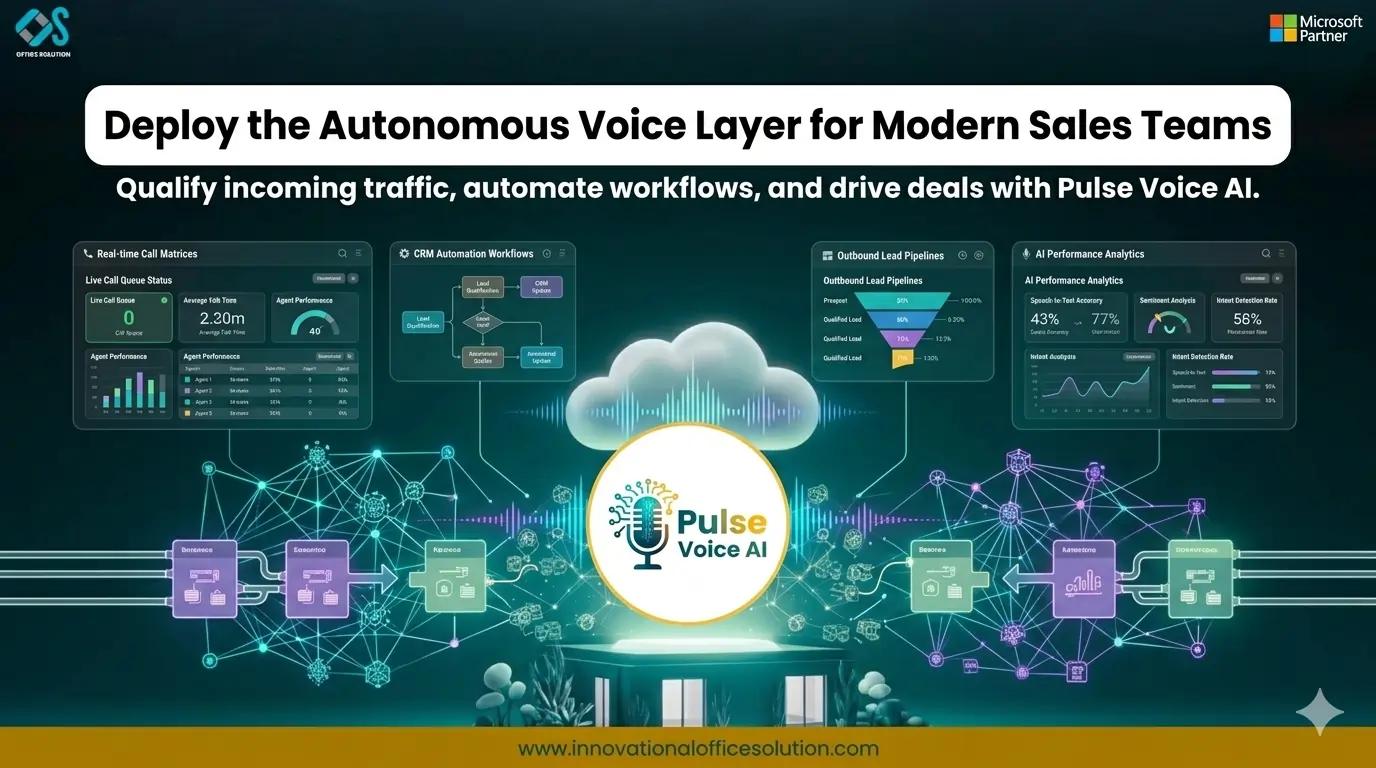
Table of Contents
Modern business-to-business corporate growth requires an absolute alignment of speed, data precision, and conversational volume across all customer-facing touchpoints. To eliminate human friction, forward-thinking enterprises are deploying Pulse Voice AI, an enterprise-grade conversation engine that seamlessly embeds intelligence directly into their telecommunication channels. When revenue organizations evaluate their actual performance metrics, they consistently uncover deep structural friction within their top- and mid-funnel operations. High-value inside sales professionals and account directors spend a disproportionate percentage of their daily shifts navigating corporate gatekeepers, leaving voicemails on dead lines, or typing text summaries into CRM platforms. When strategic human talent is bogged down by manual prospecting tasks rather than running high-value client negotiations, enterprise pipeline velocity predictably falls behind.
To permanently remove these capacity limits, sophisticated enterprise revenue leaders are transforming their execution layers using Pulse Voice AI to establish a high-fidelity, and always-on engagement network that handles frontline prospecting and operational workflows automatically. By utilizing real-time semantic processing models designed around precise enterprise business rules, organizations can establish continuous market penetration, maximize database monetization, and empower their closing executives to focus entirely on driving complex business agreements.
1. Systemic Outbound Pipeline Generation: Scaling Reach Without Overhead Drag
Building a predictable and reliable enterprise sales pipeline requires a high volume of direct outreach touchpoints, absolute messaging consistency, and meticulous compliance management. When relying entirely on human business development teams, this requirement introduces clear operational bottlenecks. Human sales agents face clear physical limitations: their daily output is restricted by standard regional timezones, cold-calling psychological fatigue, and the ongoing administrative drag of manually updating records. Consequently, significant portions of addressable market databases sit completely uncontacted, creating market gaps that faster competitors can easily exploit.
Deploying a dedicated AI voice agent for lead generation completely changes this dynamic by decoupling outreach capacity from manual headcount metrics. Operating within fully scalable cloud architectures, these software engines can run thousands of outbound phone streams concurrently. The platform's advanced signal detection features filter out dead numbers, corporate gatekeepers, and automated answering machines within fractions of a second, ensuring connection optimization.
The moment a targeted decision-maker answers the line, the agent engages with natural cadence, appropriate inflection, and professional pacing. It presents structured value propositions clearly and handles unexpected objections or stalls smoothly without friction. This automated scale expands top-of-funnel pipeline volume, giving companies a reliable foundation to enter fresh vertical markets and broad geographic regions without taking on the high financial risk of sudden team expansions. To learn more about balancing automated outreach with voice branding strategies, explore the insights.
2. Dynamic Inbound Lead Validation: Eliminating Response Latency
Inbound marketing programs often produce a high volume of raw traffic that varies drastically in qualification quality, intent intensity, and budget availability. Tasking enterprise account executives with manually calling every inbound form submitter or content downloader slows down speed-to-lead times for key enterprise clients, while wasting crucial selling hours on non-viable accounts.
Using an automated AI voice agent for lead qualification creates an immediate, highly responsive triage layer for all incoming demand signals. Operating around the clock, these systems call back inbound leads within sixty seconds of data ingestion, initiating natural, conversational validation sequences to establish baseline project fit and buying authority. By guiding prospects through core business logic qualification models—such as validating budget scope, corporate decision-making authority, immediate organizational pain points, and procurement timelines—the platform isolates enterprise-grade opportunities while filtering out low-fit submissions.
This immediate response captures high-intent accounts while their interest is fresh, while systematically keeping low-fit, incomplete, or spam submissions off your senior sales team's calendars. For an in-depth assessment of implementing these frameworks across enterprise systems, check out Pulse Voice AI: The Definitive Enterprise Guide to AI Voice Agent Services for Businesses.
3. Account-Based Personalization: Structuring Multi-Stakeholder Voice Outreach
Enterprise procurement within corporate B2B spaces involves multiple internal departments, complex technical evaluations, and extended buying periods. Moving a target account smoothly through these multi-layered journeys requires a communication asset capable of tracking extensive transactional records while maintaining absolute messaging compliance across every single interaction.
Utilizing a comprehensive B2B outbound AI calling platform for sales teams provides the structural, database-connected architecture needed to run complex, account-based marketing and sales campaigns at scale. The platform connects directly with central enterprise tools via secure APIs to pull historical account context right before initiating a call.
Instead of relying on rigid, pre-recorded scripts, the platform analyzes the intent of a user's statement in real time. This allows the system to mirror human conversational dynamics, adjusting its intonation, pacing, and responses dynamically based on context. By automatically countering common technical objections, checking feature availability parameters, and updating status parameters within backend databases, the platform keeps high-value enterprise deals progressing steadily through the pipeline while keeping core brand positioning perfectly aligned. For a detailed guide on how autonomous platforms reshape enterprise operations, read Pulse Voice AI: Powering the Autonomous Enterprise.
4. Downstream Pipeline Velocity: Recovering Stalled Mid-Funnel Opportunities
Mid-funnel transaction stagnation is a frequent operational issue that occurs when inside sales representatives naturally prioritize early-stage discovery calls or final closing deals over consistent, repetitive mid-stage follow-up tasks. Leaving detailed pricing proposals, pilot program evaluations, or service agreements sitting for days without a conversational check-in stretches out your sales cycles and delays contract signatures.
Deploying a specialized AI calling agent to automate deal closure follow ups ensures that late-stage prospects receive methodical, time-sensitive attention exactly when needed. The automated voice layer monitors CRM milestone deadlines and triggers phone follow-ups the moment an account stalls beyond approved parameters. During the call, the system answers outstanding procurement questions, offers validated contractual trade-offs, and books immediate final review sessions, driving transaction momentum forward without consuming human administrative bandwidth.
| Operational Attribute | Legacy Manual Follow-Up | Pulse Voice AI Automation Layer |
|---|---|---|
| Response Latency | 4 to 24 Hours Average | Less than 60 Seconds |
| Concurrent Stream Capacity | Limited to 1 Call per Human Agent | Scale-on-Demand (Unlimited Streams) |
| CRM Data Entry | Manual Logging (Prone to Data Gaps) | Instant Bi-Directional Synchronization |
| Objection Resolution | Inconsistent (Depends on Rep Experience) | Deterministic (Verified Corporate Data) |
| Operational Window | 8 Hours/Day (Local Timezone Dependent) | Continuous 24/7/365 Global Availability |
To analyze how automated voice layers increase deal speed and optimize qualifying metrics, see Optimizing Deal Velocity: Streamlining Lead Qualification and Pipeline Milestones with Conversational Voice Infrastructure.
5. Reactivating Legacy Repositories: Monetizing Cold Historical Databases
Over multiple fiscal years, large enterprise organizations naturally pile up expansive contact directories containing cold historical leads, old inbound inquiries, and past event attendees. Manual sales departments rarely have the spare time to systematically comb through these deep data repositories, meaning massive pools of original marketing investments sit completely unmonetized.
Using an AI voice agent for lead generation offers an efficient, systematic approach to re-engaging and cleaning up historic database assets at scale. The software dials through old databases at a high volume, verifying current corporate structures, identifying updated decision-makers, and uncovering hidden business challenges.
When the system discovers an account with an active project requirement or renewed budget availability, it qualifies the prospect based on specific criteria (such as budget, timeline, and need), logs the notes directly into your customer database, and schedules a formal discovery meeting for your closer. This automated process extracts fresh pipeline value out of existing, stagnant data sheets, completely optimizing original acquisition costs. For more context on deploying voice technologies within global sales frameworks, read AI Voice Agents for B2B Sales Pulse Voice AI.
6. Advanced Technical Mechanics: Latency Optimization and Audio Interruption Processing
The commercial success of a real-time voice automation layer depends entirely on the underlying technical engineering framework. Generic conversational applications are often plagued by noticeable transmission delays and processing gaps, which shatter the natural flow of conversation and prompt early hang-ups from busy corporate buyers.
To deliver a truly professional user experience, the system combines advanced speech processing software with low-latency communication engines:
Acoustic Voice Ingestion
— Real-Time StreamingThe platform processes incoming raw audio packets instantly via a full-duplex stream, filtering out background ambient environment distortions like office chatter or transit sounds.
Deep-Learning Speech Transcription
— Latency: <100msThe Automatic Speech Recognition (ASR) layer converts audio into clean text, utilizing specialized deep learning models trained to interpret regional accents and complex, industry-specific jargon.
Semantic Intent Processing
— Context AnalysisThe Natural Language Understanding (NLU) core maps the transcribed text against enterprise business rules, tracking contextual history rather than matching rigid, keyword-based scripts.
Dynamic Response Generation
— Real-Time Audio SynthesisThe system matches the prospect's intent with approved enterprise data points, passing text responses to a high-fidelity speech synthesis engine that streams human-like vocal cadences instantly back to the phone line.
The Critical Role of Audio Interruption Parsing
A major challenge in conversational voice systems is handling cross-talk. If a prospect interrupts the agent while it is speaking, a standard system will blindly push through its pre-recorded audio block.
Pulse Voice AI uses full-duplex audio processing to handle this naturally. The moment incoming voice audio is detected, the platform pauses its output stream immediately, parses the new statement, and updates its response path without structural delays.
For a deeper dive into how enterprise data architectures integrate with autonomous automation models, visit Maximizing Commercial Reach: Implementing High-Fidelity Voice Infrastructure Inside Enterprise Ecosystems.
7. Compliance Engineering: Navigating Security and Telecommunication Governance
Deploying automated communication systems across international markets requires strict adherence to shifting telecommunications laws and global data privacy frameworks. Running unverified, open data lines without structural guardrails risks exposing an enterprise to severe regulatory fines and long-term brand damage.
Pulse Voice AI addresses these regulatory demands by building compliance layers directly into its core engine. The platform automatically references national Do-Not-Call (DNC) registries, respects regional holiday dial windows, handles automated script verification, and records buyer opt-out choices instantly across all connected systems.
By securing all real-time audio streams and data fields using enterprise-grade encryption pathways, organizations can expand their telephone workflows globally while maintaining a secure, zero-risk data profile. To review detailed technical deployment workflows and integration protocols, visit the central platform page at Pulse Voice AI.
Comprehensive Implementation Blueprint
Transitioning to automated voice outreach workflows is simple when following a structured, milestone-based implementation strategy:
Outline Campaign Scope and Rules
Define the specific user personas, language requirements, target account files, and programmatic BANT (Budget, Authority, Need, Timeline) qualification filters your voice agent will use.
Connect API Layers and System Frameworks
Connect the conversational infrastructure directly with your existing enterprise CRM systems, central lead registries, and telephony networks via secure APIs.
Run Quality and Flow Testing
Test the agent's conversational logic under a wide variety of scenarios, verifying objection-handling loops, pricing calculations, and automated CRM data updates.
Roll Out Across the Market and Track Metrics
Deploy the voice agent across your active target lists, monitoring key performance indicators like speed-to-lead times, qualification accuracy, and calendar booking density.
To outline a custom implementation framework for your enterprise go-to-market teams, connect directly with our deployment engineers via the contact form.
Frequently Asked Questions (FAQs)
1. How does the platform synchronize conversational qualitative data into our CRM?
The platform interfaces directly with core enterprise CRM environments (such as Salesforce, HubSpot, or Microsoft Dynamics) through secure, bi-directional REST APIs. The millisecond a call finishes, the system's text processing models analyze the verbal transcript, pull out key data fields (like verified budget amounts, explicit project timelines, and unique buyer pain points), and automatically update those parameters within the correct lead file. No manual data input is required from your staff.
2. How does the platform interpret multi-lingual shifts during live conversations?
The voice infrastructure features real-time multilingual processing. The system detects the language shift instantly, adapts its internal logic, and continues the conversation in the prospect's preferred language without breaking step. This capability allows global corporations to deploy uniform sales and customer intake campaigns across multiple geographic territories using a single, unified platform architecture.
3. Can the system transfer a hot prospect to a live human manager mid-call?
Yes. The platform includes advanced live-routing protocols that support warm transfers. If an outbound prospect clears all your strict enterprise qualification filters, or explicitly asks to speak with a live representative, the agent pauses the automated conversation and routes the call smoothly to an available internal specialist's desk phone without disconnecting the buyer.
4. How are specific enterprise pricing sheets and product rules taught to the system?
During the onboarding phase, the system ingests your corporate knowledge bases, past call recordings, product manuals, and pricing calculators. This training structures the core conversational logic layer, ensuring the voice agent discusses your product features with precise technical phrasing, provides accurate tier discounts, and remains strictly aligned with approved corporate positioning rules.
5. What safeguards prevent the platform from quoting unauthorized discounts or terms?
The conversational application operates under strict, deterministic business rules. It pulls pricing, discounting tiers, and contractual terms directly from a verified corporate database, completely eliminating the risk of human error or unauthorized pricing promises. If a buyer pushes for conditions outside your pre-approved parameters, the agent politely declines and recommends booking an evaluation slot with a human specialist.
For technical architects and engineering teams interested in seeing a visual breakdown of how enterprise data platforms connect with automation models, the Office Solution AI Labs YouTube Channel provides structured video tutorials and demonstrations covering analytics, cloud architecture, and data engineering patterns that support high-volume modern business environments.


